
World News
Trump, Xi Meet as US-China Trade Truce Extended to January 2027

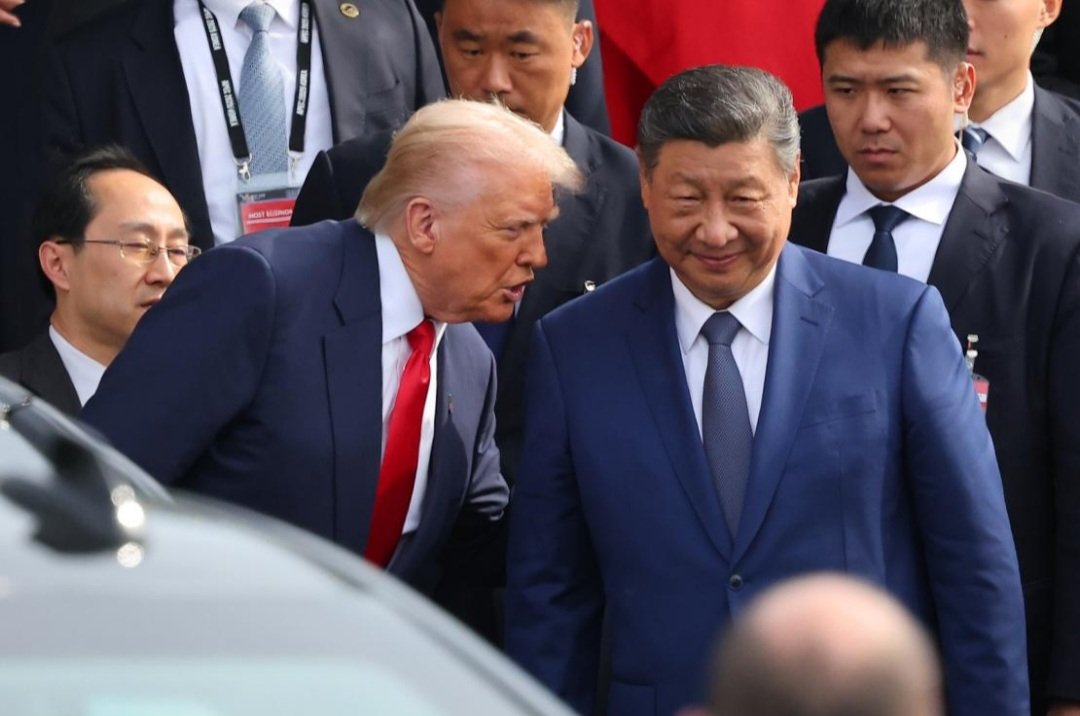
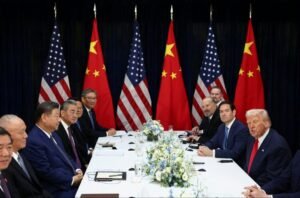
US President Donald Trump and Chinese President Xi Jinping are meeting at the White House on Thursday as Washington and Beijing seek to stabilise relations between the world’s two largest economies, with an early development coming in the form of an extension of their existing trade truce until January 10, 2027.
The extension was announced by US Treasury Secretary Scott Bessent after talks with Chinese Vice Premier He Lifeng ahead of Xi’s visit. The agreement, known as the Busan Agreement, had been due to expire on November 10. The additional two months are intended to give both sides more time to work on economic and trade issues.
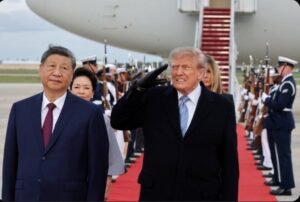
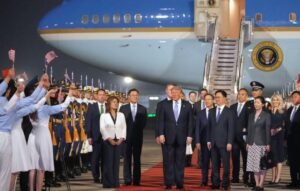
Xi arrived in Washington on Wednesday for a three-day state visit and received an unusually high-profile welcome from Trump at Joint Base Andrews. The personal reception marked a significant diplomatic gesture as the Chinese leader began his first visit to Washington in more than a decade.
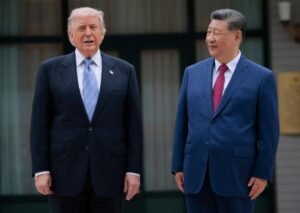
The two leaders are expected to discuss trade and tariffs, but the agenda extends beyond economics. Artificial intelligence, critical minerals, technology restrictions, Taiwan and the wider geopolitical situation, including the conflict involving Iran, are also expected to feature in the talks.
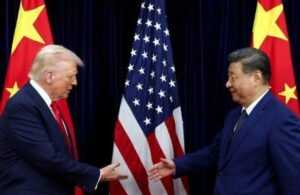
The trade truce represents a temporary pause in a confrontation that saw the two countries impose sweeping tariffs on each other. Its extension removes the immediate prospect of another escalation in November, while leaving the deeper disagreements between Washington and Beijing unresolved.
Bessent said the extension would provide additional time to assess opportunities in the economic relationship. He also said China had made progress on some commitments to purchase American agricultural products, although he indicated that Beijing was behind schedule on some other commitments.
Agriculture remains an important part of the negotiations. According to S&P Global, China has committed to purchasing 25 million tonnes of US soybeans annually from 2026 through 2028, while Washington is also seeking progress on other agricultural purchases and investment commitments.
Technology is another major area of contention. Washington has sought to maintain restrictions on the transfer of sensitive advanced technologies to China, while Beijing has objected to measures it considers attempts to constrain its technological development. Both countries are also competing for leadership in artificial intelligence and strategic industries.
Critical minerals and rare earth supplies are expected to be another significant issue. China has substantial influence over global rare-earth supply chains, giving Beijing an important economic lever in negotiations with Washington. The United States, meanwhile, has been working to reduce its dependence on Chinese-controlled supply chains for strategic materials.
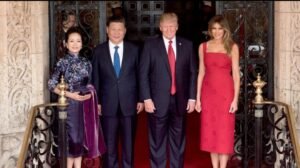
The meeting is the second encounter between Trump and Xi this year and comes after their May summit in Beijing. It is also Xi’s first state visit to Washington in more than 10 years.
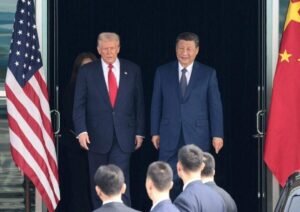
Despite the high-profile ceremony surrounding the visit, analysts cited by Reuters said expectations for a sweeping breakthrough remain limited. Instead, the immediate focus is on preserving the fragile trade détente while both governments attempt to address a much wider set of economic and strategic disputes.
Xi has called for China and the United States to be “partners, not rivals,” signalling Beijing’s interest in maintaining a more stable relationship with Washington. The Trump administration, however, continues to face difficult questions over trade, technology, Taiwan and China’s broader geopolitical relationships.
The January 10 extension therefore gives the two governments additional negotiating time, but it does not amount to a permanent settlement of their trade dispute. The outcome of the Trump-Xi discussions could determine whether the temporary pause develops into a broader economic agreement or merely postpones another confrontation.