Human angle
UN Report Says 113 Million Nigerians Deprived of Health, Education and Living Standards as Poverty Gains Reversed

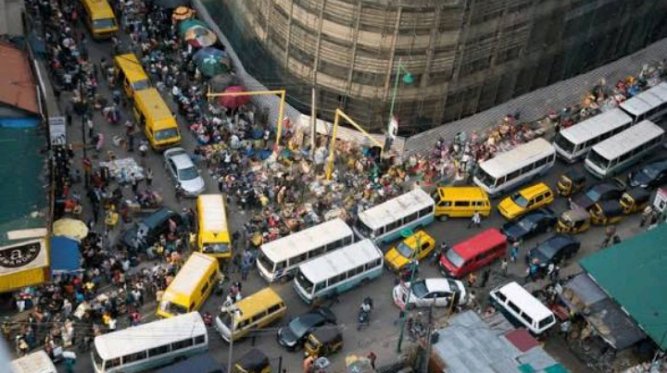
About 113 million Nigerians, representing 48.7 per cent of the country’s population, are deprived of health, education and basic living standards, according to a new United Nations report released on Monday.
The findings are contained in the 2026 Global Multidimensional Poverty Index published by the United Nations Development Programme and the Oxford Poverty and Human Development Initiative.
The report measures overlapping disadvantages in daily life rather than income alone, covering indicators such as nutrition, child mortality, years of schooling, cooking fuel, sanitation, drinking water, electricity and housing.
According to the report, the average poor Nigerian lacks 55 per cent of the weighted indicators used to assess health, education and living standards, while 28.7 per cent of the population is classified as severely poor.
The report noted that Nigeria’s earlier progress in reducing poverty has been reversed. Using comparable estimates, the share of the population living in multidimensional poverty fell from 42.3 per cent in 2013 to 33.0 per cent in 2021, before rising to 38.7 per cent in 2024.
“Like for like, the share poor fell from 42.3% in 2013 to 33.0% in 2021, then rose to 38.7% in 2024. That is nearly 18 million more poor people: three-quarters from a higher rate, one quarter from population growth,” the report stated.
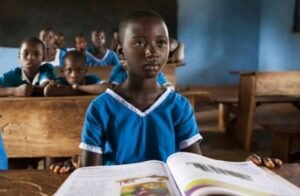
Nigeria recorded the largest increase in the number of people living in multidimensional poverty among five countries that experienced a rise, alongside Afghanistan, the Central African Republic, Guinea and Kyrgyzstan.
The report revealed sharp geographic disparities. About 68.9 per cent of rural Nigerians are multidimensionally poor, compared with 24.8 per cent in urban areas. Severe poverty is five times higher in villages, affecting 45.1 per cent of rural residents against 9.3 per cent in towns.
“It is heaviest in the North West and North East,” the report noted, highlighting the concentration of deprivation in northern Nigeria.
Clean cooking fuel and electricity emerged as the biggest poverty gaps. The report found that 47.4 per cent of Nigerians are poor and lack clean cooking fuel, while 37.6 per cent are poor and lack electricity.
“These are gaps that policy knows how to close,” the UN stated.
Globally, the report estimated that 1.2 billion people across 108 developing countries live in acute multidimensional poverty, marking the first increase since the index was introduced in 2010. The figure represents 51.5 million more people than the previous update.
UNDP Administrator Alexander De Croo described the global increase as a wake-up call.
“Behind these figures are 1.2 billion people facing hardships that reinforce one another: hunger, missed schooling and a lack of clean water or electricity. This is unacceptable,” De Croo said.
More than half of those in acute poverty worldwide were children, according to the report.
The UNDP noted that population growth accounted for part of the increase, and new survey data was available for only 13 of the 108 countries covered.
Despite the overall rise, the report highlighted that 33 countries had halved their multidimensional poverty rates in fewer than 15 years, including six in sub-Saharan Africa.