
Health
US Loses Measles Elimination Status After 26 Years

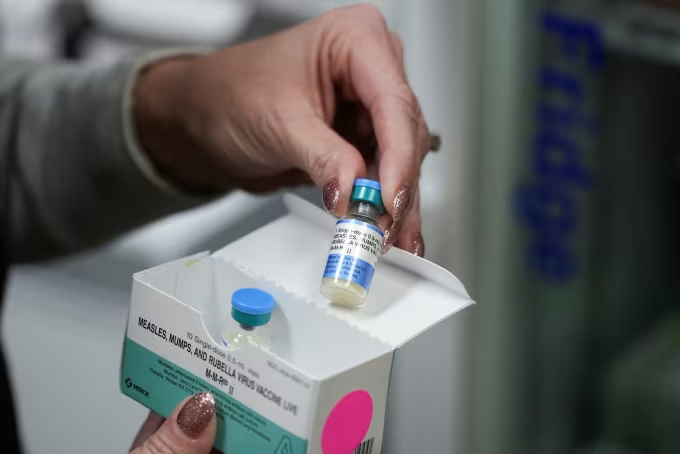
The United States has lost its measles elimination status after 26 years, following the continued spread of the highly contagious disease across the country.
The Pan American Health Organization (PAHO), the World Health Organization’s regional body for the Americas, reached the decision after determining that measles transmission had continued uninterrupted for at least 12 months, according to researchers and individuals familiar with the review.
The development ends a public health achievement declared in 2000, when the US was recognised as having eliminated the continuous spread of measles within its borders.
The decision comes amid a sharp increase in infections. According to the US Centers for Disease Control and Prevention (CDC), 5,412 confirmed measles cases had been recorded across the country as of November 12, 2026. This is more than twice the 2,289 cases reported throughout 2025.
The CDC also reported that 591 people had been hospitalised this year, while 96 per cent of confirmed cases involved people who were either unvaccinated or whose vaccination status was unknown.
Measles elimination does not mean that a country has no cases of the disease. Rather, it means that there is no continuous local transmission for at least 12 months. Countries can still record cases brought in by international travellers without automatically losing their elimination status, provided those infections do not lead to sustained local transmission.
Health experts have linked the resurgence in the US to declining vaccination rates and increasing vaccine hesitancy, which have left some communities vulnerable to outbreaks.
The measles, mumps and rubella (MMR) vaccine remains the most effective protection against the disease. Two doses are approximately 97 per cent effective against measles, while health authorities recommend vaccination coverage of at least 95 per cent to prevent sustained community transmission.
The CDC’s figures show that vaccination gaps remain a major concern, with almost all reported infections this year occurring among people who were not vaccinated or whose vaccination status was unknown.
Measles can cause serious complications, including pneumonia and inflammation of the brain. Young children, pregnant women and people with weakened immune systems are particularly vulnerable to severe illness.
Although the loss of elimination status does not mean that vaccination programmes or outbreak-control measures have stopped, health experts say it represents a significant setback for the country’s public health system.
The Pan American Health Organization is expected to make a public announcement on the decision on November 17. The United States will need to interrupt sustained local transmission and meet the required monitoring conditions to regain its elimination status.