General News
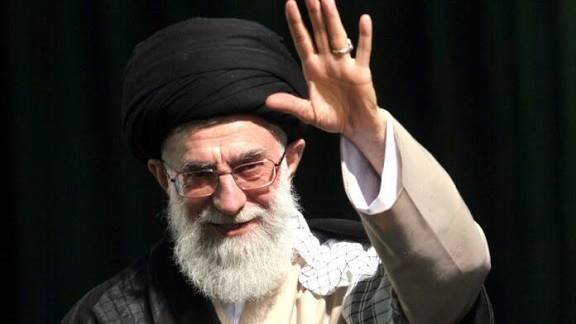
Iran’s Supreme Leader Killed in U.S.-Israeli Strike as Middle East Crisis Escalates …Tehran declares 40 days of mourning; retaliatory attacks hit Israel and Arab states
Ayatollah Ali Khamenei, Iran’s Supreme Leader since 1989, has been killed in a joint United States-Israeli military strike on Tehran, triggering one of the most volatile crises in the Middle East in decades.
The death of the 86-year-old cleric was announced Saturday by Donald Trump, who described the operation as part of a broader campaign to “restore peace and stability” to the region. Iranian state television later confirmed Khamenei’s death and declared 40 days of national mourning.
Israeli security officials said Khamenei was killed in an airstrike targeting his residential and administrative compound in Tehran. The coordinated assault reportedly involved precision-guided munitions aimed at high-ranking members of Iran’s political and military leadership.
Retaliatory Strikes Across the Region
Within hours of the announcement, Iran launched retaliatory missile and drone strikes against Israeli military installations and what it described as “hostile assets” in neighboring Arab states believed to have supported the operation. Air raid sirens were activated in parts of Tel Aviv and Jerusalem, while unconfirmed reports indicated explosions near strategic sites in the Gulf.
The Israeli government confirmed that its missile defense systems intercepted several incoming projectiles but acknowledged that some strikes caused infrastructure damage. Casualty figures were still being assessed at the time of filing this report.
Regional governments, including those in the Gulf, placed their armed forces on high alert amid fears of a wider conflict. Oil markets reacted sharply, with crude prices spiking amid concerns over supply disruptions through the Strait of Hormuz — a vital global energy corridor.
Trump Signals Continued Military Action
In a post on Truth Social, President Trump said the military campaign would continue “uninterrupted throughout the week or as long as necessary to achieve our objective of peace throughout the Middle East and, indeed, the world.”
Sources familiar with the decision-making process said the strike followed weeks of diplomatic and security consultations between Washington, Israel and key Gulf allies. The operation reportedly aimed at weakening Iran’s command structure and curbing its regional influence.
The White House has yet to release full operational details, but senior U.S. officials described the strike as “targeted” and “strategic,” emphasizing that it was not directed at the Iranian population.
Leadership Vacuum in Tehran
Khamenei’s death creates a profound leadership vacuum in Iran. As Supreme Leader, he wielded ultimate authority over the armed forces, judiciary and major state institutions. Under Iran’s constitution, the Assembly of Experts is tasked with selecting a successor, but the process could prove contentious amid heightened tensions and internal political divisions.
The late leader had shaped Iran’s foreign and domestic policies for more than three decades, overseeing its nuclear program expansion, confrontations with Western powers, and support for allied groups across the Middle East.
Global Reaction
World leaders called for restraint to prevent a broader regional war. The United Nations Secretary-General urged all parties to “immediately de-escalate and return to diplomacy,” warning that further escalation could have “catastrophic consequences.”
Analysts say the killing of Iran’s supreme leader marks an unprecedented moment in modern Middle Eastern geopolitics, raising concerns of sustained military confrontation, proxy conflicts and global economic instability.
As tensions mount, the region braces for what could be a defining chapter in its modern history.
General News
Gunman Wearing Iranian-Themed Clothing Kills Two in Austin Nightlife District
Two people were killed, and 14 others were injured in a mass shooting outside a popular Texas bar early Sunday morning, in what authorities are investigating as a possible act of terrorism.
According to a law enforcement official who spoke to The Associated Press, the suspected gunman was wearing clothing bearing an Iranian flag design and the words “Property of Allah.” The attack occurred just a day after the United States and Israel launched military strikes on Iran, prompting the Federal Bureau of Investigation to open a terrorism investigation.
Police in Austin shot and killed the suspect at the scene. Authorities confirmed that he used both a pistol and a rifle during the attack.
The shooting unfolded shortly before 2 a.m. outside Buford’s Backyard Beer Garden, located along the city’s busy Sixth Street entertainment district; a nightlife hub packed with bars and live music venues just a few miles from the University of Texas at Austin.
Witnesses described a chaotic scene. Nathan Comeaux, a 22-year-old senior who had been at the bar with friends, said the venue was filled with college students.
“It was shoulder to shoulder, hundreds of people just out enjoying their night,” he said.
Austin Police Chief Lisa Davis stated that the suspect drove past the bar multiple times before stopping and opening fire from the window of his SUV, targeting people gathered on the patio and outside the establishment.
Investigations are ongoing as authorities work to determine the motive behind the deadly attack.
General News
Wike Receives Senator Mpigi’s Remains at Abuja Airport
The Minister of the Federal Capital Territory (FCT), Nyesom Wike, on Monday morning received the remains of Senator Barinada Mpigi at the Nnamdi Azikiwe International Airport, Abuja.
Senator Mpigi, who represented Rivers South-East Senatorial District, was brought into the country in the early hours of the day. Wike arrived at the airport around 5:30 a.m., alongside other dignitaries, to pay his last respects.
He also received the late senator’s wife, Patricia Obiageri Mpigi, and their children.
Among those who accompanied the FCT Minister were Chairman of the Peoples Democratic Party (PDP) Board of Trustees, Senator Mao Ohuabunwa; Senators Philip Aduda, Magnus Abe, Allwell Onyesoh and Olaka Nwogu; House of Representatives Minority Leader, Kingsley Chinda; Rivers State Coordinator of the Renewed Hope Ambassadors, Ambassador Desmond Akawor; and the APC National Vice Chairman (South-South), Victor Giadom, among others.
Senator Mpigi died in London on Thursday, February 19, 2026, at the age of 64.
Wike had earlier visited the senator’s family in London last Thursday to commiserate with them and facilitate arrangements for the repatriation of his remains to Nigeria.
General News
‘We Remain Accountable to God’ – First Lady at NASS Chapel Commissioning

Nigeria’s First Lady, Oluremi Tinubu, has commissioned the National Assembly Christian Chapel, urging lawmakers to remain accountable to God while carrying out their legislative duties.
Speaking at the ceremony in Abuja on Sunday, the First Lady said the chapel serves as a reminder that although members of the National Assembly legislate for the people, they ultimately remain accountable to God.

“As we dedicate this Chapel today, may it inspire humility in leadership, courage in decision-making and compassion in service,” she said. “I believe the National Assembly is ready to pray Nigeria into greatness.”
The event was attended by prominent dignitaries, including former Head of State, Yakubu Gowon, and former Speaker of the House of Representatives, Yakubu Dogara, who initiated the chapel project during the 8th Assembly.
In his remarks, Gowon urged legislators to ensure that all their actions serve the best interests of the nation. He emphasized that the law of God is rooted in love for God and love for one’s neighbour.
“Love must be used to ensure the unity and continuity of this nation,” he said. “God loves us all, and we must love one another.”
Dogara described the chapel as a place for genuine repentance, national healing, and unity. He noted that national development and progress are tied to repentance and spiritual reflection.
“Let it be a centre for unity and let it be about Jesus. The only thing that can keep us here is unity,” he stated.
President of the Senate, Godswill Akpabio, said President Bola Ahmed Tinubu continues to receive support because of the quality of his leadership and reform agenda. He urged Nigerians to look beyond religious differences and focus on leadership competence.
“While men legislate for a season, God legislates for eternity,” Akpabio said. “Lawmaking must be guided in conscience, anchored in righteousness and established through prayers.”
Prayers were offered for the nation, the president, government officials, and members of the National Assembly. The commissioning ceremony was attended by serving and former lawmakers, as well as Christian and non-Christian members of the Assembly.