
General News
Iran’s Supreme Leader Killed in U.S.-Israeli Strike as Middle East Crisis Escalates …Tehran declares 40 days of mourning; retaliatory attacks hit Israel and Arab states

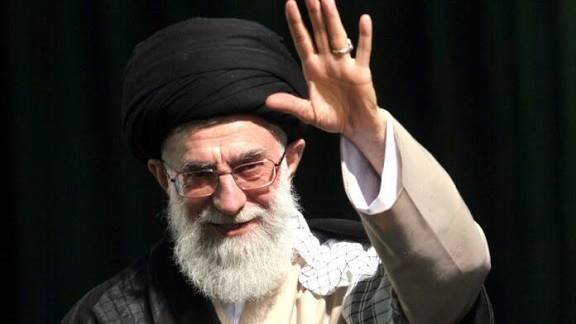
Ayatollah Ali Khamenei, Iran’s Supreme Leader since 1989, has been killed in a joint United States-Israeli military strike on Tehran, triggering one of the most volatile crises in the Middle East in decades.
The death of the 86-year-old cleric was announced Saturday by Donald Trump, who described the operation as part of a broader campaign to “restore peace and stability” to the region. Iranian state television later confirmed Khamenei’s death and declared 40 days of national mourning.
Israeli security officials said Khamenei was killed in an airstrike targeting his residential and administrative compound in Tehran. The coordinated assault reportedly involved precision-guided munitions aimed at high-ranking members of Iran’s political and military leadership.
Retaliatory Strikes Across the Region
Within hours of the announcement, Iran launched retaliatory missile and drone strikes against Israeli military installations and what it described as “hostile assets” in neighboring Arab states believed to have supported the operation. Air raid sirens were activated in parts of Tel Aviv and Jerusalem, while unconfirmed reports indicated explosions near strategic sites in the Gulf.
The Israeli government confirmed that its missile defense systems intercepted several incoming projectiles but acknowledged that some strikes caused infrastructure damage. Casualty figures were still being assessed at the time of filing this report.
Regional governments, including those in the Gulf, placed their armed forces on high alert amid fears of a wider conflict. Oil markets reacted sharply, with crude prices spiking amid concerns over supply disruptions through the Strait of Hormuz — a vital global energy corridor.
Trump Signals Continued Military Action
In a post on Truth Social, President Trump said the military campaign would continue “uninterrupted throughout the week or as long as necessary to achieve our objective of peace throughout the Middle East and, indeed, the world.”
Sources familiar with the decision-making process said the strike followed weeks of diplomatic and security consultations between Washington, Israel and key Gulf allies. The operation reportedly aimed at weakening Iran’s command structure and curbing its regional influence.
The White House has yet to release full operational details, but senior U.S. officials described the strike as “targeted” and “strategic,” emphasizing that it was not directed at the Iranian population.
Leadership Vacuum in Tehran
Khamenei’s death creates a profound leadership vacuum in Iran. As Supreme Leader, he wielded ultimate authority over the armed forces, judiciary and major state institutions. Under Iran’s constitution, the Assembly of Experts is tasked with selecting a successor, but the process could prove contentious amid heightened tensions and internal political divisions.
The late leader had shaped Iran’s foreign and domestic policies for more than three decades, overseeing its nuclear program expansion, confrontations with Western powers, and support for allied groups across the Middle East.
Global Reaction
World leaders called for restraint to prevent a broader regional war. The United Nations Secretary-General urged all parties to “immediately de-escalate and return to diplomacy,” warning that further escalation could have “catastrophic consequences.”
Analysts say the killing of Iran’s supreme leader marks an unprecedented moment in modern Middle Eastern geopolitics, raising concerns of sustained military confrontation, proxy conflicts and global economic instability.
As tensions mount, the region braces for what could be a defining chapter in its modern history.