
Health
Third Orphanage Death Deepens Congo Ebola Tragedy as 6-Month-Old Is Laid to Rest

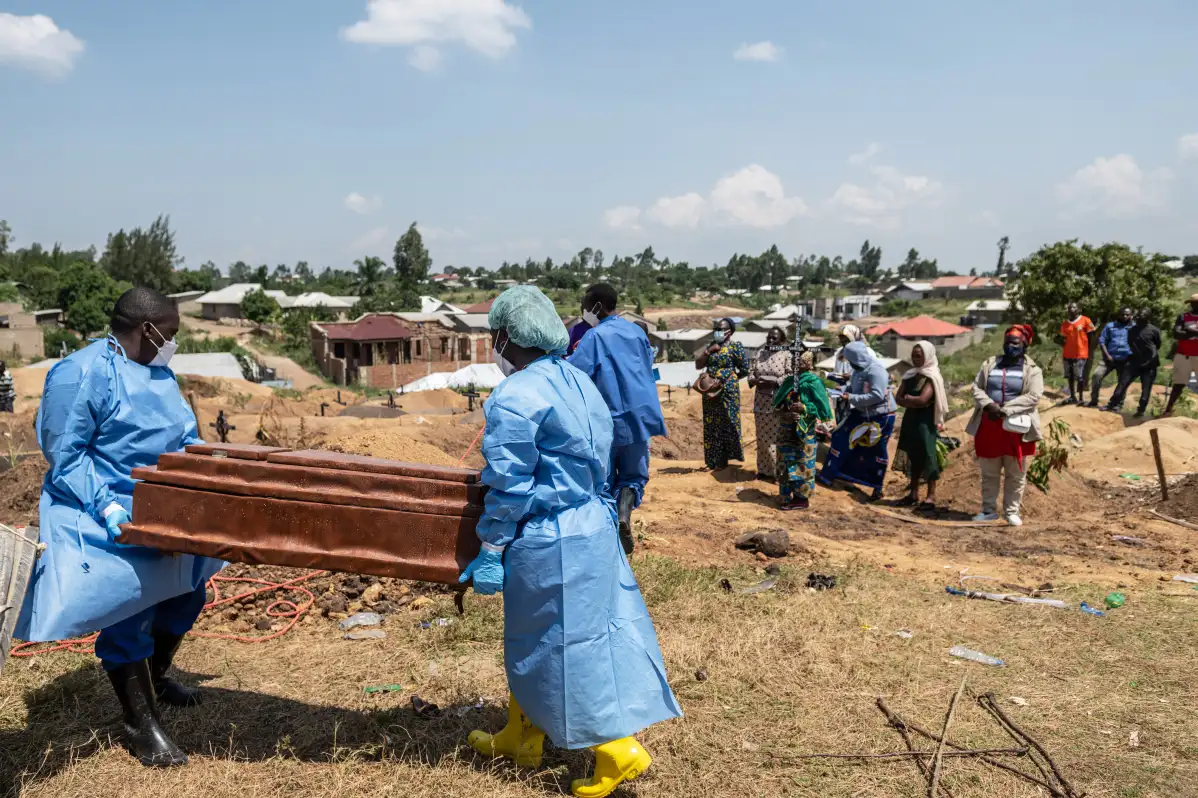
A six-month-old girl who died from Ebola has been buried in eastern Democratic Republic of Congo, becoming the third child from a church-run orphanage in Bunia to succumb to the virus as the country’s rapidly growing outbreak continues to spread. The funeral, conducted under strict public health measures, highlighted both the human tragedy and the mounting challenges facing health authorities.
The infant, identified as Vanisa Anifa, was laid to rest by health workers wearing full protective equipment while relatives and mourners observed from a distance. The safety protocols, designed to prevent further transmission of the virus, have transformed traditional funeral practices across affected communities.
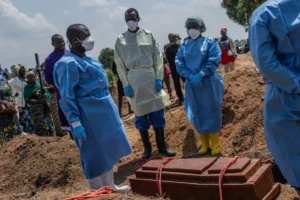
The death marks the third Ebola-related fatality among children living at the orphanage in Bunia, the capital of Ituri Province, which remains the epicentre of the outbreak. Earlier this month, two other infants from the same facility died after contracting the virus, while caregivers and a nun who looked after the children also tested positive.
Health officials say the outbreak is being driven by the rare Bundibugyo strain of Ebola, for which there is currently no approved vaccine or specific treatment. The strain has complicated response efforts and contributed to growing concerns among international health agencies.
According to health authorities, the outbreak has now spread beyond Ituri into the neighboring provinces of North Kivu and South Kivu, while cases have also been recorded across the border in Uganda. The World Health Organization and aid groups have warned that the true scale of the epidemic may be larger than official figures suggest because of delayed testing, community resistance, and limited surveillance in conflict-affected areas.
The latest figures indicate hundreds of confirmed infections and more than 200 deaths, making the current outbreak one of the deadliest in the country’s history. Health workers have struggled to contain transmission amid shortages of protective equipment, insecurity caused by armed conflict, and widespread mistrust of authorities.
Aid organizations have expressed particular concern about children, who account for a significant proportion of confirmed infections. Many young victims come from vulnerable backgrounds, including orphanages and displacement camps, where overcrowding and poor sanitation increase the risk of disease transmission.
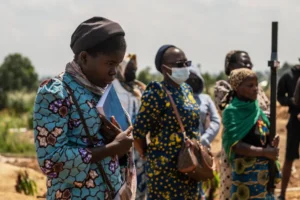
As mourners paid their final respects to the infant, health officials renewed calls for communities to cooperate with testing, contact tracing, and safe burial procedures. They warned that without stronger public support and additional resources, the outbreak could continue to spread across the region in the coming weeks.