
Health
Plateau Moves to Tackle Sickle Cell Burden with Registry, Expanded Health Insurance Coverage


The Plateau State Government has unveiled a comprehensive strategy to improve care for people living with sickle cell disease, including plans to establish a state-wide sickle cell registry and expand health insurance coverage for affected patients.

The initiative, announced during activities marking the 2026 World Sickle Cell Day in Jos, is aimed at addressing gaps in diagnosis, treatment and long-term care while reducing preventable deaths associated with the genetic disorder.
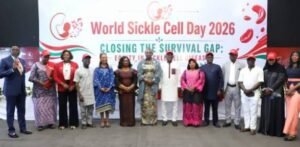
Commissioner for Health, Dr. Nicholas Baamlong, said the state government is adopting a more coordinated approach to sickle cell management as concerns grow over the disease’s impact on families and the healthcare system.
Speaking at a press briefing themed “Closing the Survival Gap: Equity in Sickle Cell Care,” Baamlong disclosed that the proposed State Sickle Cell Registry would be managed under the Ministry of Health’s Non-Communicable Disease Desk to provide reliable data for planning and policy formulation.

“We acknowledge the need for updated data to guide today’s response. The registry will strengthen planning, surveillance and evidence-based decision-making,” he said.
Nigeria’s Heavy Sickle Cell Burden
The commissioner noted that Nigeria remains one of the countries most affected by sickle cell disease globally, with an estimated 150,000 babies born annually with the condition and millions more carrying the sickle cell trait.
He revealed that historical records from the Plateau State Specialist Hospital showed that sickle cell prevalence among paediatric patients rose from 25.8 to 28.1 per 1,000 between 2012 and 2014, underscoring the need for sustained intervention.
Although case fatality rates declined during the same period, Baamlong said many patients continue to face severe health challenges, including recurrent pain crises, chronic anaemia, stroke risks, organ damage, repeated hospital admissions and social discrimination.

Insurance Cover to Ease Financial Burden
In a move expected to bring relief to affected families, the government announced plans to work with the Plateau State Contributory Healthcare Management Agency (PLASCHEMA) to widen insurance coverage for sickle cell patients.
The expanded package will cover pain management and other essential services, helping to reduce the financial burden that often prevents patients from accessing timely medical care.
According to the commissioner, the initiative is part of Governor Caleb Mutfwang’s efforts to end fragmented healthcare interventions and establish a unified framework for sickle cell care across the state.
Tackling Pain Management Challenges
Baamlong also expressed concern over reports of opioid misuse among some individuals living with sickle cell disease, attributing the problem largely to inadequate pain management and poor access to appropriate healthcare services.
Rather than adopting punitive measures, he said the government would focus on strengthening compassionate and evidence-based pain management practices, improving access to essential medicines and expanding counselling services.
“In most cases, this reflects gaps in care rather than criminal intent. Our focus is to ensure patients receive the support and treatment they need,” he stated.
New Measures Planned
As part of its long-term strategy, the state government plans to integrate newborn and early infant screening into routine maternal and child healthcare services, expand genotype testing and premarital counselling, strengthen specialist clinics and referral systems, and improve access to vaccines, malaria prevention, safe blood transfusion services and standardised treatment protocols.
Healthcare workers across the state will also receive additional training to enhance the quality of care provided to patients.
To commemorate World Sickle Cell Day, awareness campaigns are being conducted across Plateau’s 17 local government areas, while a road walk and stakeholders’ symposium are scheduled in Jos to encourage residents to know their genotype and seek appropriate medical guidance.
Baamlong called on residents to embrace genotype testing, seek genetic counselling before marriage, support voluntary blood donation and reject stigma against persons living with sickle cell disease.
“Every life matters. Every diagnosis matters. Every intervention matters. Plateau State remains committed to closing the survival gap and ensuring that sickle cell disease is no longer a barrier to living a full and dignified life,” he said.