
World News
FBI-Assisted Arrest in Montenegro Targets Alleged Hacker Linked to $3.4 Billion Cyber Campaign


Montenegrin authorities, working alongside the U.S. Federal Bureau of Investigation (FBI), have arrested an Iranian national wanted by the United States on allegations of carrying out a years-long hacking campaign that reportedly caused billions of dollars in damage to American institutions and infrastructure.
According to Montenegrin police, the suspect is a 39-year-old man who holds both Iranian and Turkish citizenship. He was arrested in the Adriatic coastal town of Kotor after a request from U.S. authorities and the FBI. The arrest is being viewed as a significant victory for international law enforcement cooperation against cybercrime.

U.S. prosecutors in New York are seeking the suspect on charges that include conspiracy to commit computer fraud, hacking, and identity theft. Authorities allege that from 2013 onward, he orchestrated extensive cyberattacks targeting more than 150 universities across the United States. Investigators estimate the resulting damage exceeded $3.4 billion, making it one of the most significant university-focused cybercrime cases ever pursued by U.S. authorities.
Montenegrin police said the attacks enabled the theft of large quantities of academic research, intellectual property, and sensitive institutional data. Investigators allege that access to compromised university networks and stolen information was subsequently used for the benefit of Iran’s powerful military organization, the Islamic Revolutionary Guard Corps, as well as other Iranian entities and universities.

The arrest comes amid growing concern in Washington over cyber threats linked to Iran. Earlier this year, U.S. cybersecurity, intelligence, and law enforcement agencies warned of increasing Iranian cyber operations targeting critical infrastructure, government systems, and private-sector networks. Officials have repeatedly described such campaigns as a national security threat due to their potential impact on energy, communications, education, and transportation systems.
While the FBI has not publicly released detailed comments on the arrest, U.S. authorities have long accused Iranian-linked hacking groups of conducting espionage operations designed to obtain research data, technological information, and strategic intelligence. Cybersecurity experts say universities are often targeted because they house valuable scientific research while maintaining large, interconnected networks that can be vulnerable to sophisticated cyber intrusions.

The case will now move to the judicial phase in Montenegro. Officials confirmed that extradition proceedings will be handled by a High Court judge in the capital city of Podgorica. The court will determine whether the suspect will be transferred to the United States to face trial.
Legal analysts note that extradition cases involving cybercrime suspects often attract significant international attention because they highlight the increasingly global nature of digital crime. Modern cyber operations frequently involve actors, victims, servers, and evidence spread across multiple countries, requiring close cooperation between governments and law enforcement agencies.
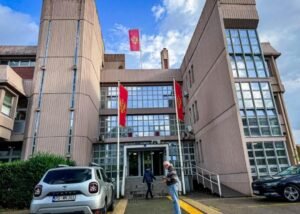
The arrest also underscores Montenegro’s growing role in international security cooperation. The Balkan nation, a member of NATO and a candidate for membership in the European Union, has increasingly collaborated with Western partners on counterterrorism, organized crime, and cybersecurity investigations.
Cybersecurity experts say the case serves as another reminder of the expanding role of cyber warfare and digital espionage in modern geopolitical rivalries. As governments invest heavily in cyber capabilities, attacks targeting universities, corporations, and critical infrastructure are becoming a central feature of international security challenges.