
World News
World’s Largest Digital Camera Begins Historic 10-Year Survey of the Universe

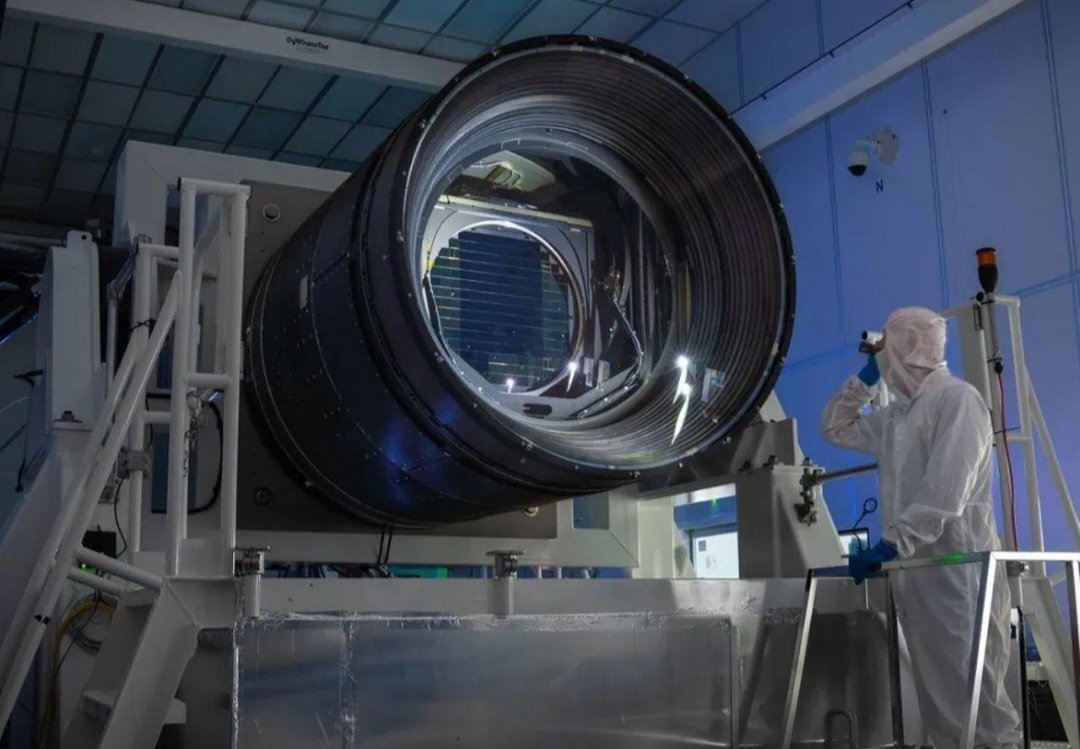
A groundbreaking new chapter in astronomy has begun as the largest digital camera ever constructed officially starts a ten-year mission to map the universe in unprecedented detail, a project scientists say could revolutionize humanity’s understanding of the cosmos.
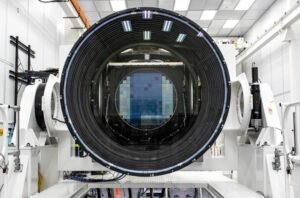
The camera, known as the LSST Camera, is installed at the Vera C. Rubin Observatory in northern Chile and is designed to carry out the observatory’s flagship project, the Legacy Survey of Space and Time (LSST). The instrument is the largest digital camera ever built for astronomy, boasting an extraordinary 3.2-gigapixel sensor capable of capturing images so detailed that hundreds of ultra-high-definition television screens would be needed to display a single photograph at full resolution.
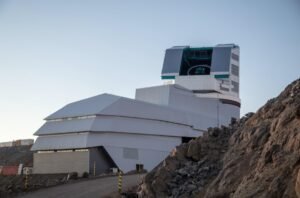
Located atop Cerro Pachón in Chile’s Atacama region, one of the world’s premier locations for astronomical observation, the Rubin Observatory will repeatedly scan the southern sky over the next decade. Scientists expect the survey to generate an unprecedented record of cosmic activity, collecting tens of billions of observations and producing petabytes of data throughout the mission.
The observatory’s primary goal is to create the most comprehensive time-lapse view of the universe ever assembled. Unlike traditional sky surveys that capture static images, the Rubin Observatory will repeatedly photograph the same regions of the sky every few nights, allowing astronomers to observe changes over time. This approach will help researchers track exploding stars, asteroids, comets, variable stars, black holes and other transient cosmic events as they occur.
Scientists believe the project could dramatically improve understanding of two of the universe’s greatest mysteries: dark matter and dark energy. Together, these poorly understood phenomena are believed to make up approximately 95 percent of the universe, yet their nature remains largely unknown. By mapping billions of galaxies and studying how cosmic structures evolve over time, researchers hope to gather crucial clues about these invisible components of the cosmos.
The camera itself represents a remarkable engineering achievement. Roughly the size of a small automobile and weighing several tons, it was developed through a collaboration involving the U.S. Department of Energy, the National Science Foundation and international research institutions. The instrument’s immense sensor array contains 189 individual imaging detectors working together to produce some of the most detailed astronomical photographs ever captured.
In addition to studying distant galaxies, the survey is expected to play a vital role in planetary defense. By repeatedly scanning the sky, astronomers anticipate discovering millions of previously unknown asteroids and thousands of near-Earth objects. This capability could improve efforts to identify potentially hazardous objects whose orbits may one day bring them close to Earth.
Researchers also expect the observatory to uncover entirely new classes of astronomical phenomena. Because the Rubin Observatory will monitor the sky more frequently and comprehensively than any previous project of its kind, scientists believe it may reveal events and objects that have never before been observed.
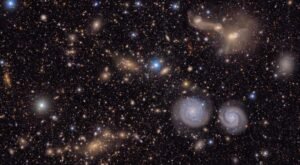
The mission’s first test images have already generated excitement within the scientific community, showcasing vast fields of stars, galaxies and cosmic structures with extraordinary clarity. Astronomers say the observatory’s unique combination of sensitivity, speed and wide field of view will enable discoveries that would have been impossible with earlier generations of telescopes.
Data collected during the survey will be shared with researchers around the world, creating one of the largest scientific databases ever assembled. Scientists expect the information gathered over the next ten years to support thousands of research projects and potentially reshape modern astronomy.
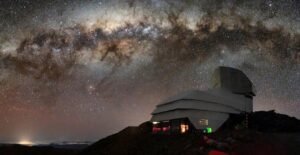
As the survey begins, researchers are describing the project as one of the most ambitious scientific endeavors of the 21st century. With its giant camera now fully operational, the Vera C. Rubin Observatory is poised to deliver an unprecedented cinematic record of the changing universe and help answer some of the deepest questions about the nature of space, time and existence itself.