
World News
Xi Calls for Greater Global Cooperation on AI, Criticizes US Restrictions on Technology Sharing

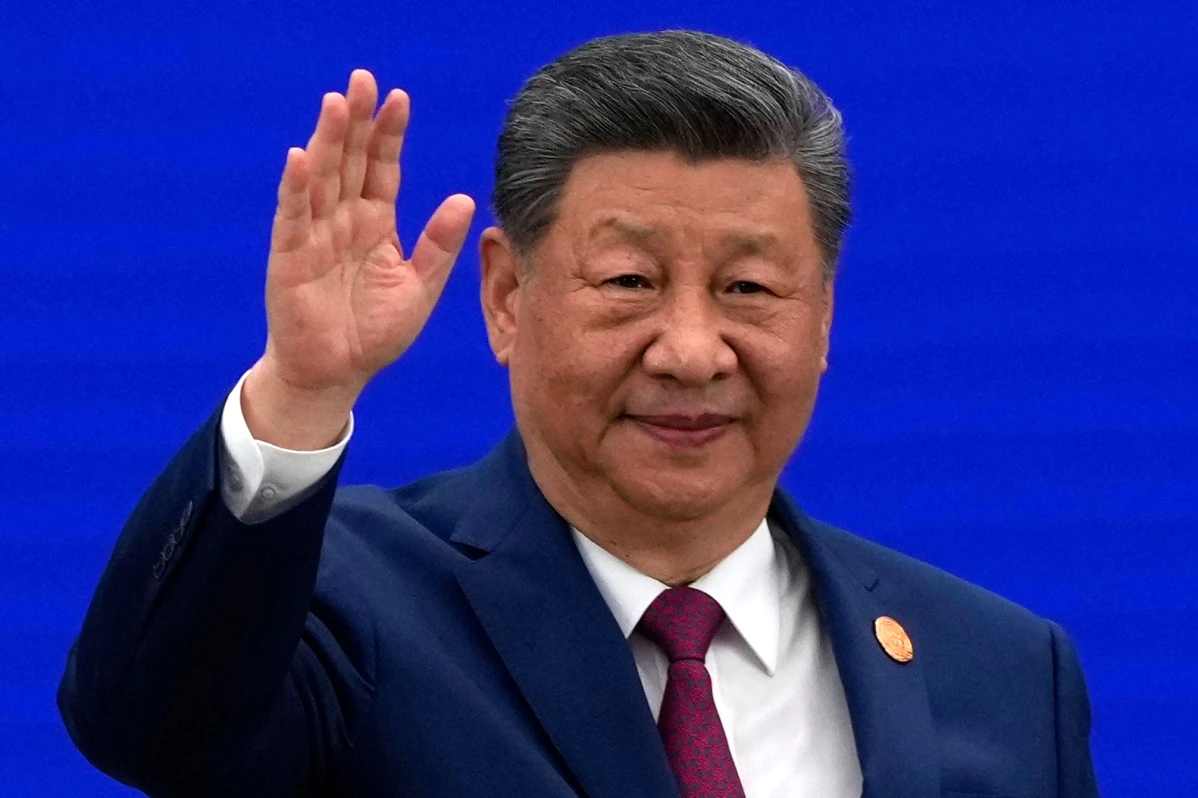
Chinese President Xi Jinping has called for stronger international cooperation in the development and governance of artificial intelligence (AI), warning against allowing a single country to dominate the rapidly evolving technology while criticizing U.S. restrictions on advanced technology exports to China.
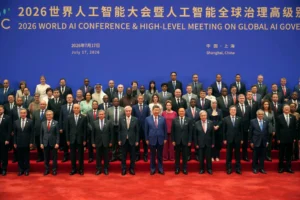
Speaking at the opening ceremony of the 2026 World Artificial Intelligence Conference (WAIC) in Shanghai, Xi said AI should become “a symphony of global cooperation” rather than the exclusive preserve of any one nation. Without naming the United States directly, he criticized what he described as the “overstretching” of national security concerns to justify restrictions on technology sharing and exports.
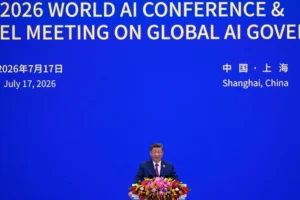
Xi argued that artificial intelligence presents enormous opportunities for economic development, healthcare, education and scientific innovation, but also creates significant challenges related to ethics, security and governance. He said the international community should work together to establish fair global rules that ensure AI benefits all countries, especially developing nations.
As part of China’s broader AI strategy, Xi announced several initiatives aimed at expanding technological cooperation with developing countries. These include providing AI-powered meteorological technology to 30 countries, establishing AI cooperation centres with organizations such as ASEAN, the African Union, BRICS, the Arab League, and the Community of Latin American and Caribbean States, and offering 5,000 AI training opportunities over the next five years.
Chinese officials said these programmes are designed to reduce the global digital divide and ensure that emerging economies are not left behind as artificial intelligence transforms industries worldwide.
During the conference, China also launched the World AI Cooperation Organization (WAICO), a new international body established with the participation of 29 countries. Beijing says the organization will promote collaboration on AI development, governance and international standards, positioning it as a platform for countries seeking greater access to AI technologies.
The initiative is widely viewed as China’s response to U.S.-led efforts to shape global AI governance through partnerships focused on trusted supply chains, advanced semiconductor controls and AI security. Analysts say the competing initiatives reflect the growing technological rivalry between the world’s two largest economies.
Relations between Washington and Beijing have become increasingly strained over artificial intelligence and semiconductor technology. The United States has imposed export controls limiting China’s access to advanced AI chips and related technologies, arguing that such measures are necessary to protect national security and prevent military applications.
China, however, maintains that the restrictions amount to technological containment and unfairly hinder global innovation. Xi reiterated that scientific progress should remain open, inclusive and accessible rather than becoming a tool for geopolitical competition.
The conference also highlighted China’s recent advances in AI, including new large-language models and high-performance computing systems developed by Chinese technology firms, demonstrating Beijing’s determination to reduce dependence on foreign technology despite ongoing U.S. restrictions.
Xi acknowledged that the rapid development of AI raises difficult questions about safety, ethics and human oversight. He called for stronger international mechanisms to manage AI risks while ensuring that technological innovation continues to drive economic growth and improve people’s lives.
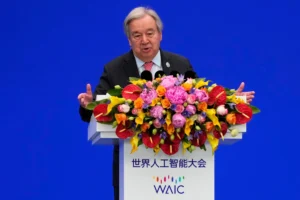
The conference, attended by world leaders, senior government officials, technology executives and UN Secretary-General António Guterres, underscored the increasing importance of AI as a central issue in global diplomacy, with China seeking to position itself as a leading voice in shaping the future of artificial intelligence.