
World News
US Expands Air Campaign Against Iran, Targets Bridges and Strategic Port Infrastructure

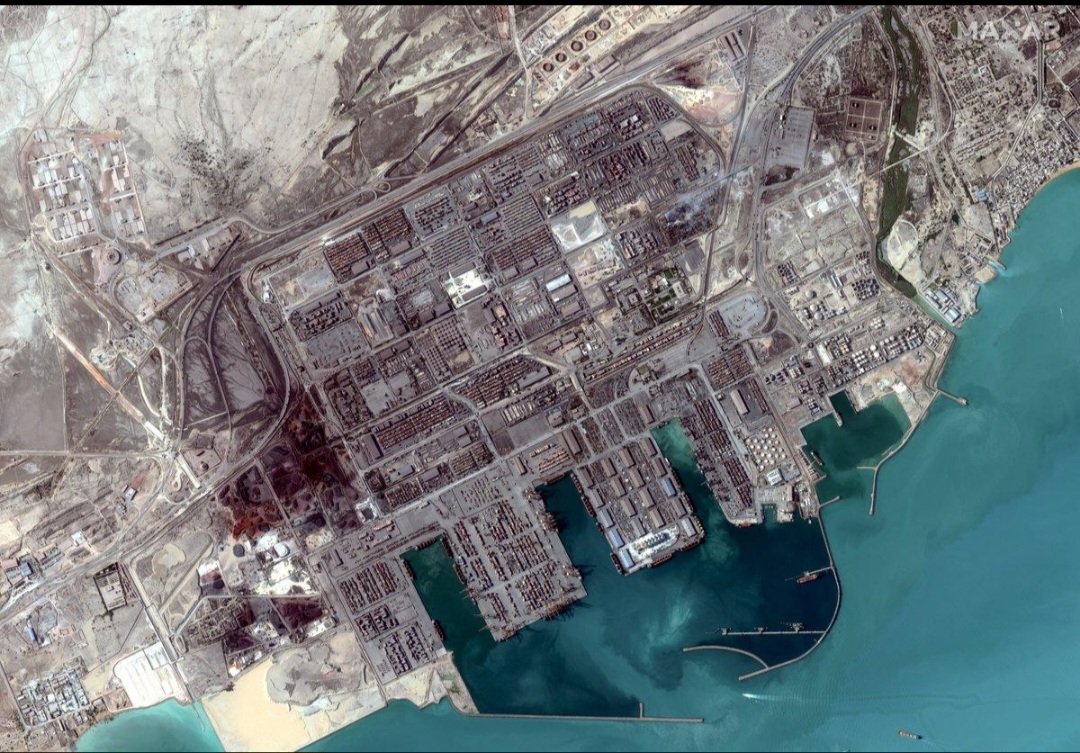
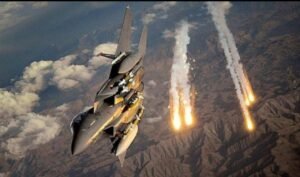
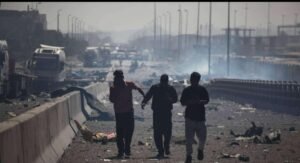
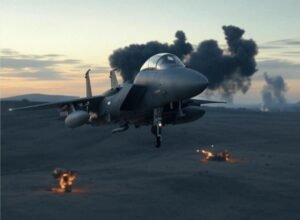
The United States has significantly intensified its military campaign against Iran, launching a new wave of airstrikes that targeted bridges and critical infrastructure, including a surveillance tower at the strategic Chabahar Port on the Gulf of Oman. The attacks mark one of the most aggressive phases of the conflict since the collapse of a temporary ceasefire between Washington and Tehran.
According to U.S. officials, the strikes are intended to weaken Iran’s transportation network and military logistics while increasing pressure on Tehran to end its restrictions on shipping through the Strait of Hormuz, one of the world’s most important energy corridors. President Donald Trump has repeatedly threatened to target Iranian infrastructure if Tehran continues disrupting maritime traffic in the strategic waterway.
One of the most notable targets was the Chabahar Port, where a maritime surveillance tower collapsed following multiple strikes. U.S. Defense Secretary Pete Hegseth shared an image showing the tower’s destruction, while Iranian state media acknowledged that the port had come under another round of attacks, although it initially did not confirm the collapse. Iranian authorities said the tower was used to monitor commercial shipping entering the port, while analysts note that the facility is also used by Iran’s Islamic Revolutionary Guard Corps (IRGC).
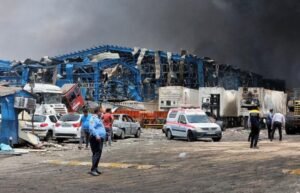
The latest operation also included strikes on bridges in southern Iran, particularly around Hormozgan Province and Bandar Abbas, with the apparent objective of disrupting military supply routes leading to key naval facilities. The attacks form part of Washington’s broader strategy to degrade Iran’s ability to project military power around the Strait of Hormuz.
Iran responded swiftly by launching fresh missile attacks against several U.S.-allied countries in the Gulf, including Qatar, Bahrain and Kuwait. Authorities in Qatar activated air defense systems and urged residents to seek shelter as missiles crossed the country’s airspace. Officials later confirmed that debris from intercepted missiles injured at least one child.
The renewed exchanges have further undermined diplomatic efforts to restore calm in the region. Qatar, which has served as a key mediator between Washington and Tehran during previous negotiations, now finds itself directly affected by the widening conflict.
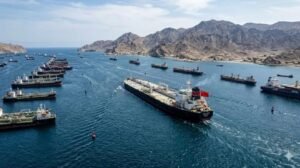
The Strait of Hormuz continues to be the central flashpoint in the conflict. Before the escalation, approximately one-fifth of the world’s traded oil and natural gas passed through the narrow waterway.
Shipping activity has fallen sharply as commercial vessels either delay voyages or alter routes because of security concerns. Maritime intelligence firms report that many ships are remaining anchored or transiting with tracking systems switched off to reduce exposure, while the United States has reinforced its naval blockade to prevent Iranian oil exports.
According to U.S. Central Command, American forces recently intercepted several commercial vessels attempting to bypass the blockade, boarding one ship to ensure compliance with the sanctions regime.
Iranian officials say the latest U.S. strikes have killed dozens of people and wounded hundreds more, although independent verification of the casualty figures remains difficult.

The growing humanitarian impact has prompted renewed international concern, with several governments urging both sides to de-escalate before the conflict spreads further across the Middle East. Analysts also warn that continued attacks on strategic infrastructure could have lasting consequences for global energy markets and international shipping.
As both nations continue exchanging military strikes, prospects for renewed diplomacy appear increasingly uncertain, raising fears that the conflict could evolve into a broader regional confrontation.