
World News
U.S. Plans Hundreds of Millions in New Global Spending to Counter China’s Influence

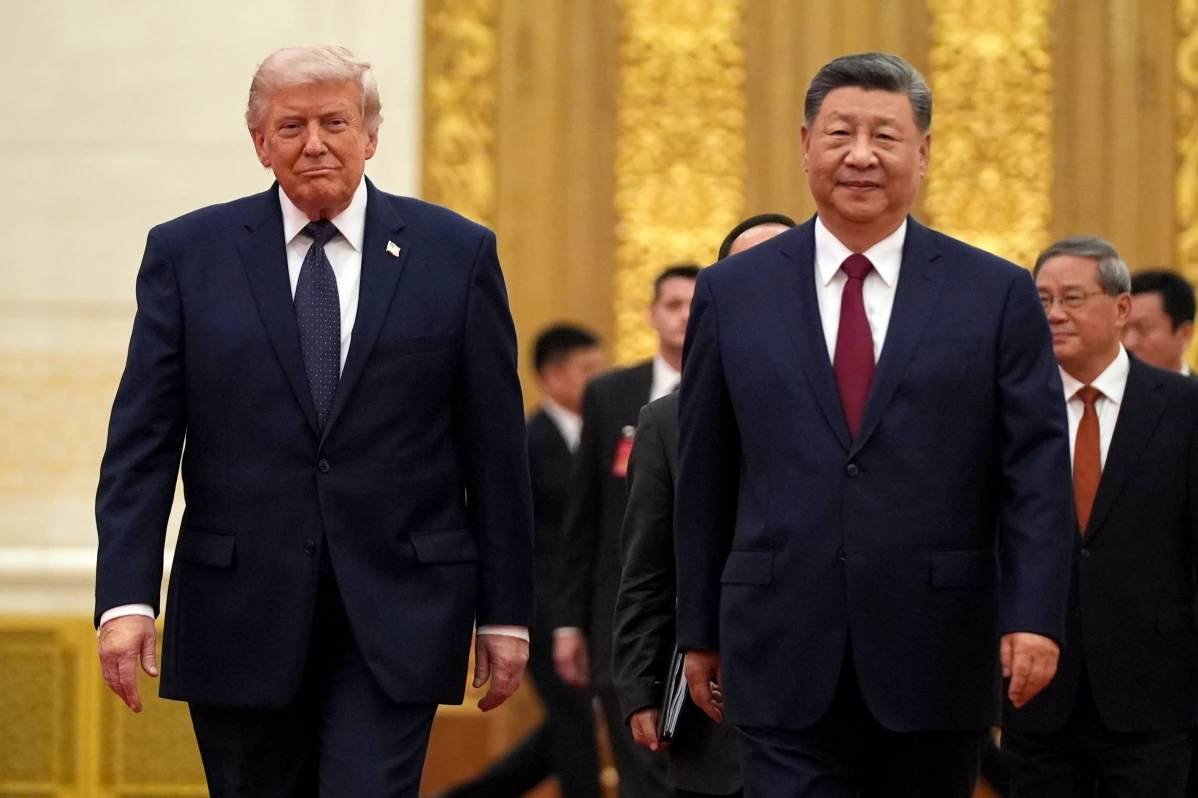
The administration of U.S. President Donald Trump is preparing a significant expansion of global spending aimed at countering China’s growing political, economic and technological influence, according to internal government documents obtained by the Associated Press. The proposal would inject hundreds of millions of dollars into projects spanning Latin America, Africa and Asia, signalling a renewed effort by Washington to compete more aggressively with Beijing despite recent diplomatic engagement between Trump and Chinese President Xi Jinping.


At the centre of the proposal is an immediate plan to allocate US$175.8 million to replace ageing undersea telecommunications cables in the Caribbean and Central America. U.S. officials argue the investment is necessary to prevent Chinese companies from expanding their role in critical communications infrastructure, which Washington says could pose national security risks. The State Department recently notified Congress of the funding request.
The cable project is only one element of a much broader strategy. Internal planning documents indicate the State Department is considering spending nearly US$500 million on dozens of programmes designed to reduce China’s influence in strategic sectors. These include cybersecurity, digital infrastructure, port security, critical minerals, telecommunications, countering Chinese surveillance technology and strengthening diplomatic partnerships in developing countries.
Several proposed initiatives would focus on countries in the Western Hemisphere, including El Salvador, Guatemala, Honduras, Nicaragua and Haiti. Other plans involve establishing regional security centres in countries such as Argentina and Belize, monitoring Chinese port and fishing activities, supporting secure communications networks and helping governments resist dependence on Chinese technology. Additional programmes would extend to Africa and Asia, where Beijing has expanded its presence through infrastructure investment and trade.

The proposals represent a notable shift after many similar programmes were suspended or significantly reduced during sweeping government spending cuts carried out last year under the Department of Government Efficiency (DOGE). Those reductions led to the dismantling of much of the U.S. Agency for International Development (USAID) and the elimination of hundreds of diplomatic positions, forcing numerous China-focused initiatives to be halted before completion. Officials now argue restoring those programmes is necessary to rebuild U.S. influence abroad.
According to the planning documents, Washington believes China has steadily increased its economic and diplomatic leverage through projects linked to the Belt and Road Initiative, investment in ports, telecommunications networks and other strategic infrastructure. A State Department official said Beijing’s investments often appear cheaper initially but can leave partner countries facing cost overruns, hidden maintenance expenses and long-term dependence on Chinese technology.
The renewed spending drive comes despite signs of improving relations between Washington and Beijing. Trump and Xi have recently projected a more cooperative tone, and Xi is expected to visit the United States later this year. Analysts say the proposed investments demonstrate that while both governments may seek diplomatic stability, strategic competition over technology, infrastructure and global influence remains a central feature of their relationship.
The funding proposals still require congressional approval, and it remains uncertain how many of the projects will ultimately receive financing. If approved, however, the initiative would mark one of the largest recent U.S. investments specifically aimed at countering China’s expanding global footprint and rebuilding American diplomatic influence after a period of significant budget reductions.