
World News
BRICS Agrees on Joint Declaration Ahead of New Delhi Summit, Sources Say

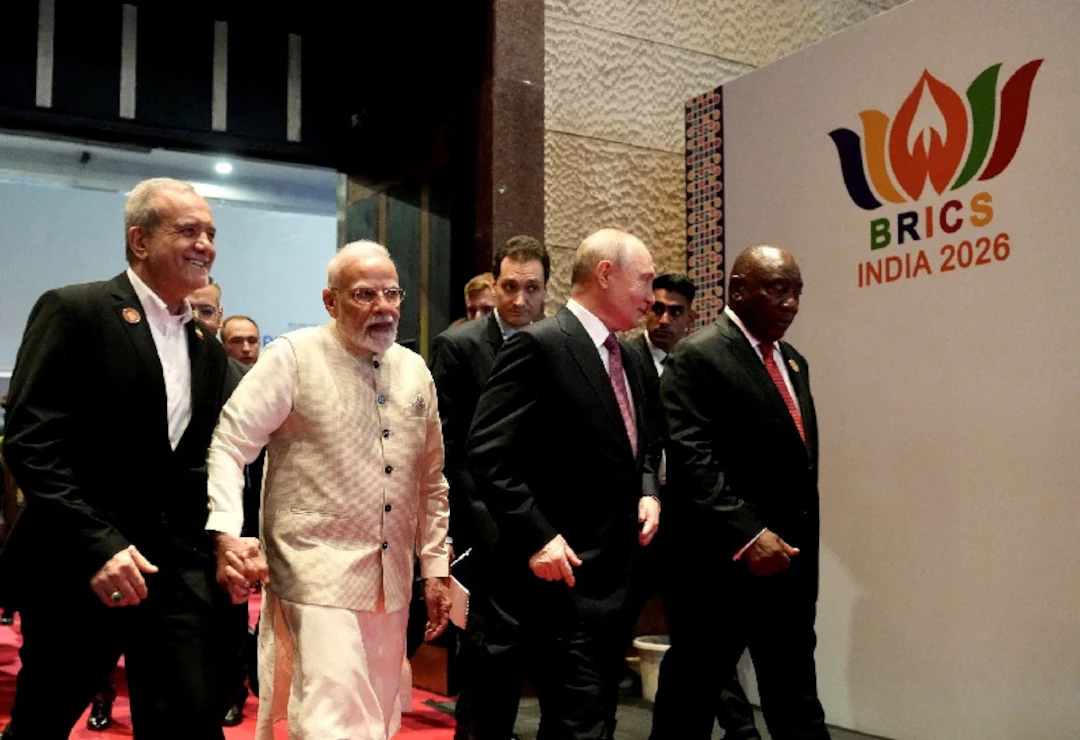
The BRICS group of emerging economies has reached agreement on a joint declaration ahead of its summit in New Delhi, in a move aimed at demonstrating unity despite deep divisions among members over the war in the Gulf and other geopolitical conflicts.
Four sources told Reuters that negotiators had reached consensus on the text before leaders began their summit on Saturday. The declaration is expected to be formally approved by the BRICS leaders during the meeting.
The agreement is significant because BRICS members have faced difficult disagreements over the conflict involving Iran and the United States and Israel. Iran and the United Arab Emirates, both members of the expanded bloc, have found themselves on opposing sides of the Gulf conflict, making consensus on a common position particularly challenging.
According to the sources, the declaration will condemn unilateral warfare, but will avoid explicitly naming any country. The wording is seen as an attempt to allow members with differing geopolitical positions to present a united front while avoiding language that could deepen divisions within the group.
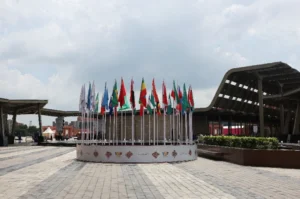
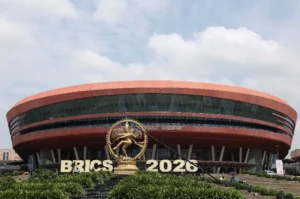
The development comes as leaders of the expanded 11-member BRICS grouping gather in New Delhi for the September 12–13 summit hosted by Indian Prime Minister Narendra Modi.
BRICS currently comprises Brazil, Russia, India, China, South Africa, Egypt, Ethiopia, Indonesia, Iran and the United Arab Emirates, with the expanded grouping representing a substantial share of the world’s population and economy.
The joint declaration will be closely watched because BRICS has sought to position itself as an influential voice for emerging and developing economies while promoting changes to the international political and financial system.
The New Delhi summit is taking place against the backdrop of the Iran conflict, the Russia-Ukraine war and growing tensions between the United States and China. These crises have exposed differences among BRICS members and complicated efforts to establish common positions on international affairs.
Russia has pushed for BRICS to become a more practical economic alliance, with greater cooperation in technology, infrastructure, payments and investment. President Vladimir Putin has also criticised Western sanctions and trade restrictions, arguing that BRICS should strengthen economic ties independently of Western influence.
India, meanwhile, has sought to use its BRICS presidency to strengthen cooperation while maintaining relationships with both Western countries and members such as Russia, China and Iran.
Indian officials are also pushing for reforms to global institutions and greater representation for developing countries. The proposed BRICS declaration is expected to address issues including global governance reform and the bloc’s role in international affairs.
Chinese President Xi Jinping arrived in New Delhi on Saturday for the summit, marking his first visit to India in seven years. He is also expected to hold talks with Modi as the two countries seek to improve relations following years of tensions linked to their disputed Himalayan border.
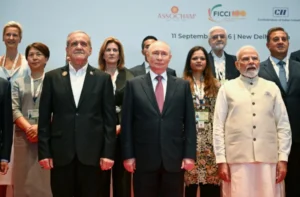
Putin and Iranian President Masoud Pezeshkian also held talks with Modi ahead of the summit, highlighting India’s balancing act as it seeks to maintain strategic partnerships with Russia and Iran while preserving its broader international relationships.
The successful negotiation of the declaration could therefore provide an important diplomatic victory for India’s BRICS presidency, particularly after the group’s May foreign ministers’ meeting ended with a chair’s statement rather than a joint declaration.
However, the declaration’s ability to produce concrete action will be closely watched. With BRICS now significantly larger and its members holding sharply different positions on major conflicts, maintaining consensus could prove increasingly difficult.
For India, the New Delhi summit represents an opportunity to demonstrate that the expanded BRICS can remain united and influential despite those differences.