
World News
US House Votes for Third Time to End Iran War, Challenging Trump’s War Powers

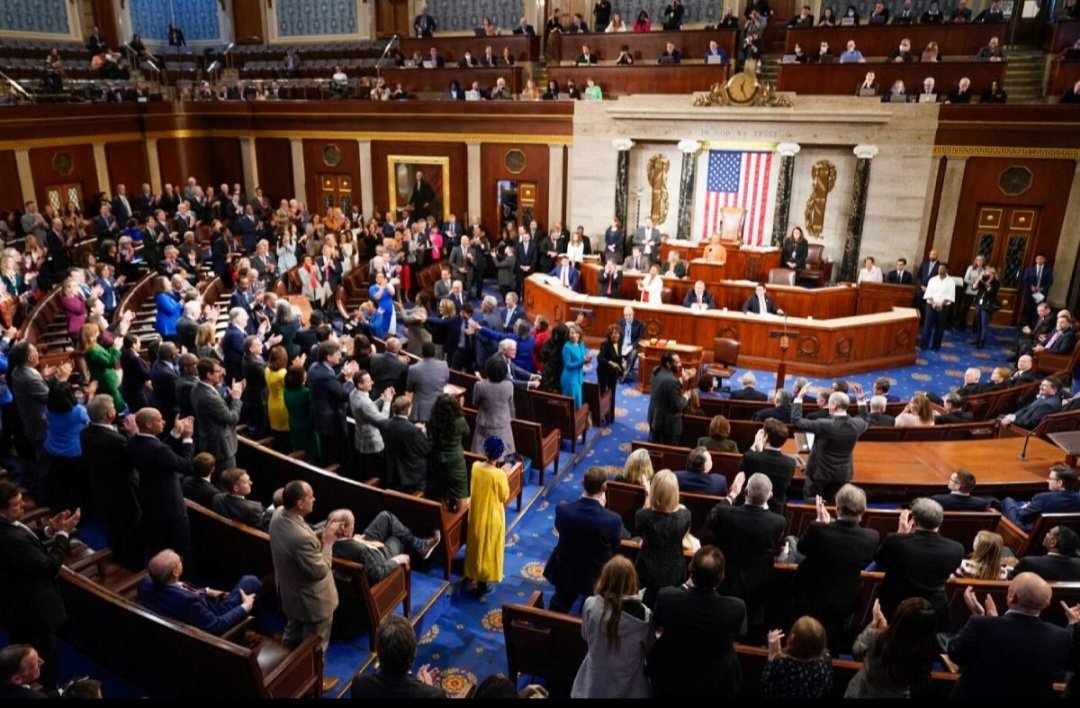
The United States House of Representatives has voted for the third time to direct President Donald Trump to end US military involvement in the war with Iran, renewing a congressional challenge to the president’s authority to continue military operations without approval from lawmakers.


The House approved the War Powers Resolution, House Concurrent Resolution 93, by 220 votes to 204 on Tuesday, September 15. All 213 voting Democrats supported the measure, alongside seven Republicans, while 203 Republicans and one independent voted against it. Nine members did not vote.

The resolution, introduced by Democratic Representative Seth Moulton, directs the president, under Section 5(c) of the War Powers Resolution, to remove US armed forces from hostilities with Iran.
The vote marks the third time the House has approved legislation seeking to restrict Trump’s military action against Iran. Similar measures passed in June and July, but none has reached the president’s desk. The latest resolution would face the same obstacle if it reaches the White House, as Trump is expected to oppose it.

Seven Republicans joined Democrats in Tuesday’s vote, up from four Republicans who supported the previous House resolutions. The Republicans backing the measure included Tom Barrett of Michigan, Warren Davidson of Ohio, Brian Fitzpatrick of Pennsylvania, Thomas Massie of Kentucky, Zachary Nunn of Iowa, Mariannette Miller-Meeks of Iowa and Nancy Mace of South Carolina.
Republican lawmakers who opposed the resolution argued that Iran continues to pose a threat and questioned the implications of withdrawing American military resources from the region. House Foreign Affairs Committee Chairman Brian Mast said Iran remained a continuing threat to the United States.
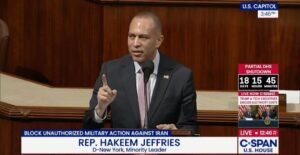
The vote comes as the conflict approaches its seventh month. The Congressional Budget Office said the war had cost the US Department of Defense more than $38 billion through August 1, with the cost expected to rise by as much as $3 billion per month depending on the intensity of the fighting. The CBO also estimated that the conflict could push inflation about 0.5 percentage points higher than previously projected through early 2027.
The economic impact has also become a major concern as disruptions to oil and natural-gas shipments through the Strait of Hormuz have contributed to higher energy and consumer prices.
Congress has previously attempted to use the War Powers Resolution to constrain Trump’s military authority. The law, enacted after the Vietnam War, seeks to establish limits on a president’s ability to maintain US forces in hostilities without congressional authorisation.
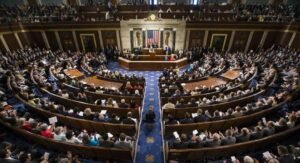
The Senate has also considered similar measures. In June, senators narrowly rejected a Democratic-led effort to end the Iran war until Congress authorised continued military action, voting 48-47 against advancing the resolution.
For now, the House vote does not by itself immediately end US military operations in Iran. Its practical effect depends on whether the measure advances through the Senate and reaches the president, as well as the subsequent legal and constitutional questions surrounding enforcement of congressional war powers.