
World News
Trump Announces Hamas Disarmament Deal, but Israel Yet to Back Plan

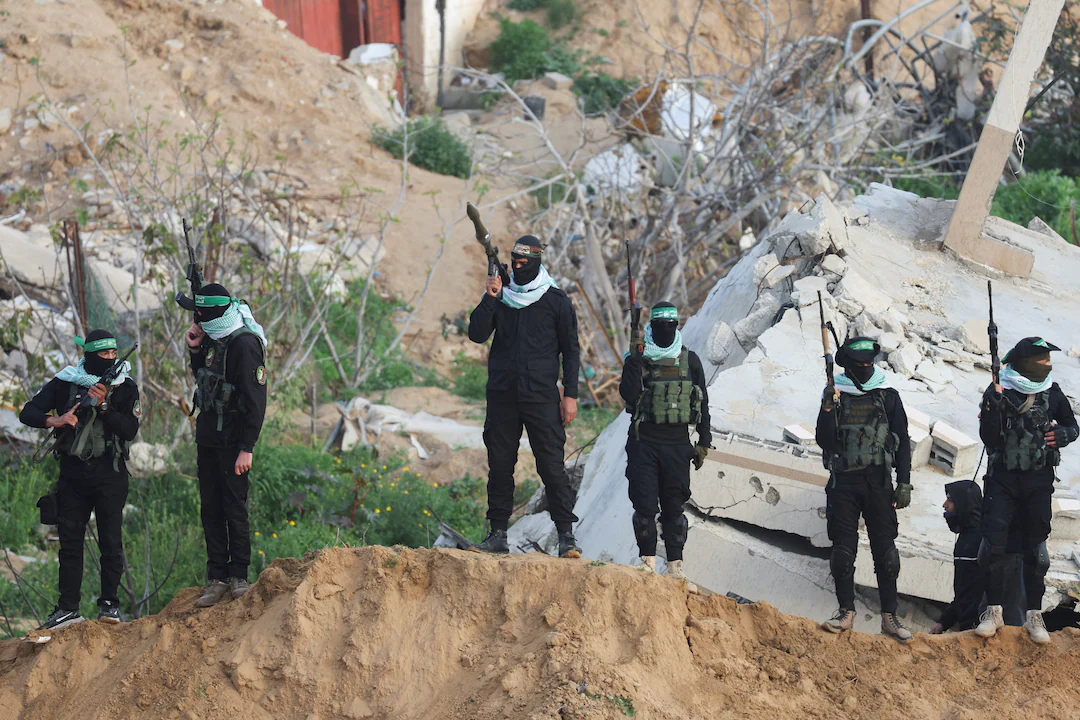
U.S. President Donald Trump has announced what he described as a landmark agreement aimed at ending the conflict in Gaza, saying mediators have secured a phased deal for the disarmament of Hamas. However, the proposal faces significant uncertainty, with Israeli officials yet to formally endorse the plan and expressing doubts over whether Hamas will fully relinquish its weapons.


Speaking after negotiations in Cairo involving mediators from Egypt, Qatar and Turkey, Trump said the agreement would pave the way for lasting peace by dismantling Hamas’ military capabilities, establishing a new Palestinian governing structure in Gaza and eventually allowing Israeli forces to withdraw from the enclave. He described the breakthrough as a major diplomatic achievement and credited his administration’s newly established “Board of Peace” for helping to broker the framework.
Despite Trump’s optimism, Hamas has not presented the agreement as final. A senior Hamas official said the document remains a draft framework and stressed that implementation would depend on Israel accepting its terms, including a phased withdrawal of Israeli troops from Gaza before full disarmament begins.

Israeli officials have also been cautious. While reaffirming their longstanding demand for the complete demilitarization of Hamas, they have not formally endorsed the proposed roadmap, arguing that the current framework does not yet provide sufficient guarantees that the militant group will surrender its arsenal or prevent future attacks.
According to details released by U.S. officials, the plan envisions a phased process lasting several months. Hamas and other armed factions would gradually surrender heavy weapons, dismantle military infrastructure and tunnel networks, while a newly created Palestinian administrative body would assume governance in Gaza. An international stabilization force would oversee security, monitor compliance and support reconstruction efforts.
The agreement also links Israel’s military withdrawal to verified progress in Hamas’ disarmament, meaning each stage would only proceed after international monitors certify that agreed benchmarks have been met. U.S. officials have described the arrangement as “conditions-based,” with implementation expected to take between 200 and 320 days if all parties comply.
The diplomatic breakthrough comes even as violence persists in Gaza. Israeli military operations have continued, with recent airstrikes reportedly killing several Palestinians, including children, underscoring the fragile security situation and the challenges facing any ceasefire effort. Humanitarian conditions also remain severe, with international agencies continuing to warn about widespread displacement, shortages of food and medicine, and extensive damage to civilian infrastructure.
Analysts say the proposal faces numerous political and practical hurdles. Hamas has historically resisted calls for complete disarmament, viewing its weapons as central to its resistance strategy, while Israeli leaders insist that any lasting peace depends on the group’s total military dismantlement.
Questions also remain over who would govern Gaza after Hamas, how security would be maintained during the transition, the composition and authority of the proposed international stabilization force, and whether regional powers and the wider international community will support the arrangement.
Trump has portrayed the proposed agreement as a historic opportunity to end years of conflict, but diplomats caution that it remains only a framework until both Hamas and Israel formally commit to its terms. With negotiations still ongoing and military operations continuing on the ground, the success of the initiative will depend on whether the parties can bridge deep disagreements over security, governance and the future of Gaza.