
World News
Italy Suspends Parts of Schengen Travel With Spain Following Ceuta Migration Crisis

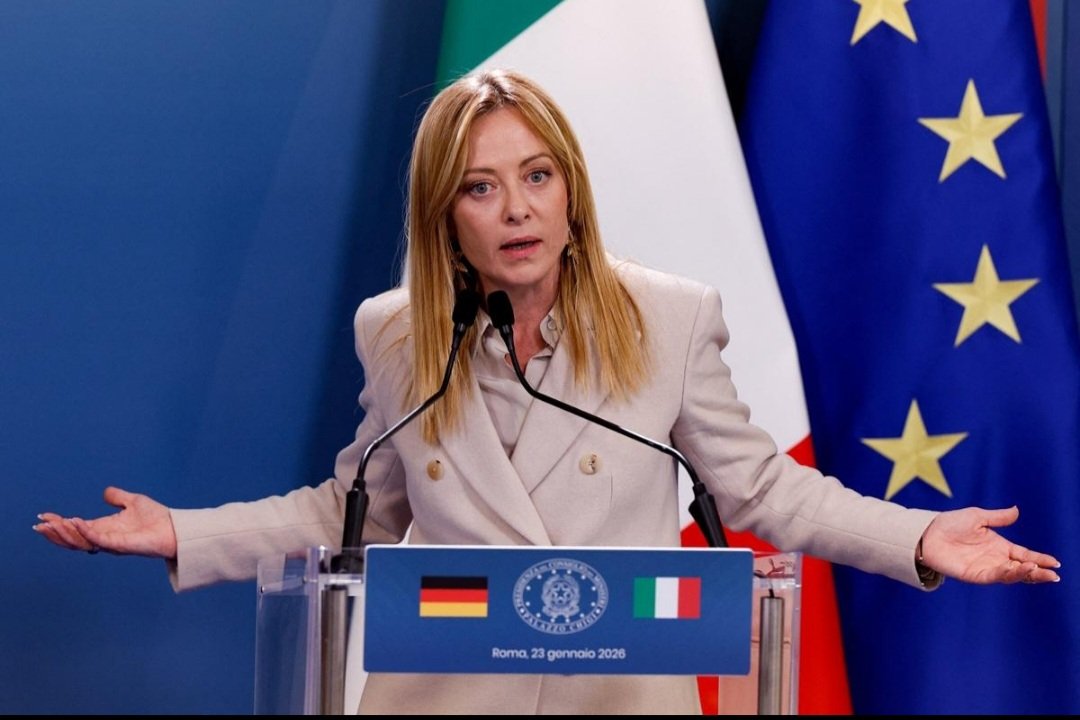
Italy has temporarily reintroduced border controls with Spain after an unprecedented migrant surge into the Spanish enclave of Ceuta from Morocco, citing national security concerns and the need to prevent possible secondary migration into Italian territory. The move marks one of the most significant challenges to Europe’s border-free Schengen Area in recent years and underscores growing tensions among European Union member states over migration policy.


Italian Prime Minister Giorgia Meloni announced that Italy would suspend aspects of the Schengen free-travel arrangement with Spain for one month, introducing targeted checks on non-EU nationals arriving from Spain by air and sea. Italian authorities stressed that the measure is temporary and is intended to safeguard national security while minimizing disruption to tourism during the busy summer season.
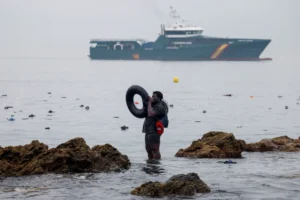
The decision follows the arrival of more than 50,000 migrants; with some estimates reaching 60,000, who crossed from Morocco into Ceuta over a short period, overwhelming local authorities and emergency services. Many migrants entered by swimming around coastal barriers or crossing border fences. At least 57 people reportedly died during the dangerous crossings.
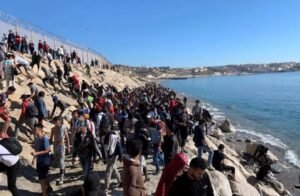
Spain has since worked with Moroccan authorities to reverse the influx. According to Spanish officials, most of those who entered have already returned to Morocco, either voluntarily or through expedited return procedures, significantly easing pressure on the enclave.
Unlike a full closure of the border, Italy’s action focuses on selective passport and document checks for third-country nationals travelling from Spain by air or sea. EU citizens, including Spanish nationals, are generally expected to continue travelling with minimal disruption, although they may also encounter additional identity checks.
Italy also coordinated with France, which has strengthened police deployments and border checks along its frontier with Spain as a precautionary measure. French officials said the enhanced controls are designed to prevent irregular onward migration while maintaining the free movement of eligible travellers.

The migration surge has intensified political debate within the European Union.
Meloni defended the temporary controls as a necessary response to exceptional circumstances, arguing that protecting the EU’s external borders is essential to combating irregular migration and human trafficking networks. Critics, however, accused the Italian government of exploiting the crisis for domestic political purposes, arguing that the measure is largely symbolic because migrants in Ceuta cannot automatically travel to mainland Spain or the rest of the Schengen Area without passing additional Spanish border controls.
Spanish officials rejected suggestions that they had lost control of the situation, insisting that cooperation with Morocco had already reversed the migrant surge. They also criticized calls to suspend Spain from the Schengen system as politically motivated and legally unfounded.
European leaders have responded with a mixture of solidarity and concern.
The European Commission reiterated its support for Spain in managing the bloc’s external borders while emphasizing that migration must be addressed collectively. EU officials also noted that Ceuta operates under a special Schengen regime, meaning migrants arriving there do not automatically gain free movement across the rest of the European Union.
Meanwhile, France announced additional border enforcement measures while expressing support for Spain’s efforts to restore order and accelerate returns to Morocco.
Italy’s border controls are expected to remain in place for one month unless security conditions improve sooner. European officials will continue monitoring migration flows and assessing whether further coordinated measures are needed.
The episode has renewed debate over the future of the Schengen system, EU migration policy and burden-sharing among member states. While Spain says the immediate crisis has largely subsided, the Ceuta crossings have highlighted the continuing challenges Europe faces in balancing border security, humanitarian obligations and regional cooperation.