
World News
Saudi-Turkey-Pakistan Defence Pact Signals Major Shift in Regional Security

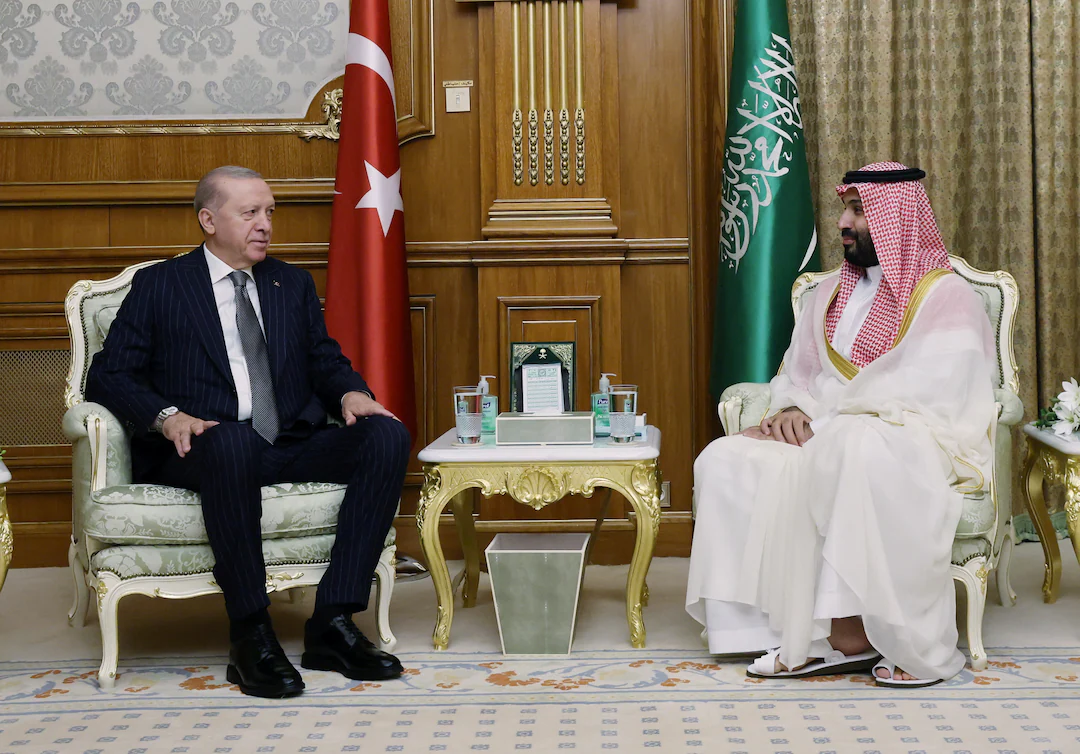
Saudi Arabia, Turkey and Pakistan have signed a landmark mutual defence agreement under which an armed attack against any one of the three countries will be treated as an attack against all, as escalating conflict and insecurity continue to reshape the Middle East.
The agreement, signed in Mecca on Friday, brings together three strategically important Muslim-majority countries: Saudi Arabia, one of the world’s leading oil producers; Turkey, a NATO member with one of the region’s largest militaries; and Pakistan, the world’s only Muslim-majority nuclear-armed state.
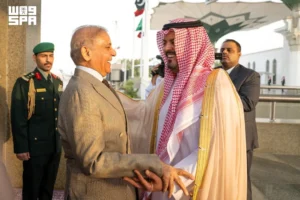
The pact, known as the Mecca Joint Defence Agreement, was signed by Saudi Crown Prince Mohammed bin Salman, Turkish President Recep Tayyip Erdoğan and Pakistani Prime Minister Shehbaz Sharif.
The three governments have presented the agreement as a defensive arrangement, stressing that it is intended to strengthen deterrence and regional security rather than target a particular country. The agreement comes at a particularly volatile moment, with the wider Middle East facing intensified military confrontation, missile attacks and disruptions to energy and shipping routes.
The agreement represents a significant expansion of security cooperation between the three countries and could mark a further shift in the Middle East’s traditional alliance structure.
Saudi Arabia has historically relied heavily on the United States and other Western partners for security, particularly in protecting its territory and critical energy infrastructure. However, attacks and wider regional conflicts have encouraged Riyadh to diversify its strategic relationships.
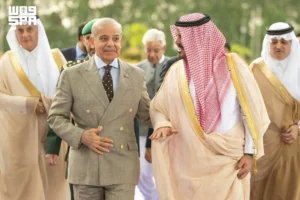
Pakistan and Saudi Arabia already have a longstanding military relationship. The two countries signed a separate Strategic Mutual Defence Agreement in September 2025, committing themselves to stronger defence cooperation and joint deterrence against aggression.
Turkey’s participation significantly broadens the arrangement. Ankara is a NATO member with a large military and an increasingly influential domestic defence industry, while Pakistan brings extensive military experience and a nuclear deterrent.
Talks about Turkey joining the Saudi-Pakistani defence framework had been underway for months. Earlier in 2026, Pakistani officials indicated that Turkey could become part of an expanded regional security arrangement as tensions involving the United States, Israel and Iran intensified.
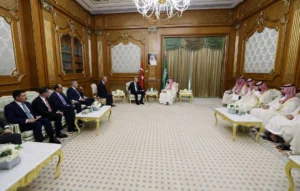
The timing of the pact is particularly significant.
The Middle East has been experiencing a period of severe instability following intensified confrontation involving Iran, Israel and the United States. The conflict has spilled beyond national borders, affecting Gulf states, maritime routes and global energy markets.
Saudi Arabia has faced renewed threats from Yemen’s Houthi movement. According to reports, Houthi forces recently launched missile and drone attacks targeting areas linked to Saudi Arabia, including Marib, while another strike affected the Najran region. The attacks reportedly killed at least two people and injured others.
The renewed violence is particularly concerning because Yemen had experienced a period of relative calm following the 2022 truce.
The latest attacks demonstrate the continuing vulnerability of Gulf states to missile and drone warfare, even after years of Saudi-led efforts to reduce the conflict in Yemen.
Iran is likely to be closely watching the development, although the three governments have not formally identified Tehran as the target of the agreement.
The pact could nevertheless strengthen deterrence at a time when Gulf Arab states are increasingly concerned about the possibility of attacks from Iran or groups aligned with Tehran.
Saudi Arabia and Iran have made efforts in recent years to improve relations, but the broader regional confrontation has placed those diplomatic gains under considerable pressure.
Officials from the three countries have emphasised that the agreement is defensive and aimed at protecting their sovereignty and territorial integrity rather than creating a platform for offensive military operations.
Pakistan’s participation gives the new arrangement an additional strategic dimension.
Pakistan possesses nuclear weapons, while Saudi Arabia does not publicly possess a nuclear arsenal. Analysts have therefore closely watched the development of the Saudi-Pakistani military relationship for possible implications for regional deterrence.
However, the agreement itself does not announce a nuclear-sharing arrangement or say that Pakistan would deploy nuclear weapons on behalf of Saudi Arabia or Turkey.
Its stated focus is broader defence cooperation and collective deterrence. The precise mechanisms that would determine how the three countries would respond to an attack have not been fully disclosed.
Turkey’s involvement is also notable because Ankara remains a member of NATO, the Western military alliance.
The new agreement does not automatically mean that NATO would become involved in any conflict involving Saudi Arabia or Pakistan. Turkey’s obligations under NATO are governed separately by the alliance’s treaty arrangements.
The development nevertheless highlights Ankara’s increasingly independent foreign-policy posture and its efforts to maintain strategic relationships with powers both inside and outside the Western alliance system.
Analysts have previously described the emerging Saudi-Pakistani-Turkish cooperation as part of a broader reshaping of regional security arrangements, rather than simply the creation of a new military alliance.
The defence agreement was announced as violence continued elsewhere in the Middle East.
In Lebanon, an Israeli strike reportedly wounded a Lebanese soldier near Mansouri amid renewed tensions along the Israel-Lebanon border. Israel has accused Hezbollah of violating ceasefire arrangements, while concerns remain that renewed clashes could destabilise the fragile situation.
The combination of renewed violence in Yemen, tensions involving Israel and Hezbollah, and the wider confrontation involving Iran has created an increasingly complicated security environment for Gulf and Middle Eastern governments.
The Saudi-Turkish-Pakistani agreement could ultimately become one of the most consequential developments in the region’s evolving security architecture.
For Riyadh, it provides another layer of defence cooperation at a time when the Kingdom is seeking greater strategic flexibility.
For Ankara, it strengthens relations with two major Muslim powers while reinforcing Turkey’s role as an influential regional actor.
For Islamabad, deeper ties with Saudi Arabia and Turkey could provide additional diplomatic, economic and military advantages.
Whether the pact develops into a more integrated military structure remains unclear. The immediate significance, however, is that three powerful regional states have formally committed to treating an attack on one as an attack on all, a declaration that could significantly influence calculations by governments and armed groups across the Middle East and beyond.
Sources: Reuters and Associated Press reporting, supplemented by analysis from the International Institute for Strategic Studies and Chatham House.