
World News
UAE Accuses Iran of Missile Attack on ADNOC Vessel in Strait of Hormuz

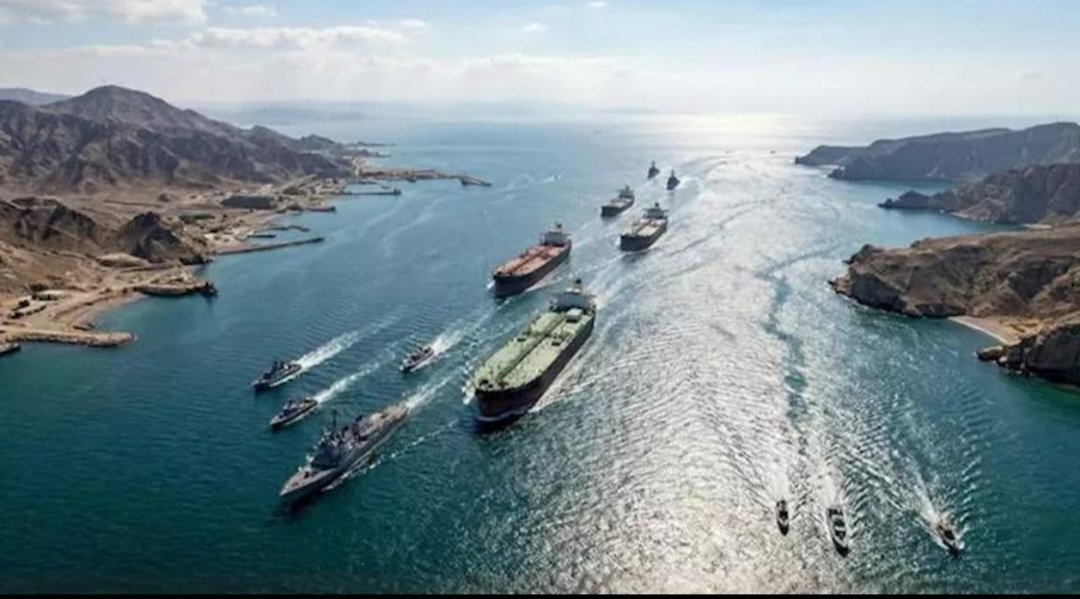
The United Arab Emirates has accused Iran of carrying out another attack on commercial shipping in the strategically vital Strait of Hormuz, saying a vessel affiliated with Abu Dhabi National Oil Company (ADNOC) was targeted by a missile while transiting the waterway.
The incident, reported on Saturday, August 8, represents another escalation in the increasingly dangerous confrontation around the Strait, where repeated attacks on commercial vessels have disrupted energy shipments and raised concerns about the security of one of the world’s most important maritime trade routes.
The UAE condemned what it described as an Iranian attack on an ADNOC-linked vessel and called for an immediate end to attacks against commercial shipping.
According to Reuters, the UAE characterised the actions attributed to Iran’s Islamic Revolutionary Guard Corps as acts of piracy and called for the Strait of Hormuz to be reopened to normal maritime traffic.
ADNOC separately confirmed that one of its vessels had been targeted by a missile while passing through the Strait in the early hours of Saturday.
Details about the vessel’s exact identity, cargo and the extent of any damage were not immediately disclosed. Reuters reported that no injuries were reported in this particular incident.
The latest attack comes only a day after ADNOC warned that repeated attacks on its ships and personnel were having a significant impact on its operations.
ADNOC said on Friday that 15 of its vessels had been targeted by missiles and drones since the conflict began, with three attacks occurring within the preceding week.
The company said the attacks had resulted in one crew member being killed and 20 others injured.

ADNOC said it was taking measures, in coordination with relevant authorities, to protect its employees, vessels and other assets while attempting to continue supplying customers despite the security situation.
The company also called for the protection of freedom of navigation and the safe passage of commercial vessels through international waterways.
The latest incident follows a more serious attack in July, when the UAE said Iranian cruise missiles struck two Emirati oil tankers; Mombasa B and Al Bahyah, in the Strait of Hormuz.
One Indian crew member was killed and eight others were wounded in that attack, while both vessels sustained fire and damage before their crews brought the situation under control.
ADNOC’s latest figures therefore point to a sustained pattern of attacks against its maritime operations rather than an isolated incident.

The company had already reported an earlier attack in May involving the ADNOC-linked tanker Barakah, which the UAE said was targeted by Iranian drones while attempting to transit the Strait.
The Strait of Hormuz is one of the world’s most important energy chokepoints.
The narrow waterway lies between Iran and Oman and links the Persian Gulf with the Gulf of Oman and the Arabian Sea. Its strategic importance comes from the enormous quantities of oil and gas that normally pass through it.
According to the U.S. Energy Information Administration, approximately 20.9 million barrels per day of crude oil and petroleum liquids moved through the Strait in the first half of 2025; equivalent to about 20% of global petroleum liquids consumption and roughly one-quarter of global maritime oil trade.
The EIA has warned that a prolonged disruption could cause major delays in energy supplies and push up global oil and gas prices because alternative routes can handle only a portion of the volumes normally transported through Hormuz.
This makes every attack on commercial shipping in the area potentially significant for international energy markets.
The repeated attacks have made shipping through the waterway increasingly difficult and expensive.
Insurers, shipping companies and energy producers have been forced to assess whether vessels can safely make the passage, while governments in the region face growing pressure to protect commercial navigation.
ADNOC said the attacks were significantly affecting its operations, although the company maintained that it was working to meet customer requirements while prioritising the safety of its personnel and assets.
The developments have also raised questions over how long the current disruption can continue without producing wider consequences for global energy markets.
The latest attack comes at a particularly sensitive moment.
Iran said Saturday that negotiations with Oman over arrangements for the Strait of Hormuz were approaching a possible agreement, but Tehran stressed that any deal would not automatically mean the waterway would fully reopen.

Iran’s Revolutionary Guard subsequently said reopening the Strait depended on whether the United States accepted Iranian conditions, rather than simply on the outcome of talks with Oman.
That position underscores the difficulty of restoring normal shipping through the waterway even as diplomatic efforts continue.
The latest ADNOC incident illustrates how the conflict has increasingly moved beyond military targets and into commercial shipping.

For Gulf energy producers such as the UAE, Saudi Arabia, Kuwait and Qatar, the security of maritime routes is directly tied to their ability to export oil and gas.
For international consumers, continued disruption could translate into higher transportation costs, increased insurance premiums and renewed pressure on energy prices.
The UAE’s accusation against Iran also adds another layer of tension between Tehran and Gulf Arab states, which have repeatedly warned against attacks on civilian and commercial infrastructure.
For now, the immediate focus is on protecting vessels and maintaining whatever maritime traffic can safely operate through the Strait. But with ADNOC reporting 15 vessels targeted since the conflict began, the latest missile incident demonstrates that the threat to commercial shipping remains acute.