
Health
Food Adulteration: Experts Raise Alarm Over Rising Health Threat as 53,000 Nigerians Die Annually


Experts, regulators and consumer protection advocates have raised fresh concerns over the growing threat posed by adulterated and contaminated food products in Nigeria, calling for urgent action to strengthen laboratory testing, monitoring and traceability across the food supply chain.

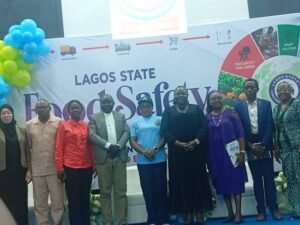
The warning came on Tuesday at the fourth Lagos State Food Safety 2026 Conference and Exhibition held at NECA House, Ikeja, Lagos.
The conference, themed “From Burden to Solution – Safe Food Everywhere,” brought together stakeholders to examine challenges confronting food safety and ways of protecting consumers from unsafe products.

The Chief Executive of the Lagos State Consumer Protection Agency, Afolabi Solebo, described food safety as a critical issue affecting both public health and economic stability.
Solebo warned that weaknesses in enforcement and food supply-chain traceability were exposing consumers to chemical adulterants and food-borne pathogens.
Providing an indication of the scale of the problem, keynote speaker Dr Adeniyi Odugbemi of Food Update Konsult said available data showed that food-borne illnesses were associated with more than 53,000 deaths and 50 million cases of disease annually in Nigeria.
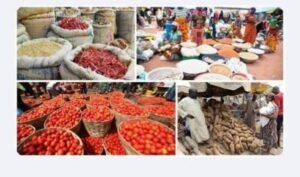
Odugbemi identified informal markets as particularly vulnerable, noting that up to 70 per cent of urban residents reportedly obtain their daily food from such markets, where formal regulatory oversight and cold-chain facilities may be limited.
Palm oil adulteration sparks concern
One of the major issues discussed at the conference was the alleged adulteration of palm oil, a widely consumed staple in Nigeria.
Dr Nurayn Oseni warned that chemical dyes are routinely used to alter substandard palm oil and make it appear to be of better quality.
She estimated that as many as seven out of 10 market samples could be compromised, stressing the need for stronger testing capacity to detect sophisticated forms of adulteration.
Oseni called for increased investment in laboratories and specialised training for regulatory personnel.

She also recommended the adoption of internationally recognised testing procedures, including the Malaysian BOB and AIB protocols.
To improve accountability within the supply chain, she advocated mandatory batch-tracing systems for retailers, which would enable regulators to trace problematic products back to their sources.
FCCPC urges joint action
The Executive Vice Chairman of the Federal Competition and Consumer Protection Commission, Tunji Bello, called for greater collaboration among regulatory agencies, civil society organisations and market associations.
Bello said government regulators could not inspect every commercial transaction on their own, urging businesses to take greater responsibility for consumer protection.
He stressed the importance of accurate product labelling, valid expiry dates and transparent disclosure of ingredients.
According to him, businesses that deliberately compromise consumer safety in an attempt to reduce costs should be prepared to face sanctions.
NAFDAC records 225 complaints
Meanwhile, the National Agency for Food and Drug Administration and Control disclosed that it received 225 complaints concerning suspected counterfeit products in August.
NAFDAC Director-General, Prof. Mojisola Adeyeye, disclosed this on Monday while briefing journalists on the agency’s campaign against counterfeit, adulterated and unsafe products.
Adeyeye said Nigerians submit more than 200 complaints to NAFDAC every month through its official complaint channels, describing the reports as valuable leads for investigation.
She urged members of the public to use the agency’s established reporting channels when they suspect that a product is counterfeit or unsafe.
The NAFDAC boss said the agency was also aware of recent concerns and allegations involving products such as yoghurt, palm oil, apples, soy sauce, olive oil, chicken, fish, water and beverages.
However, she cautioned that claims circulating on social media should not automatically be treated as proof that a product is counterfeit or dangerous.
Adeyeye stressed that scientific testing and regulatory investigations were necessary to establish the safety or otherwise of suspected products.
The stakeholders’ warnings have intensified calls for stronger food safety enforcement, better laboratory infrastructure and improved traceability systems to protect Nigerians from preventable food-related health risks.