
Health
Ethiopian Twins Successfully Separated After Months of Complex Surgeries in St. Louis

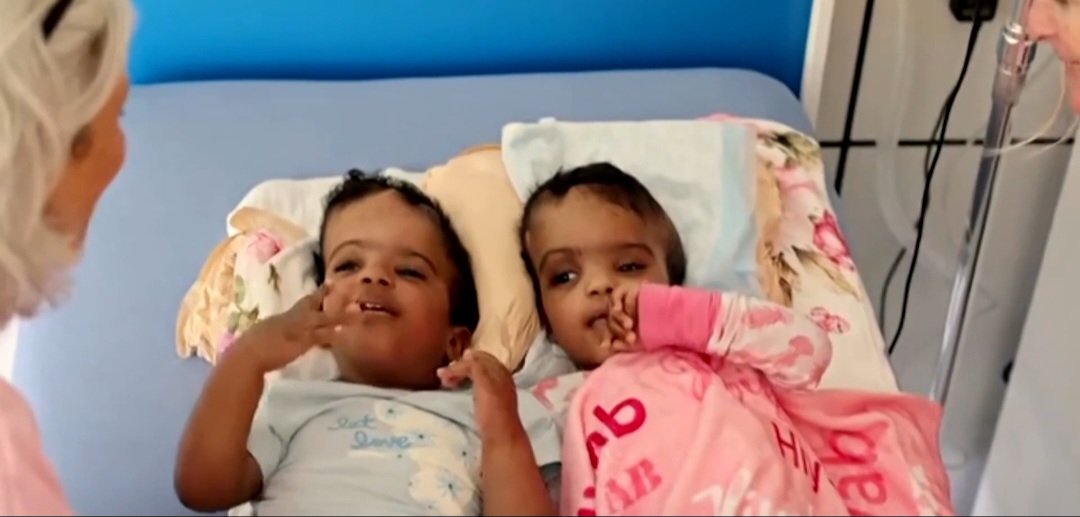
Doctors in St. Louis, Missouri, have successfully separated two Ethiopian twin sisters who were born joined at the head after months of highly complex medical procedures culminating in a nearly 25-hour separation operation.


The girls, Hiyab and Wuhbto, were born as craniopagus twins, a rare condition in which twins are fused at the skull. They travelled from Ethiopia to the United States in March 2025, shortly before their first birthday, to begin preparations for treatment.
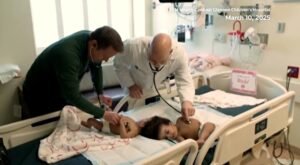
The separation was carried out at SSM Health Cardinal Glennon Children’s Hospital in St. Louis on February 24-25, 2026. Doctors said the final procedure lasted about 25 hours, following a series of earlier operations designed to prepare the girls for separation.
The operation was the culmination of an extensive treatment programme involving more than six major procedures.
One of the biggest challenges facing surgeons was an extensive network of blood vessels shared by the girls around their skulls. Doctors performed four staged procedures to gradually separate the shared blood vessels and allow each child to develop independent circulation.
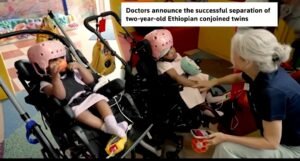
The medical team also used advanced imaging and 3D-printed models to plan the procedures. According to the hospital, more than 2,500 feet of filament was used to produce 3D models during the planning process, while hundreds of hours were spent in strategy and preparation meetings.
More than 60 clinical team members were involved in the twins’ care, including neurosurgeons, plastic surgeons, anaesthesiologists, nurses, imaging specialists and therapists.
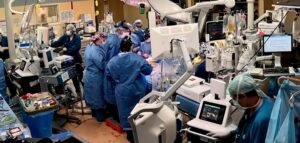
During the final operation, the twins were separated at about 2:31 a.m. on February 25. Two surgical teams then worked simultaneously to close and reconstruct each girl’s skull before they were transferred to separate beds in intensive care.
Craniopagus twins are extremely rare. SSM Health says twins joined at the head occur approximately once in every 2.5 million live births and account for less than 6% of conjoined twins.
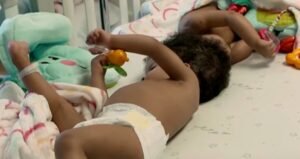
Medical experts cited by the hospital said only a limited number of separation attempts have been recorded worldwide. Catholic Health World reported that only 62 such separation attempts had been recorded over the previous century.
The St. Louis operation also required cooperation between several organisations, including SSM Health Cardinal Glennon Children’s Hospital, Ranken Jordan Pediatric Bridge Hospital, World Pediatrics, Lola Children’s Home in Ethiopia and Ronald McDonald House Charities. Ethiopian Airlines also helped transport the girls to the United States.
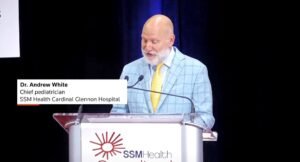
Following their separation, Hiyab and Wuhbto moved to Ranken Jordan Pediatric Bridge Hospital, where they are receiving rehabilitation and intensive medical care.
Doctors say the girls are now able to participate in individual therapies and activities that were impossible while they were joined.
They are learning skills including sitting upright, eating, speaking, socialising and playing with other children. Doctors hope they will eventually be able to stand and walk independently.
Wuhbto has already undergone a successful skull reconstruction procedure, while Hiyab is expected to undergo a similar operation later this year.
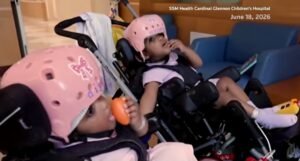
Doctors have cautioned that it is still too early to determine the girls’ long-term development, but specialists say the separation has given them opportunities for growth and rehabilitation that were not possible while they were conjoined.
The hospital said the decision to announce the successful procedure months after the February operation was made partly to allow the girls to reach important health and rehabilitation milestones.
For Hiyab and Wuhbto, the operation marks the beginning of a new stage of their lives as two individuals after spending their first years physically connected.