
World News
Why Trump Is Seeking Warmer Ties With Xi After Years of China Criticism

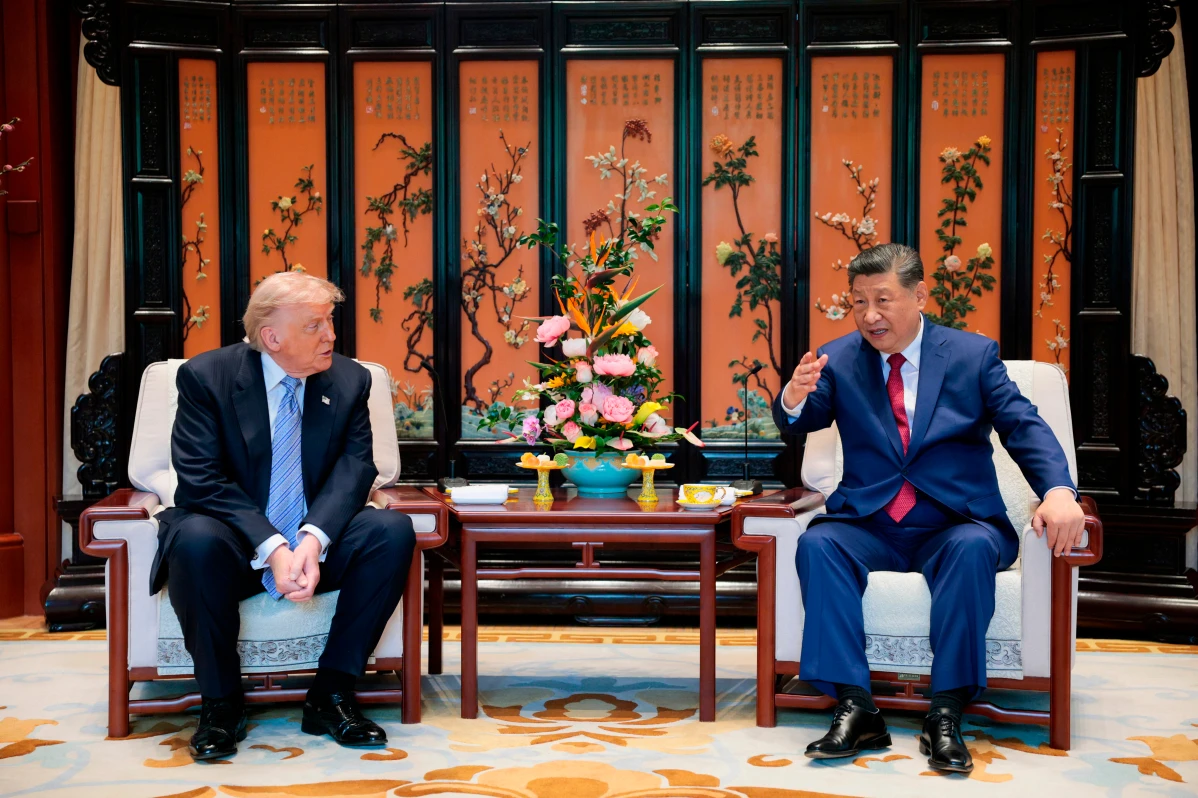
US President Donald Trump is preparing to welcome Chinese President Xi Jinping to Washington for a state visit, marking a striking change in tone from the tough rhetoric he used against Beijing during his first presidential campaign.
Xi is expected to arrive in the United States next week for talks with Trump, with the two leaders set to discuss trade, technology, artificial intelligence, rare earth minerals and broader international issues. Trump has said he will personally greet Xi at Joint Base Andrews, an unusual gesture for a visiting foreign leader.
The warmer approach comes after years in which Trump portrayed China as a major economic threat to the United States. During his first presidential campaign, he accused Beijing of taking American manufacturing jobs and weakening the US middle class.
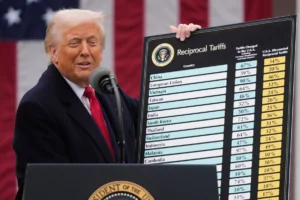
His administration subsequently imposed tariffs on large volumes of Chinese imports, while Washington also introduced restrictions affecting Chinese access to advanced technologies.
But Trump’s second-term approach has increasingly combined economic pressure with direct engagement with Xi.
One factor behind the shift is the difficulty Washington has faced in using tariffs to substantially alter China’s economic position.
China remains a major manufacturing power and has considerable influence over global supplies of rare earth minerals, which are important for electronics, electric vehicles, defence equipment and other industries.
The Associated Press reported that China’s leverage over rare earths contributed to negotiations that eventually produced a trade truce with the Trump administration. The two countries have since sought to keep their economic relationship from deteriorating further.
Trump has nevertheless continued to describe the relationship with Beijing in increasingly positive terms.
“He’s a great gentleman; we get along great,” Trump said this month when discussing Xi, according to AP.
The two governments have reached agreements covering several areas of trade.
According to the White House, a May 2026 agreement included Chinese commitments relating to rare earth supplies, agricultural purchases and Boeing aircraft, while the two countries agreed to establish boards dealing with trade and investment.
The US and China are also preparing for further negotiations over the trade truce. US Treasury Secretary Scott Bessent and Chinese Vice Premier He Lifeng are due to discuss unresolved issues including rare earth exports and artificial intelligence before the Trump-Xi meeting.
That means Trump’s outreach to Xi is not simply ceremonial. Economic stability remains a major issue for both governments as they seek to manage their rivalry without triggering another escalation in the trade conflict.
Artificial intelligence has also become an increasingly important part of the US-China competition.
The two countries are racing to develop advanced AI systems, while Washington remains concerned about China’s access to advanced computer chips and allegations that Chinese companies have copied or obtained US-developed AI technology.
Reuters reported this week that AI competition is expected to be a central issue in the upcoming Trump-Xi talks, alongside questions about safeguards for military applications and access to advanced chips.
At the same time, Trump has argued that the United States must move rapidly on AI development to maintain its technological advantage over China.
Trump has also placed considerable emphasis on his personal relationship with Xi.
During his May visit to Beijing, Trump praised Xi and said the two countries could have a “fantastic future together.” Xi similarly argued that Washington and Beijing had more common interests than differences and that cooperation was preferable to confrontation.
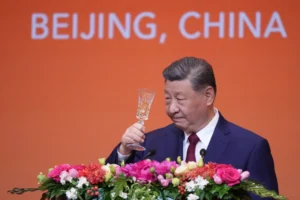
The upcoming state visit therefore provides both leaders with an opportunity to demonstrate that competition between the world’s two largest economies can coexist with direct diplomatic engagement.
However, major disagreements remain, including Taiwan, technology restrictions, trade, rare earth supplies and China’s growing global economic and military influence. The warmer public relationship between Trump and Xi has not eliminated those disputes.
For Trump, the shift represents a move from relying primarily on pressure toward a combination of tariffs, negotiations and personal diplomacy. For Xi, the US visit offers an opportunity to maintain direct communication with Washington while protecting China’s economic and strategic interests.
The outcome of the forthcoming talks will show whether the increasingly cordial relationship produces further concrete agreements or remains largely a diplomatic effort to manage an increasingly competitive US-China relationship.