
Health
Genetic Discovery Offers New Clues to Reversing Alzheimer’s Brain Damage

Scientists have identified a mechanism through which the APOE4 gene, the strongest genetic risk factor for Alzheimer’s disease, damages blood vessels in the brain, and experiments suggest that the damage may be reversible.
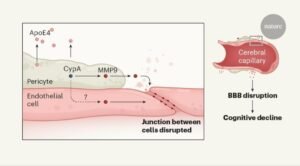
Researchers at the Icahn School of Medicine at Mount Sinai in New York found that APOE4 can cause pericytes, cells that normally support and stabilize small blood vessels and help maintain the blood-brain barrier, to transform into scar-forming cells.
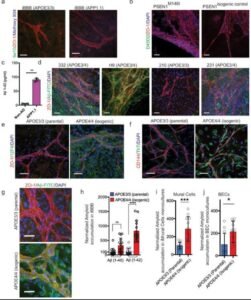
The transformation causes fibrosis, or excessive scar-like tissue formation, around brain blood vessels and encourages the accumulation of amyloid, a protein associated with Alzheimer’s disease. The findings were published in the journal Cell on September 24.
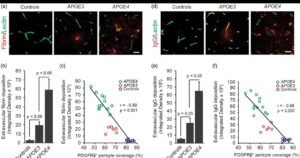
The researchers used a single-cell genetic map of human brain blood vessels to examine how APOE4 affects different types of cells. They found that in people carrying APOE4, the number of normal pericytes was reduced while a population of myofibroblast-like cells emerged.
Further experiments showed that the altered cells released fibronectin, a protein involved in the formation of connective tissue, which contributed to amyloid accumulation around blood vessels.
The team identified increased activity of a signalling pathway involving transforming growth factor beta, or TGF-β, as a key driver of the change. When researchers blocked TGF-β signalling, normal pericyte coverage was restored and vascular fibrosis and amyloid accumulation were reduced to levels similar to those seen with the more common APOE3 variant.
The findings were also reproduced in aged mice carrying APOE4, providing evidence that the vascular damage associated with the gene can potentially be reversed in an animal model.
Joel Blanchard, one of the study’s corresponding authors, said the findings challenge the idea that blood-vessel damage in Alzheimer’s is simply a late consequence of the disease. The researchers argue that APOE4 itself can actively contribute to cerebrovascular degeneration and that the process may be therapeutically targeted.
The discovery is significant because APOE4 has long been associated with a higher risk of Alzheimer’s disease, but researchers have continued to investigate precisely how the gene contributes to disease development. The new study places the brain’s blood vessels and the cells that support them at the centre of one important pathway.
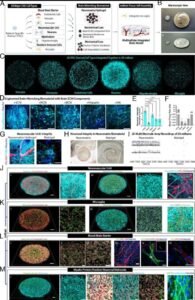
Mount Sinai researchers also used a three-dimensional stem-cell-derived human brain model known as a “miBrain” to investigate APOE4-related processes. The platform contains neurons, glial cells and blood-brain-barrier-like vascular structures, allowing scientists to study interactions between different brain cell types in a laboratory setting.
A related study from the same research group, published in Cell Stem Cell, found that APOE4 can also disrupt cholesterol handling in astrocytes, another type of brain cell. The resulting cholesterol accumulation impaired cellular waste-processing systems and contributed to abnormal alpha-synuclein accumulation in laboratory-grown brain tissue. Reducing intracellular cholesterol restored several of the affected cellular processes in the model.
However, scientists caution that these findings do not mean Alzheimer’s-related brain damage can currently be reversed in patients. The vascular reversal experiments were conducted in laboratory models and mice, and potential treatments targeting TGF-β would still need to undergo extensive testing for safety and effectiveness in humans.
The research nevertheless adds to growing evidence that Alzheimer’s involves more than the accumulation of amyloid plaques and tau proteins. Changes in blood vessels, inflammation, lipid metabolism and interactions among different brain cell types may all contribute to the progression of neurodegeneration.
For researchers, identifying a potentially reversible step in the pathway linking APOE4 to blood-vessel damage could provide a new target for future therapies aimed at protecting the brain’s circulation and limiting the accumulation of harmful proteins.