
World News
Trump Says FBI Investigating Nvidia CEO Jensen Huang’s Affair With Alleged Chinese Spy

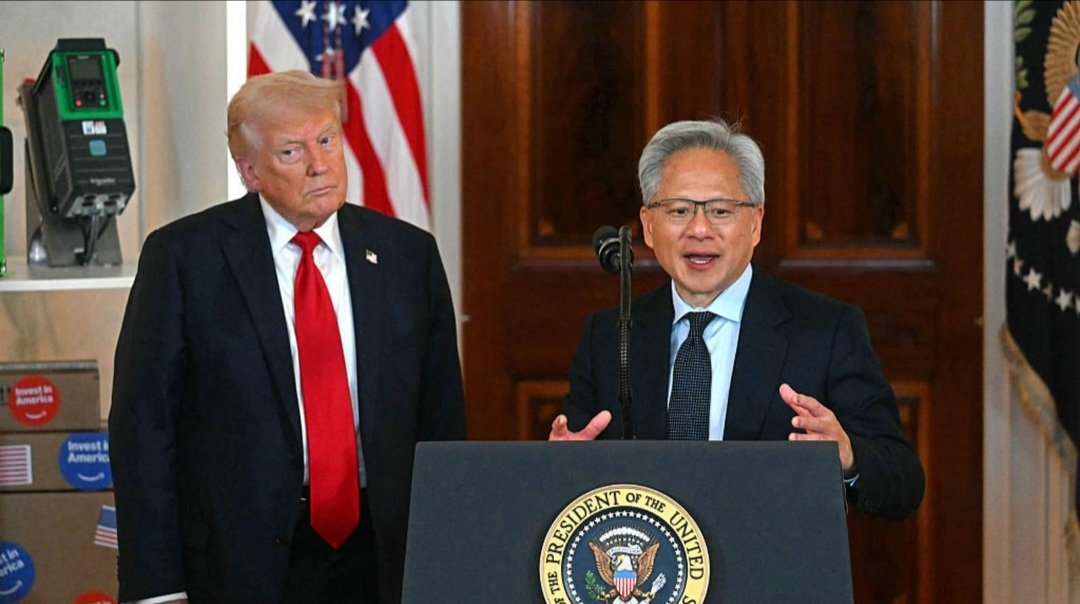
US President Donald Trump has said the Federal Bureau of Investigation (FBI) is looking into Nvidia Chief Executive Officer Jensen Huang’s relationship with a Chinese businesswoman suspected by US intelligence officials of working for Beijing.
Trump disclosed the investigation on Monday, November 9, while speaking to reporters at the White House, adding that he had personally contacted Huang following reports about the alleged espionage connection.
The president said Huang told him he had no knowledge that the woman was allegedly a Chinese intelligence operative, expressing confidence that the technology executive would emerge from the controversy without serious consequences.
“I asked him that question, ‘Did you have any idea that she was a spy?’ He said, ‘I had no idea that she was a spy,’ and I really believe him,” Trump told reporters.
He added that the FBI was investigating the matter but did not provide details about the scope or progress of the inquiry.
The controversy follows reports by The New York Times linking Huang to Alice Huang, a Chinese businesswoman and former executive of Singapore-based technology company Megaspeed International.
US intelligence officials reportedly believe Alice Huang was gathering information for the Chinese government. She is not related to the Nvidia chief executive.
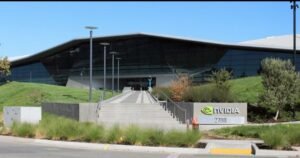
The reports have raised national security concerns because Nvidia produces some of the world’s most advanced artificial intelligence chips, which are central to the technological competition between the United States and China.
Alice Huang’s former company, Megaspeed International, has reportedly had business dealings with Nvidia. The company has also faced allegations involving the unauthorised shipment of advanced Nvidia chips to China.
Huang, 63, has acknowledged having an extramarital relationship with a business executive, although he did not identify the woman in an open letter addressed to Nvidia employees.
He apologised to his wife, family and colleagues, admitting that he had been unfaithful and expressing regret over the distress caused by the revelations.
However, he rejected any suggestion that he would compromise the company’s interests or American national security.
“I support the investigation and will cooperate fully. I love our country and our company. I am committed to protecting NVIDIA and supporting America’s national security,” Huang said.
Following the reports, Nvidia’s board announced an independent investigation into whether its chief executive had been targeted by a foreign intelligence operation.
The company said it had no reason to believe that its trade secrets or national security information had been compromised, but confirmed that the review would examine available information.
China has strongly rejected the espionage allegations. Foreign Ministry spokesperson Guo Jiakun described the claims as unsubstantiated and a smear campaign against Beijing.
The controversy has also affected Nvidia’s financial performance, with its shares falling more than four per cent on Monday as investors reacted to the revelations and the company’s announcement of an internal investigation.
Some Nvidia shareholders have also filed a proposed class-action lawsuit against Huang and the company, accusing them of concealing information about his alleged connections to a suspected Chinese intelligence asset.
The development has attracted attention in Washington, where lawmakers are increasingly concerned about China’s access to advanced American semiconductor technology.
Democratic House Minority Leader Hakeem Jeffries has called for further explanations and urged Congress to strengthen restrictions on advanced chip sales to China.
Huang, one of the most influential figures in the global artificial intelligence industry, has maintained close ties with the Trump administration and repeatedly lobbied Washington over restrictions on semiconductor exports to China.
Trump said he did not intend to raise the allegations during his planned meeting with Chinese President Xi Jinping at the Asia-Pacific Economic Cooperation summit, although he acknowledged that the Chinese leader might bring up the issue.
The investigation comes at a sensitive time for US-China relations, with advanced semiconductor technology and artificial intelligence remaining major areas of strategic competition between the two countries.