
International
Jay Clayton Confirmed as US Director of National Intelligence

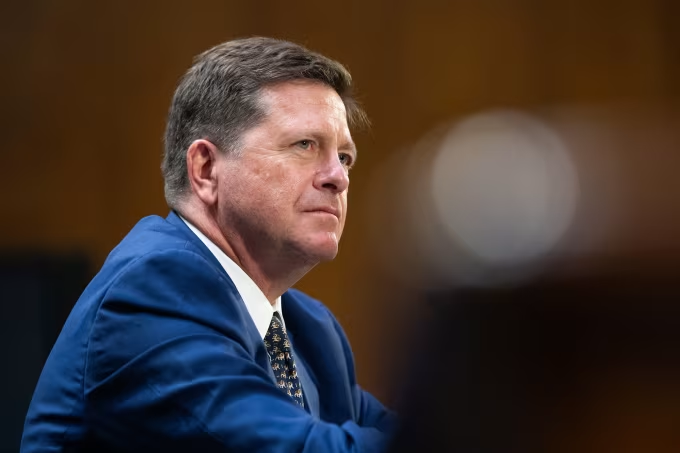
The U.S. Senate has confirmed Jay Clayton as the new Director of National Intelligence (DNI), giving President Donald Trump a permanent intelligence chief after weeks of political wrangling over the leadership of America’s intelligence community. Clayton was approved in a 51-47 party-line vote, with Republicans backing the nomination and Democrats voting in opposition.


Clayton, a former Chairman of the Securities and Exchange Commission (SEC) during Trump’s first administration and most recently the U.S. Attorney for the Southern District of New York, will now oversee the Office of the Director of National Intelligence (ODNI) and coordinate the work of the nation’s 18 intelligence agencies, including the CIA, NSA, and other key security bodies.

His confirmation follows the resignation of former DNI Tulsi Gabbard in June and the interim leadership of Bill Pulte, whose brief tenure was marked by significant restructuring within the intelligence community. During his time as acting director, Pulte reportedly reduced the size of the ODNI workforce by roughly 30%, drawing criticism from both Democrats and some Republicans who questioned the future role of the agency.
Clayton’s confirmation process proved contentious despite his previous bipartisan confirmations to senior federal positions. During his Senate hearing, Democratic lawmakers repeatedly pressed him to state unequivocally that Joe Biden won the 2020 U.S. presidential election. Clayton declined to answer directly, saying only that Biden had been “certified” as president, a response that intensified opposition from Democrats.

Lawmakers also questioned Clayton over his limited background in intelligence and national security. Although he has extensive experience as a federal prosecutor and financial regulator, critics argued that he lacks the traditional intelligence credentials usually associated with the nation’s top intelligence post. Supporters countered that his experience leading complex federal investigations and prosecuting national security cases makes him well suited to oversee the intelligence community.
One of Clayton’s most immediate challenges will be helping the administration and Congress navigate the future of Section 702 of the Foreign Intelligence Surveillance Act (FISA), a key surveillance authority that expired in June. The lapse has created uncertainty for U.S. intelligence agencies, and its renewal is expected to become one of the most contentious national security debates in Washington.

During his confirmation hearing, Clayton pledged to preserve the Office of the Director of National Intelligence as an oversight and coordination body despite concerns that recent staffing reductions could weaken its effectiveness. He said his focus would be on ensuring cooperation among intelligence agencies while protecting national security and responding to emerging threats such as cyberattacks, espionage, terrorism and strategic competition with China and other adversaries.
Political analysts say Clayton’s appointment reflects President Trump’s continued effort to install trusted allies in senior national security positions during his second term. His leadership will likely face close scrutiny from Congress as the intelligence community balances national security priorities with ongoing political debates over oversight, surveillance powers and election security.