
International
Senate Plans Contempt Vote After Fauci Refuses to Answer COVID-19 Questions

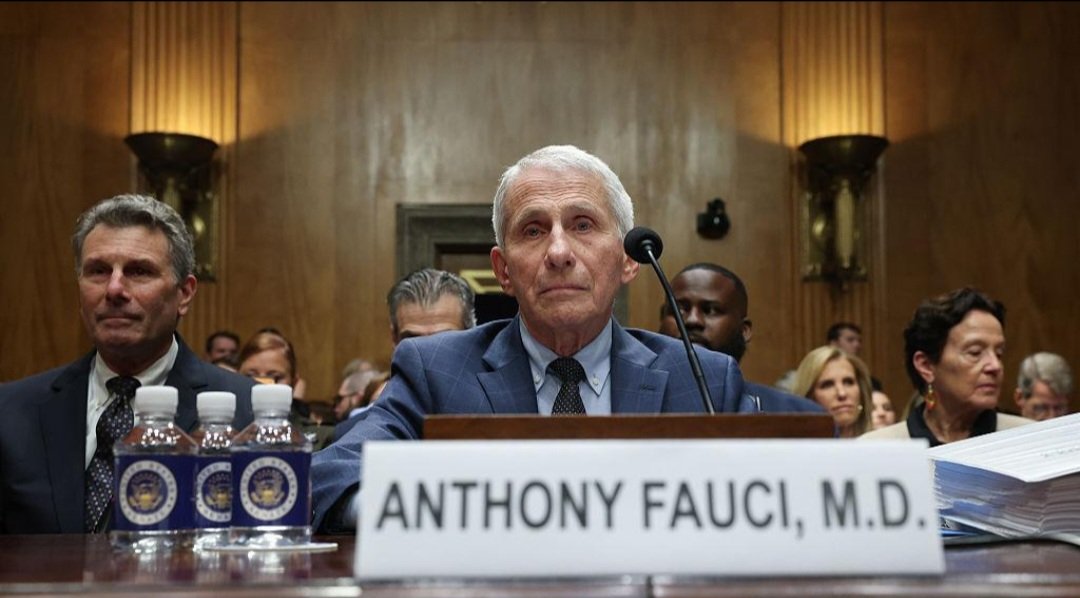
A Republican-led U.S. Senate committee is preparing to vote on whether to hold former top infectious disease expert Dr. Anthony Fauci in contempt of Congress after he repeatedly invoked his Fifth Amendment right against self-incrimination during a highly contentious hearing on the federal government’s handling of the COVID-19 pandemic. The hearing, chaired by Senator Rand Paul of Kentucky, marked the latest chapter in a years-long political and legal dispute over the origins of the coronavirus and the U.S. pandemic response.


Fauci, who served as director of the National Institute of Allergy and Infectious Diseases (NIAID) and became one of the most recognisable public health officials during the pandemic, was subpoenaed to testify before the Senate Homeland Security and Governmental Affairs Committee. However, after being sworn in, he declined to answer more than 100 questions, repeatedly citing his constitutional right to avoid self-incrimination on the advice of his legal team.

The hearing quickly became confrontational. Senator Paul accused Fauci of misleading Congress and the American public about issues including U.S.-funded research linked to laboratories in Wuhan, China, COVID-19 mitigation policies and the origins of the virus. Paul argued that Fauci’s refusal to answer questions obstructed the committee’s investigation and announced that Republicans would seek a committee vote next week to hold him in contempt of Congress. Republicans hold an 8–7 majority on the committee, giving them enough votes to advance the measure.
Fauci defended his decision through a prepared statement, describing the investigation as a politically motivated effort aimed at finding grounds for prosecution rather than uncovering facts. He characterised Senator Paul’s campaign against him as an “obsessive vendetta” and said he had testified extensively before Congress in previous years, maintaining that his actions during the pandemic were guided by the best available scientific evidence at the time.

The hearing also generated controversy when Senator Paul ordered one of Fauci’s attorneys removed from the hearing room after the lawyer attempted to intervene during questioning. Democrats on the committee strongly criticised the proceedings, arguing that the hearing was intended to score political points rather than conduct legitimate oversight. They defended Fauci’s right to invoke the Fifth Amendment and rejected Republican allegations that he had intentionally misled lawmakers.
The dispute comes despite Fauci having received a broad presidential pardon from former President Joe Biden in January 2025 covering actions taken during his government service related to the pandemic. Republicans have argued that the pardon does not prevent congressional oversight or require the committee to abandon its investigation, while legal experts note that witnesses may still invoke the Fifth Amendment under certain circumstances if they believe they face potential legal exposure beyond the scope of a pardon.
If the committee approves the contempt resolution, it would represent the first step in a process that could eventually be referred to the full Senate and potentially to federal prosecutors for consideration. Whether such a referral would result in criminal proceedings remains uncertain and would likely face significant legal scrutiny.
The hearing underscores the continuing political divisions surrounding the COVID-19 pandemic, more than six years after the virus first emerged. Questions over the origins of COVID-19, pandemic-era public health measures and federal research funding remain deeply contentious in Washington, with Republicans pledging to continue investigations while Democrats accuse their opponents of attempting to rewrite the history of the pandemic for political purposes.