# Tags

FEDERAL GOVERNMENT URGES ASUU TO EMBRACE DIALOGUE OVER STRIKE AS TALKS STALL

The Federal Government has expressed disappointment over the Academic Staff Union of Universities (ASUU)’s decision to proceed with a warning strike despite ongoing efforts to address the union’s grievances, stressing dialogue remains key to resolving the impasse. Honourable Minister of Education Dr. Maruf Tunji Alausa and Honourable Minister of State for Education Prof. Suwaiba Sai’d Ahmed conveyed government’s unwavering commitment constructive engagement ASUU sustainable resolution university system outstanding issues in a statement issued by Director Press and Public Relations Boriowo Folasade. Boriowo Folasade indicated government met deadline presenting position ASUU agreed talks yet union opted strike sans reverting Ministry continuing dialogue. “Government had demonstrated sincerity patience addressing virtually all ASUU concerns including significant teaching allowance improvements staff conditions service,” Folasade communicated Ministers’ stance. Dr. Maruf Tunji Alausa and Prof. Suwaiba Sai’d Ahmed observed ASUU’s action contrasts cooperation spirit fairness students public amid government’s demonstrable commitment concrete steps. “Dialogue most effective sustainable path resolving disagreements; government open engagement prevent unnecessary education sector disruption,” Ministers said according to Boriowo Folasade. The statement quoted Ministers emphasizing extant Nigerian labour law “no work, no pay” policy guiding government disrupted academics. Dr. Maruf Tunji Alausa and Prof. Suwaiba Sai’d Ahmed affirmed government balances goodwill flexibility responsibility uphold fairness accountability public resources utilization. Government reassured Nigerian students parents general public commitment maintaining industrial harmony tertiary education Renewed Hope Agenda President Bola Ahmed Tinubu. Boriowo Folasade appealed unions prioritize partnership dialogue confrontation collective higher education interest. Folasade concluded conveying Ministers’ reaffirmation government’s education reform enhancing teaching research institutional autonomy mutual respect productivity innovation urging ASUU reconsider strike return dialogue students’ Nigerian education future best interest.

NIGERIA’S PUBLIC UNIVERSITIES SHUT DOWN AS ASUU EMBARKS ON TWO-WEEK WARNING STRIKE

Academic activities across Nigeria’s public universities ground to a halt Monday, October 13, as the Academic Staff Union of Universities (ASUU) commenced a two-week comprehensive warning strike over unaddressed grievances. ASUU President Prof. Chris Piwuna disclosed the union’s action follows government inaction on pressing issues. Prof. Piwuna cited outstanding concerns propelling industrial action include unpaid lecturers’ allowances, woeful tertiary funding, and government’s unfulfilled pacts. “Government’s neglect compelled this step. We give them 14 days to act meaningfully averting possible indefinite strike escalation,” he warned. All lectures, exams and university administrative functions stand suspended nationwide impacting students’ academic progression. “We understand stakeholders’ concerns; our struggle seeks rectification Nigeria’s ailing higher education,” Prof. Piwuna noted. Students and parents express dismay over recurring disruptions. “Both parties must urgently forge lasting fix sparing learners endless calendar turmoil,” an anxious parent pleaded. ASUU underscores determination pursuing reforms ameliorating universities’ decay tracing unmet 2009 agreement among festering flashpoints. Union stresses engagement remains route resolving impasse affecting Nigeria’s tertiary sector. Government response is awaited as strike effects ripple thousands undergraduates, postgraduates countrywide. ASUU remains resolute pressing redress longstanding demands catalysing industrial action.

ASUU SERVES FEDERAL GOVERNMENT 14-DAY ULTIMATUM, THREATENS FULL-BLOWN STRIKE

The Academic Staff Union of Universities (ASUU) has issued a 14-day ultimatum to the Federal Government of Nigeria, warning that if their demands aren’t met, they’ll embark on a full-blown strike. This decisive move follows an emergency National Executive Council (NEC) meeting held at the University of Abuja on Sunday, September 28, 2025, as announced by ASUU President, Professor Christopher Piwuna. “The fourteen days ultimatum, therefore, is an alarm to the Nigerian Government and ASUU as a Union believes that the Government has the muscle to avert this looming strike,” Professor Piwuna stated in the press release titled “Notice Of Strike Action”. He emphasized that ASUU is confident Nigerian leadership has the capacity and financial strength to resolve university challenges once and for all. The union’s key demands include: – *Re-negotiation of the 2009 ASUU-FGN Agreement*: A longstanding pact needing updates. – *Sustainable Funding of Universities*: Ensuring financial stability for institutions. – *Revitalization of Universities*: Addressing infrastructure and resource gaps. – *Addressing Victimization*: Concerning staff in Lagos State University (LASU), Kogi State University (KSU, now Prince Abubakar Audu University), and Federal University of Technology, Owerri (FUTO). – *Outstanding 25-35% Salary Arrears*: Unpaid salary increments. – *Promotion Arrears Over 4 Years*: Stalled career progression for lecturers. – *Third-Party Deductions*: Unresolved financial deductions. Professor Piwuna lamented the government’s consistent neglect of the education sector, noting these issues have been debated for over three months across national, zonal, and branch levels, and publicly discussed for 16 years. “It is over sixteen years now since ASUU has brought these issues to the media and the public domain,” he said, urging stakeholders to press the government for action. If the ultimatum expires without satisfactory resolution, ASUU plans a two-week warning strike, potentially escalating to an indefinite strike. “ASUU believes the government has the strength to avert this looming strike. As the saying goes, a stitch in time saves nine,” Piwuna appealed.

NARD GIVES FG 10-DAY ULTIMATUM TO MEET WELFARE DEMANDS OR FACE NATIONWIDE STRIKE

The Nigerian Association of Resident Doctors (NARD) has given the Federal Government a 10-day ultimatum to meet its long-standing welfare demands or face a nationwide strike. The warning was contained in a communiqué signed by NARD President, Dr. Tope Osundara, General Secretary, Dr. Oluwasola Odunbaku, and Publicity and Social Secretary, Dr. Omoha Amobi. The association recalled that it had earlier issued a three-week ultimatum in July, later extending it by another three weeks to allow engagement with key stakeholders. However, NARD said the government had failed to honour its promises. “The E-NEC condemned the failure of the Federal Government to fulfil its promises, noting with dismay that a substantial number of resident doctors remain unpaid for their 2025 Medical Residency Training Fund,” the communiqué read. The doctors also expressed displeasure with the Medical and Dental Council of Nigeria (MDCN) for downgrading membership certificates issued by the West African Colleges of Physicians and Surgeons, while criticising the National Postgraduate Medical College of Nigeria for its persistent delay in issuing certificates. Other grievances include the non-payment of the 2024 Accoutrement Allowance arrears and the alleged neglect of doctors in some states. NARD commended governors who have paid the 2025 Medical Residency Training Fund, describing their actions as a sign of commitment to the welfare of medical professionals. The association warned that its 10-day ultimatum, which expires on Wednesday, September 10, 2025, would be final. “The E-NEC extends the ultimatum by a final 10 days to all relevant government agencies to meet these demands. Failure to do so within this period will leave the NEC with no other option than to embark on a nationwide strike action,” it warned. NARD’s key demands include the immediate settlement of outstanding allowances and entitlements, full recognition of postgraduate membership certificates, and resolution of welfare issues affecting its members in Kaduna and Oyo States. The association condemned the failure of the Kaduna State Government to honour its commitments to members and the Oyo State Government’s neglect of doctors in LAUTECH Teaching Hospital, Ogbomosho.

NAMA WORKERS SET TO EMBARK ON INDEFINITE STRIKE

The National Union of Air Transport Employees (NUATE) and three other unions have directed all workers of the Nigerian Airspace Management Agency (NAMA) to stop all services with effect from Monday, August 11, 2025, at 05:00 hours indefinitely. The unions, which include the Air Transport Services Senior Staff Association of Nigeria (ATSSSAN), Association of Nigeria Aviation Professionals (ANAP), and Amalgamated Union of Public Corporations, Civil Service Technical and Recreational Services Employees (AUPCTRE), announced the strike action in a joint statement. Comrade AbdulRasaq Saidu, Secretary General of ANAP, said in the statement that all airlines and allied companies, as well as the flying public, are advised to make alternative travel arrangements. Comrade Odinaka J. Igbokwe, Deputy General Secretary of NUATE, and Comrade Frances Akinjole, Principal Deputy General Secretary of NUATE, alongside Comrade Fcahces Akinjole, General Secretary of ATSSSAN and AUPCTRE, signed the notice. The unions stated that only joint communication from their National Secretariats would be heeded regarding further directives on this matter. “Solidarity forever!!” the statement concluded. AbdulRasaq Saidu, along with the other union leaders, emphasized the unions’ commitment to the strike action. Odinaka J. Igbokwe and Francis Akinjole also reiterated the unions’ stance. The notice of withdrawal of services was given on July 30, 2025, and expires at the end of August 7, 2025. As a result, the strike action would commence on August 11, 2025. The unions’ directive is expected to have significant implications for air travel in Nigeria.

ISRAEL CARRIES OUT POWERFUL STRIKES ON SYRIAN CAPITAL DAMASCUS

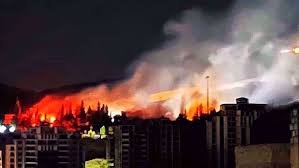
Israel has carried out a series of powerful strikes on the Syrian capital Damascus, escalating a campaign it says is in support of an Arab minority group involved in deadly clashes with Syrian government forces. At least three people were killed and 34 others were injured in the attacks, the Syrian health ministry said. The Syrian government has strongly condemned Israel for striking several government buildings in Damascus, calling the attacks a “dangerous escalation.” “This blatant attack, which comes within the context of a systematic policy pursued by the Israeli entity to ignite tension, create chaos, and undermine security and safety in Syria,” the country’s Foreign Ministry said in a statement. Syria said it will “reserve its full legitimate rights to defend its land and people by all means guaranteed by international law,” the statement added. Israel’s Defense Minister Israel Katz shared footage of the attacks, saying “the painful blows have begun.” A military official confirmed Israel had targeted the Ministry of Defense and an area near the presidential palace. Israel says it is attacking Syria to protect the Druze, an Arab minority at the center of clashes with government loyalists. However, another incentive behind Israel’s decision to strike could be related to its opposition to the current Syrian government. Israeli Prime Minister Benjamin Netanyahu has previously referred to the new leaders of the country as an “extremist Islamic regime” and a threat to the state of Israel. The United States has expressed concern over the strikes, with Secretary of State Marco Rubio saying, “We’re talking with both sides, all the relevant sides and hopefully we can bring it to a conclusion but we’re very concerned.” The United Nations Secretary-General António Guterres expressed alarm over the continued escalation of violence in Suwayda, condemning all violence against civilians and calling for an immediate cessation of all violations of Syria’s sovereignty. Several countries in the region, including Turkey, Saudi Arabia, the United Arab Emirates, and Qatar, have condemned the Israeli strikes in Syria. Turkey called Israel’s strikes “an act of sabotage against Syria’s efforts to secure peace, stability, and security.” The Druze community is concentrated around three main provinces close to the Israeli-occupied Golan Heights in the south of the country, and form a majority in the Suwayda province. More than 20,000 Druze also live in the Golan Heights, a strategic plateau that Israel seized from Syria during the Six-Day War in 1967. Israeli Prime Minister Netanyahu has called on the Druze community in Israel and the Golan Heights not to cross over the border into Syria, saying “I have one request for you: You are citizens of Israel. Do not cross the border.”

UNIVERSITY LECTURERS DOWN TOOLS AS ASUU DECLARES INDEFINITE STRIKE

Lecturers across Nigeria’s universities have brought academic activities to a grinding halt as the Academic Staff Union of Universities (ASUU) commenced an indefinite strike. The industrial action is in response to the federal government’s failure to pay June 2025 salaries, which has left lecturers financially strained. ASUU President, Professor Chris Piwuna, stated that the union’s National Executive Council (NEC) had resolved to withdraw services due to the persistent delay in salary payments. Piwuna expressed frustration with the government’s lack of commitment to resolving the issue, despite meetings with key officials. The transition to the Government Integrated Financial Management Information System (GIFMIS) has exacerbated the problem, resulting in lecturers being unpaid for days after the month ends. Piwuna emphasized that the delay is not due to technical issues but appears to be a deliberate act by some officials. In addition to the salary issue, ASUU is demanding the immediate release of the outstanding N10 billion balance for Earned Academic Allowances (EAA). The union warned that further delays could lead to another phase of industrial action. The strike has already taken effect in several universities, including the University of Jos and University of Abuja, where lecturers have stopped work and suspended academic duties. A strike monitoring team has been activated to ensure compliance across the country.

US MILITARY STRIKES ON IRANIAN NUCLEAR FACILITIES SPARK CONTROVERSY

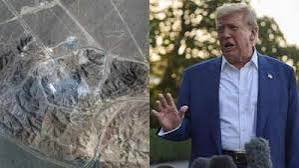
The United States carried out airstrikes on three key Iranian nuclear facilities, including the heavily fortified Fordow complex, in an operation dubbed “Operation Midnight Hammer”. President Donald Trump announced the strikes, claiming they were a “spectacular military success” that had “completely and totally obliterated” Iran’s nuclear enrichment facilities. However, experts’ assessments contradict Trump’s claims, suggesting that while the outer parts of the Fordow facility were damaged, its interior and centrifuges may not have been severely compromised. “If you don’t get Fordow, you haven’t eliminated their ability to produce weapons-grade material,” said Brett McGurk, former US coordinator for the Middle East. The experts also speculate that Iran might have removed its stockpile of enriched uranium from the Fordow facility before the strike. Estimates put the consignment at 400 kilogrammes of uranium enriched to 60% purity, enough to make a “dirty bomb” and just one step away from the 90% threshold needed for a nuclear weapon. In response to the experts’ assessments, Trump accused the media and experts of being “fake” and “mischievous” in their attempts to discredit the military feat. “The strikes were a spectacular military success,” Trump declared. “Iran’s key nuclear enrichment facilities have been completely and totally obliterated.” However, the Pentagon disagreed with Trump’s assessment, saying there was no evidence that the strikes destroyed their targets. American intelligence officials estimate that the strikes could only set back Iran’s nuclear program by three months. Israeli Prime Minister Benjamin Netanyahu hailed the strike, saying it had helped remove an imminent existential threat to Israel. The US military used B-2 stealth bombers and Massive Ordnance Penetrators (MOPs), the biggest non-nuclear bomb in its arsenal, in the operation. The International Atomic Energy Agency (IAEA) reported no increase in off-site radiation levels at the targeted facilities, suggesting that any radioactive materials present at the sites remained contained.

AIRPEACE SUSPENDS FLIGHT OPERATIONS DUE TO NIMET STRIKE

Air Peace has announced the suspension of all flight operations nationwide due to the ongoing strike by the Nigerian Meteorological Agency (NiMET). The decision was made in a statement signed by the head of corporate communications, Air Peace, Ejike Ndiulo. According to Ndiulo, the suspension is necessary because NiMET is responsible for issuing critical weather reports that ensure safe landings, particularly during the current season of heavy rainfall and thunderstorms. “Without these reports from the control tower, flight safety could not be guaranteed,” he explained. As a safety-first airline, Air Peace has chosen to act responsibly by suspending operations until NiMET resumes full service. “We understand this may cause inconvenience, and we sincerely apologise,” Ndiulo said. “Passengers will be contacted with updates and options for rescheduling.” The strike by NiMET staff commenced on Tuesday over demands related to conditions of service and other issues. Air Peace’s decision aims to prioritize passenger safety amid the disruption caused by the strike.

ISRAEL STRIKES SOUTHERN BEIRUT AFTER ACCUSING HEZBOLLAH OF ROCKET ATTACKS, ESCALATING TENSIONS

The Israeli military launched a strike on southern Beirut on Friday, marking the first such attack since November, after accusing Hezbollah of firing two projectiles from Lebanon into Israel. The Israel Defense Forces (IDF) confirmed targeting a Hezbollah site in the Dahieh area, describing it as a “terrorist infrastructure site used to store UAVs by Hezbollah’s Aerial Unit.” The IDF accused Hezbollah of embedding its operations within civilian areas, calling it a “cynical exploitation of Lebanese civilians as human shields.” Hezbollah denied launching the rockets and reiterated its commitment to the ceasefire with Israel. Prior to the strike, the IDF issued evacuation orders to residents near the targeted area in southern Beirut, warning them to move at least 300 meters away for their safety. The Lebanese government suspended classes in the area, evacuating schools and staff following Israel’s warning. Israeli forces also struck multiple locations across southern Lebanon, targeting what it called “Hezbollah command centers, terrorist infrastructure sites, launchers, and terrorists.” An attack on Kfar Tebnit killed three people, including a woman, and injured at least 18 others, according to Lebanon’s state news agency NNA. Israeli Defense Minister Israel Katz warned that Beirut would “be treated the same” as Kiryat Shmona, the northern Israeli town allegedly hit by the projectiles. “If there is no peace in Kiryat Shmona and the Galilee communities, there will be no peace in Beirut either,” Katz said in a statement. The Lebanese army reported discovering a rocket launch site near the border and announced an investigation into the incident. It condemned Israel’s strike as a “blatant and repeated violation of Lebanon’s sovereignty,” calling it a breach of international law and the ceasefire agreement. Hezbollah suggested the rocket attacks were a pretext for further Israeli aggression, while Lebanese President Joseph Aoun stated his government was in contact with U.S. officials to reinforce the November ceasefire. “There is a ceasefire in place, and both sides are expected to respect the agreement,” Aoun said. Israeli Prime Minister Benjamin Netanyahu vowed a forceful response to any threats, declaring, “We will attack everywhere in Lebanon against any threat to the state of Israel.” The strike comes amid rising tensions following months of relative calm after the ceasefire. Since the truce, Israel has conducted numerous strikes in southern Lebanon, targeting Hezbollah positions. The conflict between Israel and Hezbollah escalated after the outbreak of the Gaza war in October 2023, with cross-border attacks persisting for over a year. The November 2024 ceasefire reduced violence, but Israel maintains a military presence in southern Lebanon despite agreeing to withdraw under the deal.

  • 1
  • 2