
World News
Putin Tightens Pressure on Armenia as Russia Fights to Maintain Global Influence

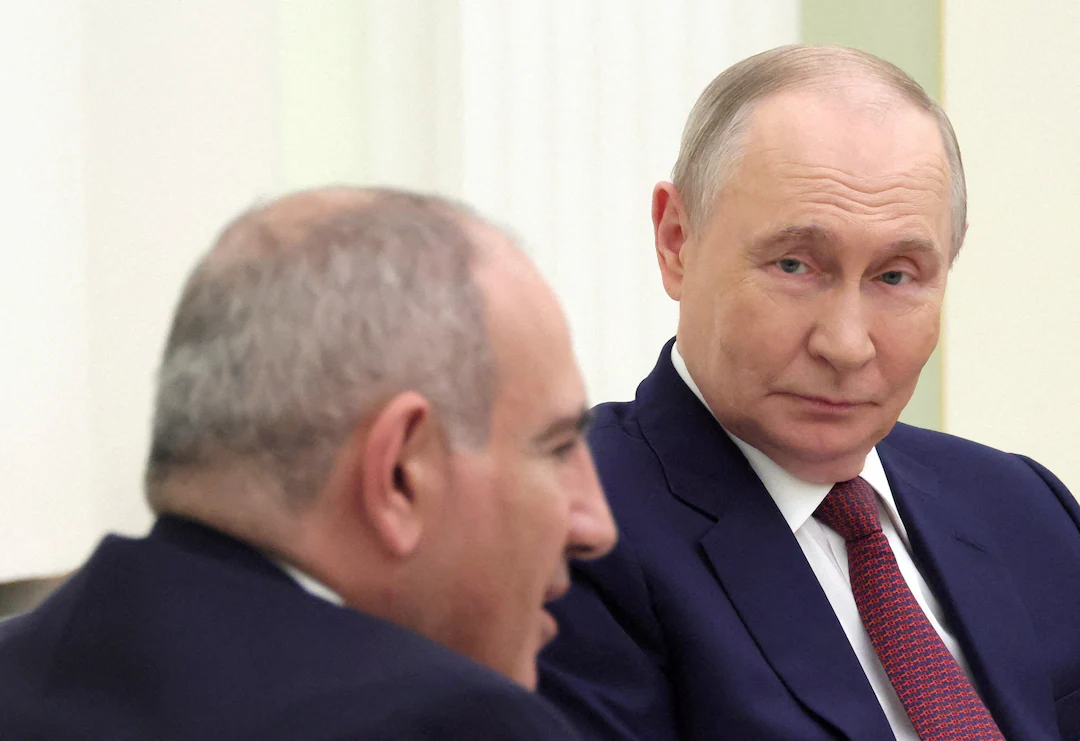
Russia is stepping up pressure on Armenia as the Kremlin seeks to maintain its influence in the South Caucasus and project strength on the global stage amid mounting geopolitical challenges.
Relations between Vladimir Putin and Armenia have become increasingly strained in recent years, with Yerevan pursuing closer ties with Western countries while expressing dissatisfaction with Moscow’s role in regional security matters.
Analysts say Russia views Armenia as a strategically important ally in the South Caucasus, a region that has historically been within Moscow’s sphere of influence. As competition with Western powers intensifies, the Kremlin appears determined to prevent further erosion of its position in the region.
Tensions have grown since Armenia questioned the effectiveness of Russian-led security arrangements following conflicts involving neighboring Azerbaijan. Armenian leaders have increasingly sought stronger relationships with the European Union and the United States, moves that Moscow has watched with concern.
Recent political and economic developments have fueled speculation that Russia may be using diplomatic, economic, and security levers to discourage Armenia from drifting further toward Western institutions. Observers note that Armenia remains heavily connected to Russia through trade, energy supplies, labor migration, and security cooperation.
For Moscow, retaining influence in Armenia carries significance beyond the South Caucasus. Experts argue that Russia’s ability to maintain alliances and partnerships is closely linked to its broader efforts to demonstrate that it remains a major global power despite sanctions, international isolation, and ongoing geopolitical disputes.
The Kremlin has repeatedly emphasized the importance of preserving traditional partnerships within the former Soviet space. Russian officials have warned against what they describe as external attempts to undermine regional stability by drawing countries away from long-standing security and economic arrangements.
Meanwhile, Armenian officials have maintained that their foreign policy is guided by national interests rather than geopolitical competition. The government has sought to diversify international partnerships while insisting that it does not intend to sever relations with Russia.
The evolving relationship comes at a time of significant change in the South Caucasus, where shifting alliances, security concerns, and economic opportunities are reshaping regional politics. Analysts say Armenia’s strategic position between Europe, Russia, and the Middle East makes it a key battleground for influence among competing powers.
As Russia works to preserve its standing abroad, developments in Armenia are increasingly being viewed as a test of Moscow’s ability to retain influence in neighboring states amid a rapidly changing geopolitical landscape.