
World News
US Resumes Strikes on Iran as Hostilities Flare After Month-Long Pause

The United States has launched a fresh wave of strikes against targets in Iran, sharply escalating tensions after roughly a month without direct US military action and raising fears that the conflict could once again spread across the Middle East.
The US military said Tuesday that its latest strikes were directed at Iranian targets following what Washington described as recent attempts by Iran’s Islamic Revolutionary Guard Corps (IRGC) to attack commercial shipping in the Strait of Hormuz and US forces deployed in the region.
The renewed attacks came only days after US forces struck two Iranian rocket launchers on Larak Island, a strategically located island in the Strait of Hormuz. That operation was the first known direct US strike on Iran since late July.
US Central Command said the latest military action was aimed at Iranian forces involved in threatening maritime security.
According to US officials, the IRGC had been preparing to launch rockets equipped with sea mines into the Strait of Hormuz. Washington says the strikes are intended to protect commercial shipping and American personnel operating in the region.
The Strait of Hormuz is one of the world’s most strategically important waterways, making the renewed military activity particularly significant for global energy markets and international shipping.
The conflict has already disrupted traffic through the waterway, with oil prices responding sharply to developments in the region.
The latest escalation follows Iran’s retaliation for Sunday’s US attack on Larak Island.
Iran launched missiles toward US military positions in Jordan, according to reports, although the incoming missiles were intercepted and there were no immediate reports of significant damage at the targeted US facilities.
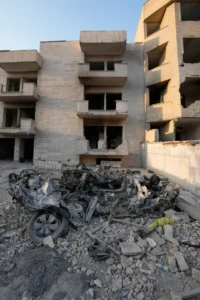
The United Arab Emirates also said it intercepted a drone coming from Iran and rejected reports that its Al Minhad air base had been attacked.
Iran’s Revolutionary Guards have vowed further retaliation against the United States following the American strikes.
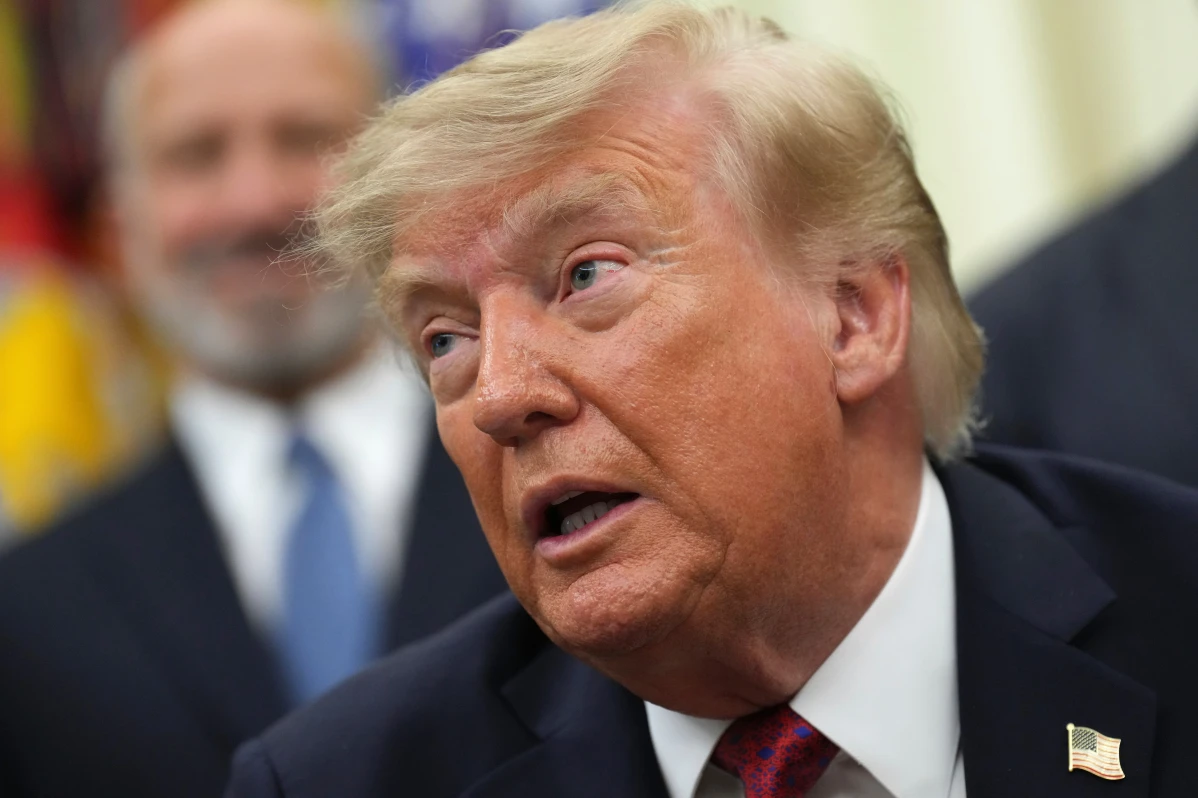
President Donald Trump has signalled that the United States could continue military operations against Iran.
Trump said Monday that Iran’s military and economy had been severely weakened but left open the possibility of further attacks, adding to uncertainty over whether the latest exchange will remain limited or develop into another major phase of the conflict.
The renewed fighting comes after Washington had increasingly relied on economic pressure and sanctions against Tehran following the earlier phase of the conflict.
The Strait of Hormuz is at the centre of the latest confrontation because of its importance to international energy supplies.
The waterway connects the Persian Gulf with the Gulf of Oman and is used by a substantial share of global oil shipments. Any prolonged disruption could push energy prices higher and add to inflationary pressure worldwide.
The latest US strikes therefore have implications well beyond the battlefield, particularly for oil-importing countries and international shipping companies.
Reuters reported Tuesday that the US launched new air strikes around the Strait of Hormuz, raising concerns that the recent exchange of attacks could mark the beginning of a broader renewal of hostilities.
Iranian President Masoud Pezeshkian, speaking at the Shanghai Cooperation Organisation summit in Bishkek, said Tehran would reciprocate if Washington returned to its commitments under an earlier memorandum of understanding.
The statement suggests that diplomatic channels have not completely closed despite the renewed military confrontation.
However, the latest US strikes and Iran’s retaliatory actions have significantly complicated prospects for a return to negotiations.
The renewed conflict is also being closely watched by financial markets.
Oil prices have risen amid fears that fighting could further disrupt shipping through the Strait of Hormuz. Investors are also concerned that a prolonged confrontation could lead to higher energy costs, renewed inflation and greater volatility in global markets.
For countries heavily dependent on imported crude oil, a sustained rise in prices could translate into higher fuel and transportation costs.
The latest escalation therefore represents not only a military development but also a potentially significant economic shock.
The latest attacks mark a major reversal after weeks in which direct US military action against Iran had largely subsided.
The United States and Israel began their wider campaign against Iran on February 28, with Iran responding with attacks on Israel and US-linked facilities in the region. The conflict has since stretched into its sixth month.
Sunday’s Larak Island strike and Tuesday’s wider US operation now threaten to open another dangerous chapter.
With Iran promising retaliation and President Trump warning that further US action remains possible, international governments are watching closely to determine whether the latest exchange will remain contained or trigger a broader regional confrontation.
For now, the Strait of Hormuz has once again become the focal point of a rapidly escalating US-Iran confrontation with military, diplomatic and economic consequences extending far beyond the Middle East.