
World News
U.S. Walks Out of U.N. Meeting After France Criticizes America’s Human Rights Record

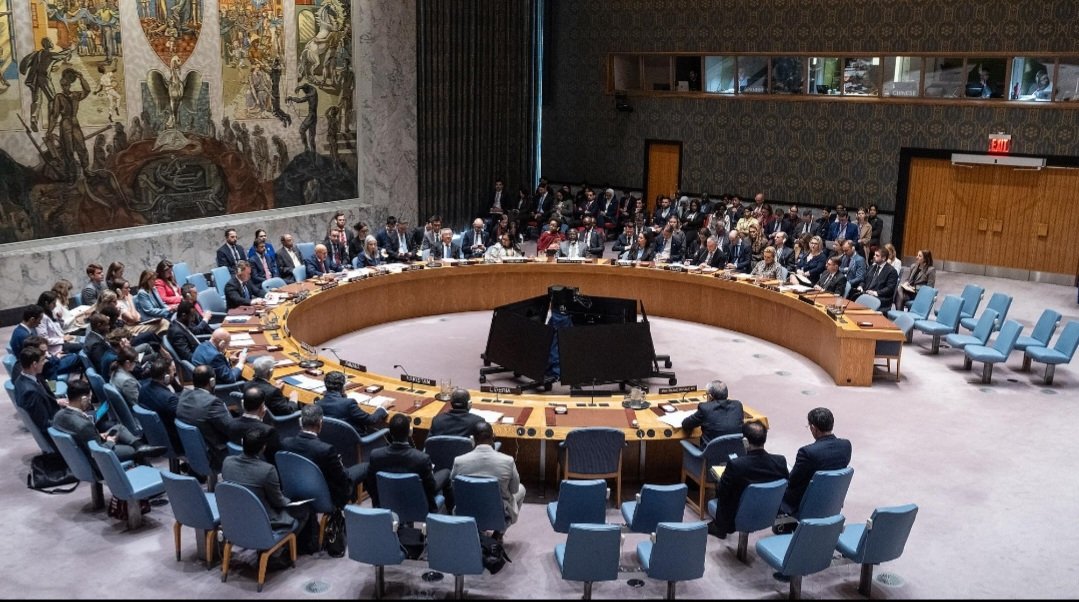
A rare diplomatic confrontation unfolded at the United Nations Security Council when the United States delegation walked out of a meeting as France’s representative took the floor, protesting what Washington described as “disingenuous grandstanding” over criticism of the Trump administration’s human rights record. The incident highlighted growing tensions between two longstanding allies amid wider disagreements over international human rights policy and transatlantic relations.


The walkout occurred during a Security Council session on the war in Ukraine. Before leaving the chamber, senior U.S. diplomat Dan Negrea accused France of attempting to lecture the United States on human rights while ignoring its own shortcomings. He said Washington would no longer tolerate what it viewed as disrespectful rhetoric from one of its closest allies.

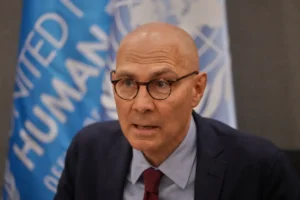
The dispute stemmed from France’s criticism of the United States after the U.N. General Assembly voted overwhelmingly to grant Volker Türk, the U.N. High Commissioner for Human Rights, a second four-year term. The United States was among just ten countries that voted against his reappointment, while 144 member states supported it. France’s U.N. mission in Geneva subsequently posted on social media that the United States had once been “a beacon of human rights” but now stood isolated alongside countries such as North Korea and Russia.
Washington strongly rejected those accusations. U.S. Ambassador to the United Nations Mike Waltz argued that France was supporting a U.N. human rights chief whom the Trump administration believes has unfairly criticised democratic nations, including the United States, Britain and Israel, while failing to hold authoritarian governments sufficiently accountable. Waltz accused France of shielding some of the world’s worst human rights violators while attacking its democratic allies.
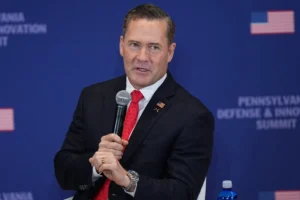
Following the walkout, Negrea defended the U.S. position, insisting America remains “the beacon of liberty for the world.” He warned that U.S. diplomats would continue leaving meetings whenever France addressed the Council unless Paris abandoned what Washington considers inflammatory and disrespectful language. The comments marked an unusually public exchange between two NATO allies that have traditionally coordinated closely at the United Nations.
France’s ambassador to the United Nations, Jérôme Bonnafont, avoided responding directly to the American protest during the meeting. Instead, he reaffirmed France’s commitment to the founding principles of the United Nations, including the promotion of international peace, security and human rights. Bonnafont also recalled the long historical relationship between France and the United States, noting France’s role in supporting American independence.
The diplomatic clash comes amid broader strains in U.S.-European relations under President Donald Trump. The two sides have disagreed over NATO burden-sharing, military deployments in Europe, the war in Ukraine, and Washington’s approach to multilateral institutions. France has also taken a leading role in advocating stronger European defence capabilities and greater strategic autonomy.
Despite the sharp exchange, analysts say the dispute is unlikely to derail broader U.S.-French cooperation on security issues. However, it reflects increasingly visible divisions between Washington and several European allies over international human rights policy and the future role of global institutions, raising questions about Western unity at a time of multiple international crises.