
World News
Israel and Lebanon Sign Historic U.S.-Backed Framework Agreement in Major Step Toward Peace

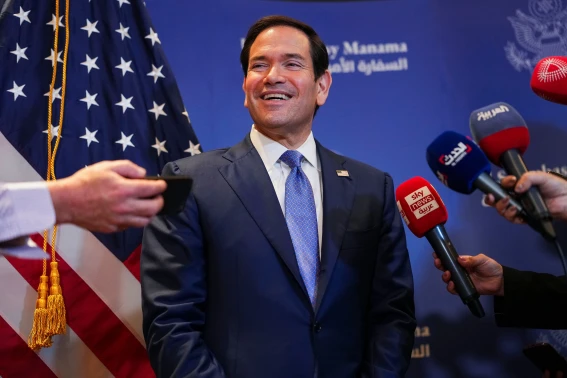
In a potentially historic diplomatic breakthrough, Israel and Lebanon have signed a U.S.-backed framework agreement that American officials describe as the first step toward a broader peace arrangement between the two longtime adversaries. The accord was announced on Friday by U.S. Secretary of State Marco Rubio following several days of negotiations in Washington.
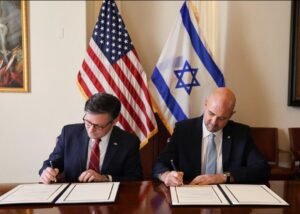
The agreement was signed by Israel’s ambassador to the United States, Yechiel Leiter, and Lebanon’s ambassador to the United States, Nada Hamadeh, during a ceremony hosted by the U.S. State Department. While officials did not immediately release the full contents of the framework, they described it as a roadmap for future negotiations aimed at achieving lasting peace and security between the neighboring countries.
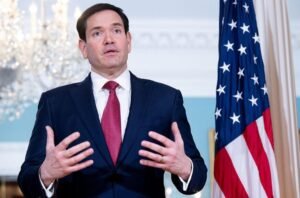
Speaking at the signing ceremony, Rubio said the agreement “begins to put in place a framework for lasting peace and security” and represents a significant diplomatic milestone after months of conflict and decades of hostility between Israel and Lebanon.
The deal follows several rounds of U.S.-mediated talks that sought to end renewed fighting between Israel and the Iran-backed Lebanese militant group Hezbollah. The latest conflict erupted earlier this year when Hezbollah launched attacks into northern Israel, triggering a large-scale Israeli military response that expanded into southern Lebanon. The fighting caused heavy casualties, widespread displacement, and extensive damage on both sides of the border.
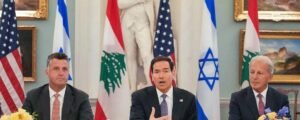
According to reports, more than 4,000 people were killed in Lebanon during the recent hostilities, while Israel reported dozens of military and civilian deaths. Hundreds of thousands of people were displaced as airstrikes, rocket attacks, and ground operations intensified across the border region.
One of the most notable aspects of the framework agreement is the absence of Hezbollah and Iran from the negotiations. U.S., Israeli, and Lebanese officials emphasized that the discussions were conducted between the sovereign governments of Israel and Lebanon, with Washington acting as mediator. Supporters of the agreement argue that excluding non-state armed actors increases the chances of establishing a durable state-to-state understanding.

Although the details remain confidential, previous U.S.-led proposals reportedly included measures aimed at strengthening Lebanese government control over southern Lebanon, expanding the role of the Lebanese Armed Forces, and reducing the influence of armed groups operating outside state authority. Earlier negotiations also discussed the creation of pilot security zones where the Lebanese military would assume exclusive control.
A central issue remains the future of Hezbollah’s armed presence. Israel has consistently demanded the disarmament of the group and its withdrawal from areas near the Israeli border. Lebanese officials, meanwhile, have prioritized the withdrawal of Israeli forces from Lebanese territory and the restoration of full Lebanese sovereignty. These unresolved questions are expected to be among the most difficult issues in future negotiations.
The framework agreement arrives at a sensitive moment in the Middle East, as regional powers attempt to stabilize multiple conflicts involving Iran, Israel, and armed groups aligned with Tehran. U.S. diplomats have portrayed the accord as part of a broader effort to reduce tensions and prevent further escalation across the region.
For Lebanon, the agreement could offer an opportunity to rebuild areas devastated by conflict and attract much-needed international investment. The country has endured years of economic crisis, political instability, and infrastructure challenges, conditions that were worsened by the latest fighting. Israeli officials have also expressed interest in achieving a more secure northern border and reducing the threat of future attacks.
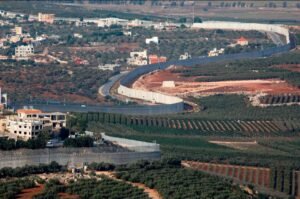
Despite the optimism surrounding the announcement, analysts caution that the agreement is only a preliminary framework rather than a final peace treaty. Significant political, military, and territorial issues remain unresolved, and the success of the process will depend on implementation and continued diplomatic engagement.
Nevertheless, the signing marks one of the most important diplomatic developments between Israel and Lebanon in decades. If negotiations continue successfully, the framework could lay the foundation for a broader normalization process and a more stable security environment along one of the Middle East’s most volatile frontiers.