
World News
Iranian President Announces Planned Release of $6 Billion Held in Qatar Amid Diplomatic Tensions

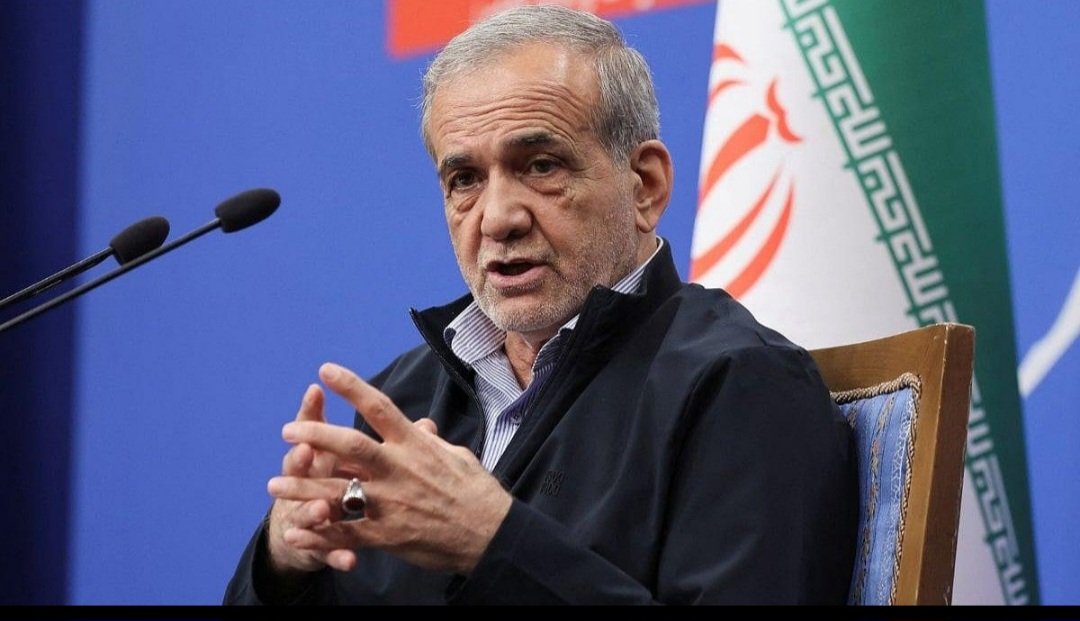
Iranian President Masoud Pezeshkian has announced that $6 billion in frozen Iranian assets held in Qatar will be released, presenting the move as a major diplomatic achievement even as negotiations with the United States face fresh uncertainty following a weekend of escalating military tensions across the Persian Gulf.
Speaking on Monday, Pezeshkian said the funds are part of approximately $12 billion in Iranian financial resources currently held in Qatar. According to Iran’s state-run IRNA news agency, the president said plans had been finalized for the release of half of those assets and that the necessary administrative procedures were underway.

“Based on the plans made, $6 billion out of the total $12 billion of Iranian resources in Qatar will be released and returned to the country,” Pezeshkian said, according to IRNA.
However, U.S. officials have not confirmed that any of the frozen assets have been transferred, creating uncertainty over the actual status of the funds and highlighting continuing differences between Washington and Tehran.
The announcement comes at a delicate stage in efforts to stabilize relations between Iran and the United States following months of conflict.

Over the weekend, tensions flared after Iran launched drone and missile attacks targeting U.S. military facilities in Bahrain and Kuwait, describing the strikes as retaliation for recent American airstrikes on Iranian targets. Tehran also warned that it could suspend negotiations entirely if further U.S. military action occurs.
Despite the violence, mediators; including Qatar and Pakistan, have continued working to keep negotiations alive. Reuters reported that technical teams from both countries are still expected to meet in Doha to discuss implementing a fragile interim agreement aimed at reducing tensions, although Iranian officials have yet to formally confirm their participation.
Access to Iran’s overseas assets has become one of the key issues in the ongoing diplomatic process.
The money originated from Iranian oil revenues that became inaccessible because of international sanctions before being transferred to accounts in Qatar. Tehran argues the funds belong to Iran and should be released without restrictions.
Washington has taken a more cautious position, maintaining that any release would be subject to agreed conditions and oversight mechanisms. U.S. officials have repeatedly emphasized that no assets have yet been released despite Tehran’s announcement.
The negotiations are also unfolding against the backdrop of continued instability around the Strait of Hormuz, one of the world’s most important energy shipping routes.

Recent attacks on commercial vessels and military exchanges in the Persian Gulf have disrupted maritime traffic and raised concerns about global oil supplies. Mediators are working to establish de-escalation mechanisms to keep shipping lanes open and prevent further conflict.
Energy analysts warn that any prolonged disruption in the region could have significant consequences for international oil markets, given that roughly one-fifth of global oil trade normally passes through the strategic waterway.
While Iranian officials have portrayed the planned release of the assets as evidence that diplomacy is producing results, Washington continues to urge caution.
American officials say negotiations remain fragile and insist several political and technical issues must still be resolved before any agreement can be fully implemented. The conflicting public statements underscore the lack of clarity surrounding the status of the funds and the broader diplomatic process.
President Pezeshkian’s announcement represents one of the strongest indications yet that Iran expects to regain access to part of its frozen overseas assets.
Whether the $6 billion is ultimately released may depend on the success of ongoing negotiations and the ability of both sides to prevent further military escalation in the Gulf. For now, the announcement has added a new dimension to already complex U.S.-Iran diplomacy, with the future of both the funds and the negotiations remaining uncertain.