
International
India’s Youth Revolt: Why the ‘Cockroach’ Movement Became Modi’s Biggest Challenge

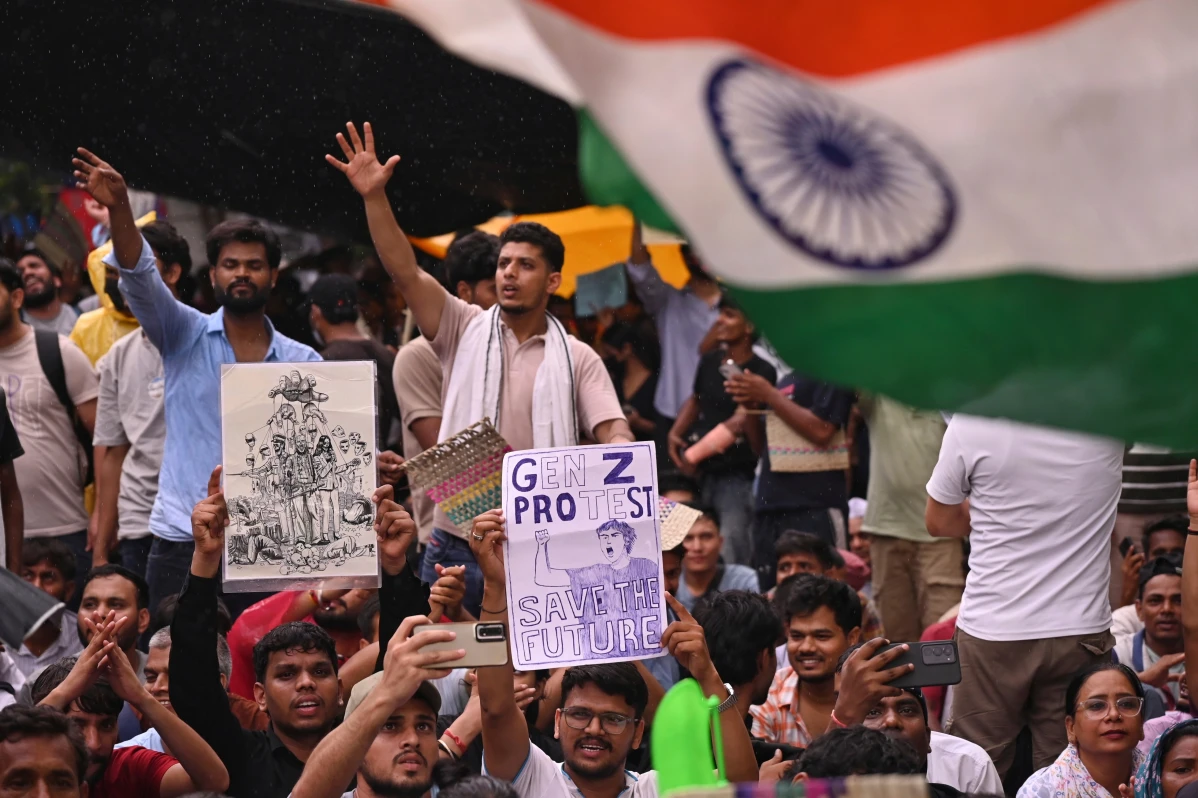
Prime Minister Narendra Modi is facing one of the most significant political challenges of his tenure after a youth-led protest movement known as the Cockroach Janta Party (CJP) transformed online satire into a nationwide campaign demanding accountability, education reforms and better economic opportunities.
What began as a social media joke has rapidly evolved into one of India’s largest youth protest movements in recent years, exposing growing frustration among millions of young Indians over unemployment, recurring examination paper leaks, rising living costs and what protesters describe as government inaction.
The movement’s unusual name traces back to remarks widely interpreted as comparing unemployed or outspoken young people to “cockroaches.” Rather than reject the label, Gen Z activists embraced it, turning the insect into a symbol of resilience and collective resistance. The satirical Cockroach Janta Party soon attracted millions of followers across social media platforms and organized thousands of volunteers for demonstrations across India.
The protests gained momentum after repeated controversies surrounding India’s highly competitive entrance examinations, particularly allegations of leaked exam papers that left countless students believing years of preparation had been wasted.
For many participants, the demonstrations extended beyond education. Protesters argued that exam scandals reflected deeper governance failures, including a shrinking job market, limited opportunities for graduates and declining trust in public institutions.
Thousands of protesters eventually converged in New Delhi, demanding the resignation of Education Minister Dharmendra Pradhan. Police attempted to prevent marchers from approaching Parliament using barricades, tear gas and baton charges, but the demonstrations continued for days and attracted widespread national and international attention.
In a development many political analysts described as unprecedented under Modi’s administration, Education Minister Dharmendra Pradhan resigned after weeks of sustained public pressure.
The resignation was widely viewed as a significant victory for the youth movement and marked one of the few instances in which Modi’s government appeared to yield to large-scale public protests. The government also announced measures aimed at tightening laws against examination malpractice and promised reforms to restore confidence in the education system.
For over a decade, Modi has cultivated an image as a decisive and politically dominant leader. Analysts say the Cockroach movement has challenged that perception by demonstrating that digitally connected young voters can organize rapidly and force political concessions.
Although Modi and his governing party remain politically influential, observers believe the protests have exposed growing dissatisfaction among India’s younger generation; particularly those struggling with unemployment and limited economic opportunities despite years of education.
Political commentators note that the movement is less about supporting opposition parties than expressing frustration with systemic issues affecting India’s youth. Even after the minister’s resignation, activists insist their broader demands for accountability, employment and education reform remain unresolved.
Leaders of the Cockroach Janta Party have said they do not currently intend to transform the movement into a conventional political party. Instead, they say they want to remain a platform representing young Indians seeking reforms and greater government accountability.
Whether the movement develops into a lasting political force remains uncertain, but analysts agree it has already altered India’s political landscape by proving that online activism can evolve into sustained mass mobilization capable of influencing national politics.