
International
Pressure Mounts on Germany’s Merz After Fractious Cabinet Reshuffle

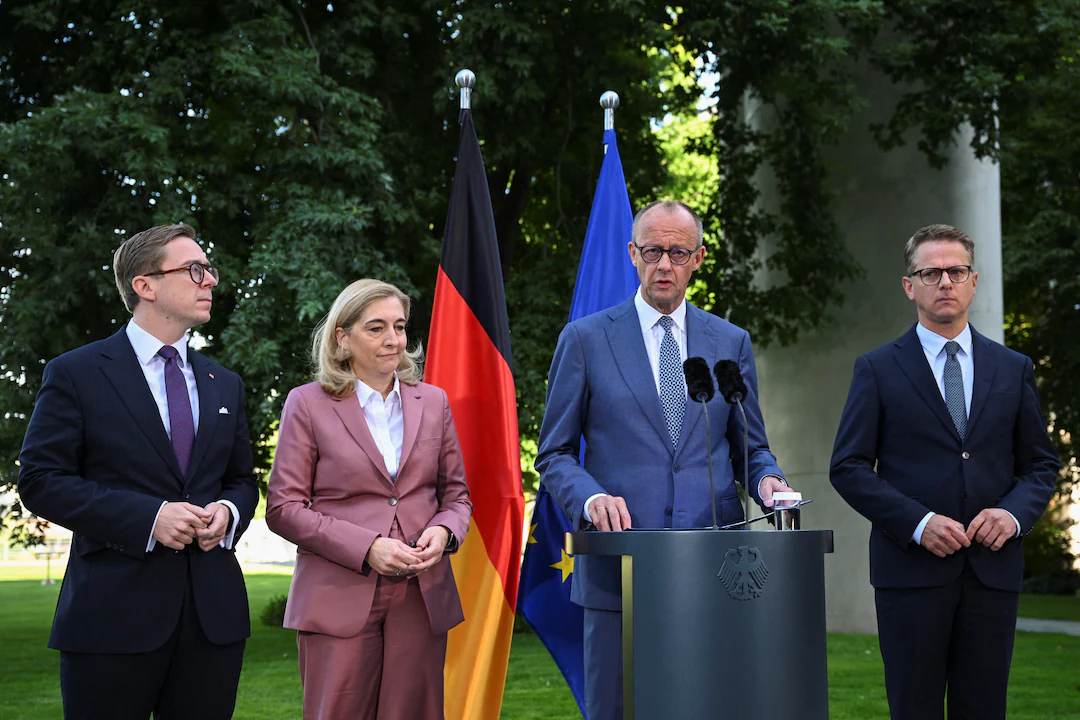
German Chancellor Friedrich Merz is facing mounting political pressure after a contentious cabinet reshuffle triggered divisions within his conservative alliance, exposing growing dissatisfaction with his leadership just weeks before crucial state elections. What was intended to reset his struggling administration has instead fuelled criticism from lawmakers and raised fresh concerns about the stability of Germany’s governing coalition.


The reshuffle followed the resignation of senior conservative figure Jens Spahn as parliamentary leader of the CDU/CSU bloc after controversy surrounding his use of surrogacy. Seeking to quickly restore order, Merz promoted his close ally Thorsten Frei to lead the parliamentary group while appointing former Health Minister Nina Warken as Germany’s first female chief of staff. Carsten Linnemann was selected to replace Warken as health minister, and further personnel changes followed.
However, the changes have sparked fierce resistance within Merz’s own party. One of the biggest flashpoints was the dismissal of Transport Minister Patrick Schnieder, whose removal angered many lawmakers from his home state of Rhineland-Palatinate. Reports indicate that several regional CDU legislators refused to meet the chancellor, saying they had lost confidence in the way the reshuffle was handled.
Adding to the turmoil, Merz’s preferred replacement for the transport portfolio reportedly declined the position before eventually agreeing on another candidate, creating confusion and reinforcing criticism that the reshuffle lacked planning and clear communication. The episode has prompted opponents and even some allies to question the chancellor’s political judgement.
The internal unrest comes at a politically sensitive moment. Germany is preparing for key state elections in September, particularly in eastern regions where the far-right Alternative for Germany (AfD) continues to gain support. Recent opinion polls show the AfD running ahead of the CDU/CSU nationally, while Merz’s personal approval ratings have fallen sharply, with only about 15% of voters expressing satisfaction with his performance.
Political analysts say Merz is under pressure not only because of the reshuffle but also due to broader public concerns over Germany’s sluggish economy, migration, and the pace of promised reforms. Critics argue that the government has struggled to deliver visible improvements since taking office, allowing the AfD to present itself as the main alternative to the governing coalition.
Despite the backlash, Merz has defended the personnel changes, insisting they are necessary to strengthen his administration before the autumn election campaign. He has expressed confidence that tensions within the CDU will ease in the coming weeks and that the government can refocus on economic reforms, infrastructure investment and national security.
The coming weeks are expected to be critical for the chancellor. If Merz succeeds in restoring party unity and improving public confidence, the reshuffle may ultimately be viewed as a necessary reset. But if internal divisions persist and the AfD continues its rise, the cabinet shake-up could mark a turning point that further weakens both his leadership and the conservative bloc ahead of Germany’s most closely watched regional elections in years.