
Disaster/Tragedy
Venezuela Earthquake Disaster Worsens as Death Toll Reaches 164, Nearly 1,000 Injured

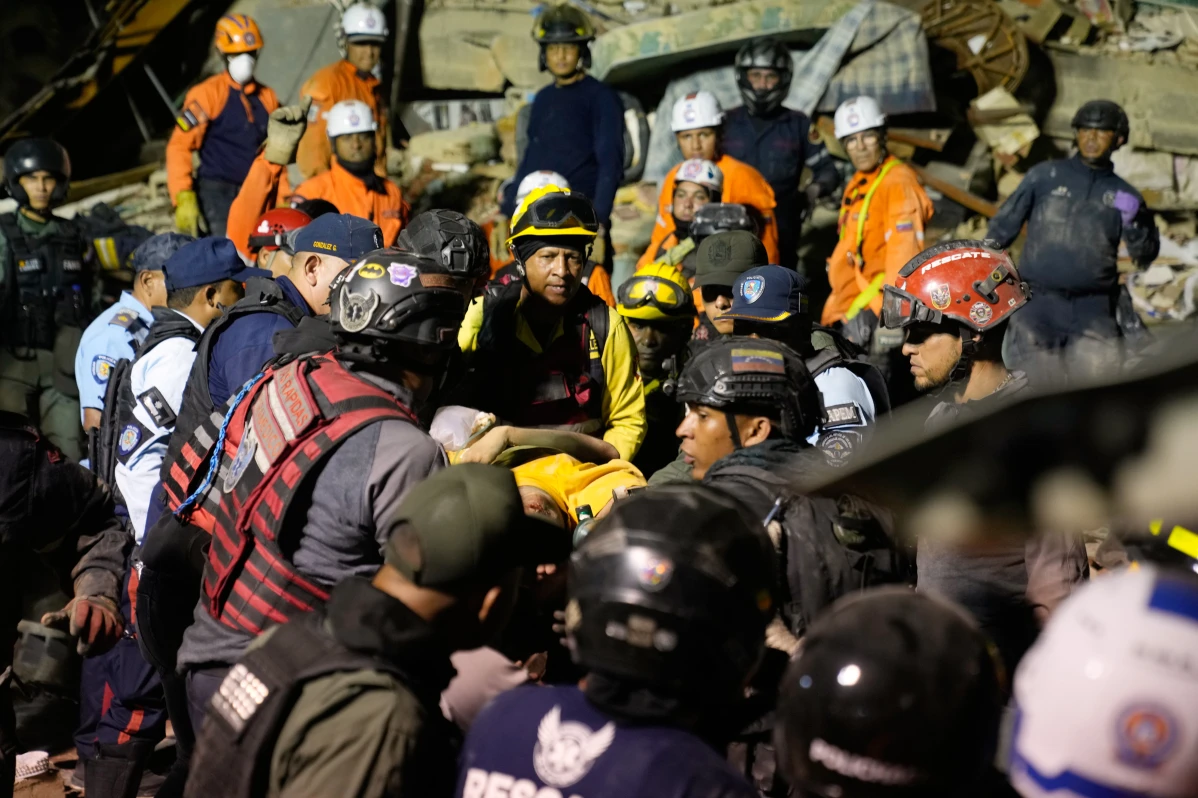
Venezuela is facing one of the deadliest natural disasters in its modern history after two powerful earthquakes struck the country, killing at least 164 people and injuring nearly 1,000 others, according to the latest figures released by authorities.
The twin earthquakes, measuring 7.2 and 7.5 in magnitude, struck within moments of each other on Wednesday evening, sending shockwaves across much of northern Venezuela and causing widespread destruction in several states. Rescue officials warned that the death toll could continue to rise as emergency crews search through collapsed buildings and isolated communities cut off by damaged infrastructure.
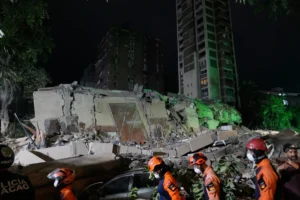
Authorities said the earthquakes caused extensive destruction in and around the capital, Caracas, as well as in the coastal state of La Guaira, which has emerged as the worst-affected region. Entire residential blocks, office buildings, and public facilities were damaged or destroyed, leaving thousands of residents displaced.
Interim President Delcy Rodríguez addressed the nation following emergency meetings with government officials and disaster-response agencies. She described the situation as a national tragedy and announced a nationwide state of emergency.
“We are facing an unprecedented challenge,” Rodríguez said. “Our priority is saving lives, providing medical assistance, and ensuring that every affected family receives support.”
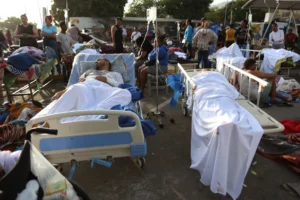
Emergency services reported that nearly 1,000 people have been injured, with hospitals in Caracas, La Guaira, Miranda, and neighboring states operating under emergency conditions. Medical centers have established temporary treatment areas to cope with the surge of patients suffering fractures, head injuries, and other trauma-related conditions.
Particularly severe damage was reported in La Guaira, home to the country’s principal international gateway, Simón Bolívar International Airport. Authorities ordered the airport closed after inspectors discovered significant structural damage to terminals and support facilities. Several domestic and international flights were canceled or diverted.
Search-and-rescue teams continue to work around the clock in collapsed residential neighborhoods where officials believe survivors may still be trapped beneath rubble. Military personnel, firefighters, civil defense workers, and volunteers have joined the effort, using heavy machinery and specialized rescue equipment to reach affected areas.
The earthquakes were felt far beyond Venezuela’s borders. Residents in parts of Colombia, Brazil, and several Caribbean nations reported strong shaking. Buildings were evacuated in some Brazilian cities, although no major damage was reported outside Venezuela.
International support has begun arriving as the scale of the disaster becomes clearer. Governments across Latin America, North America, and Europe have pledged assistance, including emergency medical supplies, rescue specialists, food aid, and temporary shelter materials.
The United Nations announced it was coordinating humanitarian support through its disaster-response agencies, while the International Federation of Red Cross and Red Crescent Societies mobilized emergency teams to assist local responders.
The United States, Brazil, Mexico, Spain, and several Caribbean countries have also offered assistance. International rescue specialists are expected to help Venezuelan authorities search for survivors and assess damage to critical infrastructure.
Seismologists described the event as a rare and highly destructive seismic doublet, where two major earthquakes occur in rapid succession. The powerful shaking was followed by dozens of aftershocks, some of which were strong enough to cause additional structural damage and hamper rescue efforts.
Experts warned that aftershocks could continue for days or even weeks. Authorities have advised residents to avoid damaged buildings and remain alert for emergency instructions.
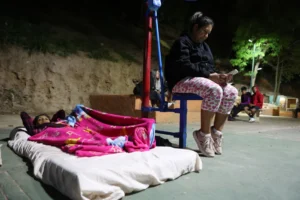
Schools and government offices across multiple regions have been closed indefinitely. Thousands of people spent the night in temporary shelters, parks, and open spaces due to fears that weakened structures could collapse during aftershocks.
Economists say the disaster is likely to have a significant impact on Venezuela’s already fragile economy. Damage assessments are still underway, but early estimates suggest that billions of dollars in infrastructure, housing, transportation, and public services may have been affected.
As rescue operations continue, attention is increasingly turning toward long-term recovery efforts. Government officials, humanitarian organizations, and international partners are expected to coordinate reconstruction plans once emergency operations transition into the recovery phase.
For now, Venezuela remains focused on locating survivors and assisting affected communities as the country confronts the human and economic consequences of one of the most destructive earthquakes in its history.