
World News
Trump Urges Syria to Confront Hezbollah, Raising Fears of New Regional Conflict

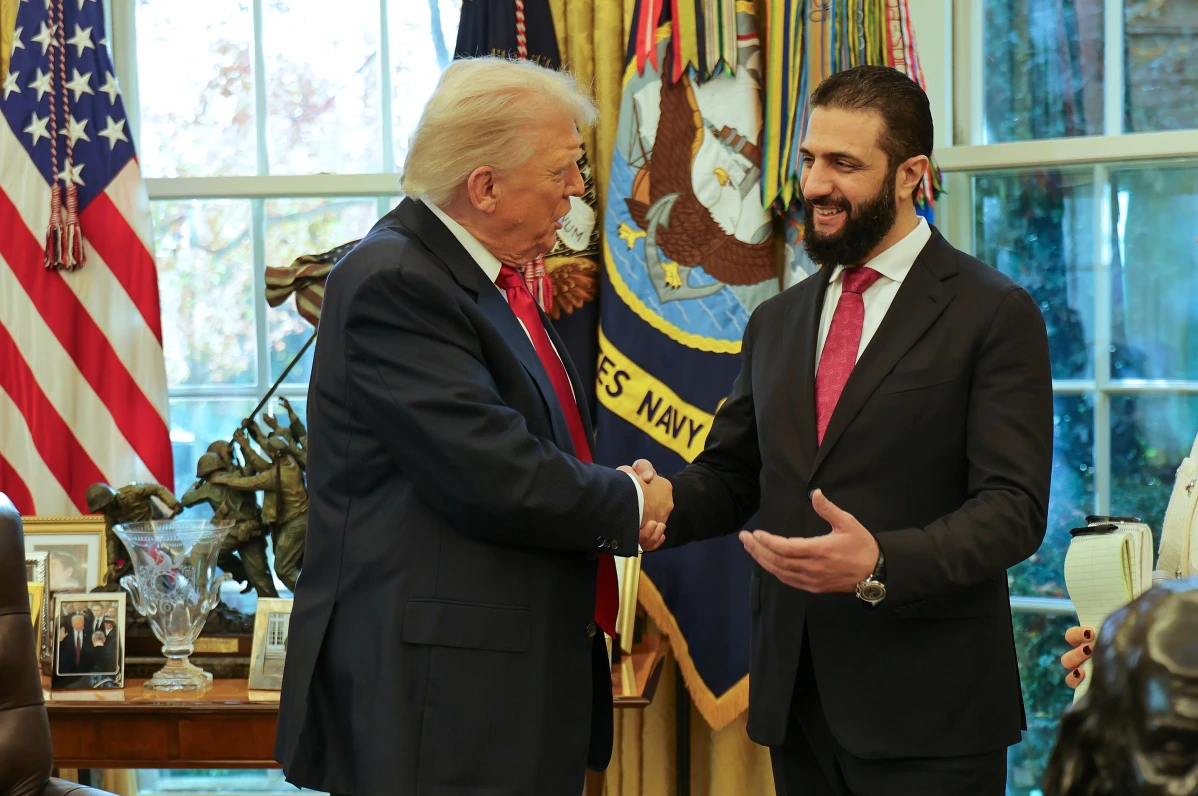
U.S. President Donald Trump has intensified pressure on Syria’s new government to confront Hezbollah in neighboring Lebanon, a proposal that has sparked concern across the Middle East as officials in Lebanon and Israel warn it could ignite another regional conflict.
The remarks come as the United States seeks to consolidate a fragile U.S.-brokered framework between Israel and Lebanon that aims to end months of fighting, strengthen the Lebanese state, and reduce Hezbollah’s military influence in southern Lebanon. Under the proposed arrangement, the Lebanese Armed Forces would gradually assume security responsibilities while Hezbollah is expected to disarm in designated areas.

According to U.S. officials, Trump has argued that Syria’s military should take a more active role in neutralizing Hezbollah’s presence near the Syrian-Lebanese border, suggesting Damascus could help prevent the group from rebuilding its military capabilities.
The proposal reflects Washington’s broader effort to weaken Iranian-backed armed groups across the region. However, it has been met with skepticism from regional governments and security analysts, who fear such a move could draw Syria into a direct confrontation with Hezbollah and further destabilize Lebanon.
Syrian President Ahmed al-Sharaa has sought to distance his government from the proposal, saying his administration has no intention of launching military operations against Hezbollah inside Lebanon.
Officials in Damascus have emphasized that Syria’s priority remains rebuilding the country after years of civil war and restoring stability, rather than becoming involved in another regional conflict. Syrian residents interviewed by regional media also expressed opposition to any military intervention in Lebanon, arguing that Syria should avoid opening a new front.
The proposal has generated strong reactions in Lebanon, where political leaders fear that involving Syria militarily could worsen the country’s already fragile security situation.
Parliament Speaker Nabih Berri, a close Hezbollah ally, sharply criticized the U.S.-backed framework between Lebanon and Israel, warning that it risks provoking internal divisions and could never be implemented in its current form. Hezbollah has likewise rejected calls for disarmament, insisting that its weapons remain necessary to defend Lebanon against Israel.
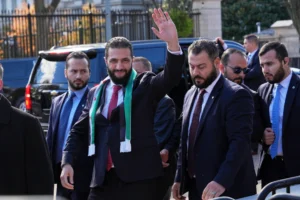
Analysts note that Lebanon is already facing severe economic hardship and political instability, making the prospect of another military confrontation particularly alarming.
Although Israel has long viewed Hezbollah as one of its most significant security threats, Israeli officials are reportedly cautious about relying on Syria to confront the group.
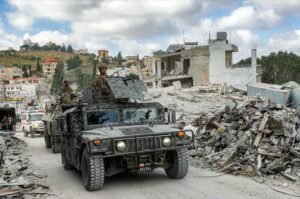
Israel remains wary of Syria’s new Islamist-led government and continues to carry out military operations inside Syrian territory, saying they are aimed at preventing hostile forces from establishing positions near its borders. Security experts say Israeli leaders question whether Damascus has either the military capacity or the political will to challenge Hezbollah directly.
Trump’s proposal comes amid broader diplomatic efforts to reduce tensions across the Middle East, including indirect negotiations involving Iran, the United States, Israel and Lebanon.
The U.S.-mediated agreement between Israel and Lebanon envisions a phased Israeli withdrawal from southern Lebanon, reconstruction assistance and the gradual extension of Lebanese government authority into areas historically dominated by Hezbollah. However, implementation has already encountered significant political resistance.
For now, there is little indication that Syria intends to act on Trump’s proposal, while Hezbollah continues to reject any plan requiring it to surrender its weapons.
With divisions deepening inside Lebanon, ongoing Israeli military operations, and Syria focused on its own domestic recovery, analysts say any attempt to involve Damascus directly against Hezbollah could complicate already fragile diplomatic efforts rather than strengthen them.