
International
House Democrats Prioritise Healthcare Reforms, Ending Iran War as They Prepare to Take Majority

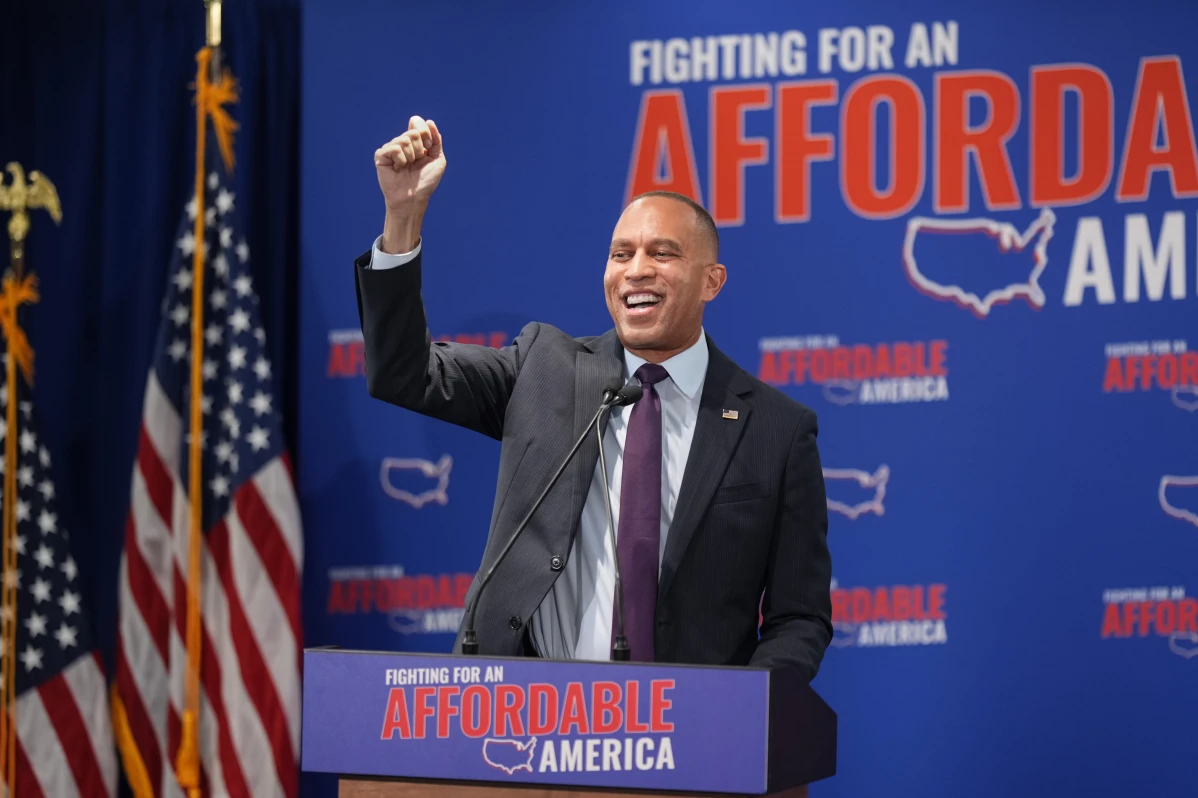
Democrats in the United States House of Representatives are preparing to prioritise healthcare reforms and efforts to end the war with Iran when they assume majority control of the chamber in January 2027, following their sweeping victories in the November midterm elections.
The party’s legislative agenda is expected to focus on expanding Medicaid, restoring enhanced tax subsidies under the Affordable Care Act and advancing legislation aimed at bringing the US military involvement in Iran to an end.

House Democratic Leader Hakeem Jeffries, who is expected to become the next Speaker of the House, said the party intends to move quickly once the new Congress is sworn in on January 3.
“We’re going to get out of the gate fast,” Jeffries said, signalling an aggressive legislative approach aimed at delivering on campaign promises to reduce living costs and improve access to essential services.
Democrats are seeking to reverse changes to Medicaid introduced under President Donald Trump’s tax and spending legislation, which is projected to reduce federal spending on the programme by more than $900 billion over a decade.
The party also wants to restore enhanced Affordable Care Act subsidies designed to make health insurance more affordable for millions of Americans.
According to KFF, a health policy research organisation, Medicaid enrolment had fallen by approximately five million people, representing about seven per cent, since July 2025.

Beyond healthcare, Democrats have pledged to push legislation seeking to end the US war with Iran, following months of military confrontation and repeated disagreements over presidential war powers.
Lawmakers have already held several votes on the conflict, including 14 in the Senate and six in the House, reflecting continuing divisions over the administration’s military actions.
The party also intends to challenge some of Trump’s trade tariffs, which Democrats argue have contributed to higher costs for American households and businesses.

Other priorities include reducing the cost of housing, groceries, energy and caregiving, alongside introducing safeguards for artificial intelligence and data-centre development.
However, despite their expected numerical advantage in the House, Democrats could encounter significant obstacles in turning their proposals into law.
Most major legislation requires 60 votes to overcome a filibuster in the Senate, where Republicans retain control. President Trump could also veto bills passed by Congress.
Senate Majority Leader John Thune has warned that Democratic control of the House could result in legislative gridlock during the next two years.
Democratic Senate leader Chuck Schumer, however, has indicated that his party intends to pursue its priorities even when faced with opposition from the White House.
There are also internal disagreements within the Democratic Party over how aggressively to challenge Republican policies, particularly whether to eliminate the Senate filibuster to make passing legislation easier.
Progressive lawmakers and advocacy groups are calling for broader measures addressing corporate power, workers’ rights, consumer protection and the influence of technology companies.
The coming congressional session is therefore expected to feature major political confrontations between Democrats and the Trump administration, with healthcare, foreign policy, trade and the cost of living at the centre of the debate.