
Analysis
CHINUA ACHEBE: EARTHDAY


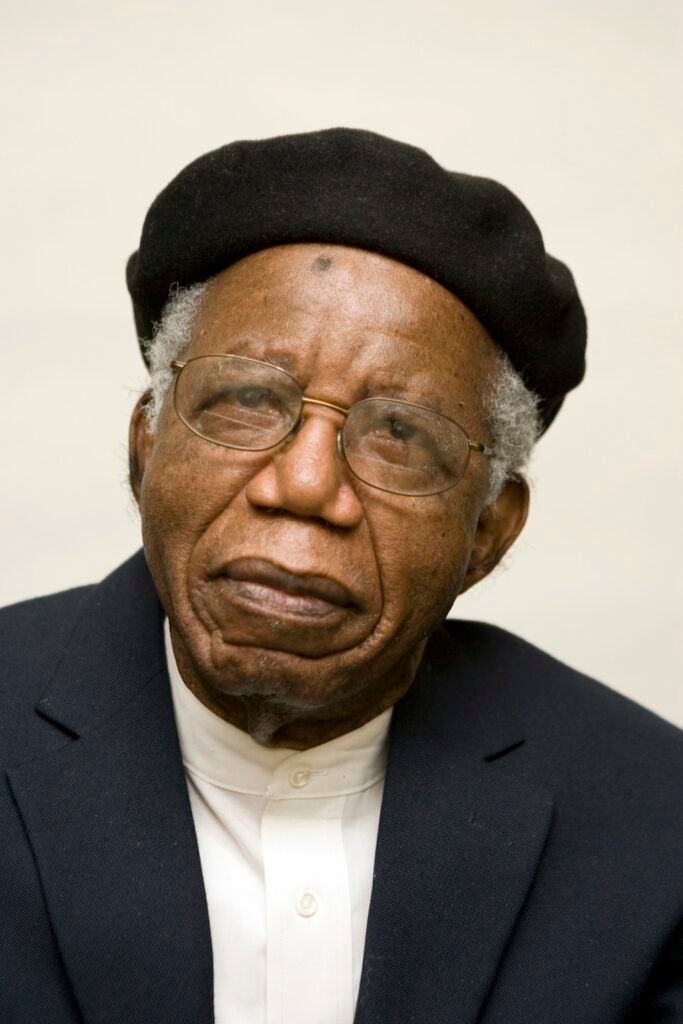
Chinua Achebe, born Albert Chinụalụmọgụ Achebe on November 16, 1930, in Ogidi, Nigeria, was a pioneering Nigerian novelist, poet, essayist, and critic widely regarded as the father of modern African literature. His works, particularly his debut novel Things Fall Apart (1958), revolutionized the portrayal of African societies in literature by countering colonial stereotypes and drawing on Igbo oral traditions to explore themes of cultural clash, colonialism, identity, and postcolonial disillusionment. Achebe’s writing in English allowed him to reach a global audience while critiquing Western narratives about Africa, influencing generations of writers and establishing African literature as a vital force in world letters. Over his career, he published five novels, numerous essays, poetry collections, short stories, and children’s books, often blending Igbo proverbs, folklore, and history with sharp social commentary.

Achebe was born into a family that embodied the tensions between traditional Igbo culture and Christianity in colonial Nigeria. His father, Isaiah Okafo Achebe, was a teacher and evangelist for the Church Missionary Society (CMS), having converted from the indigenous Odinani religion, while his mother, Janet Anaenechi Iloegbunam, came from a family of vegetable farmers and church leaders. Raised in Ogidi, a town in the Igbo heartland, Achebe was the fifth of six children in a household that respected ancestral traditions despite its Christian faith. Storytelling played a central role in his upbringing, with his mother and older sister sharing Igbo folktales, which later informed his narrative style. He began formal education at St. Philip’s Central School in Ogidi in 1936, excelling in reading and handwriting, and attended Sunday school where he encountered biblical stories alongside Igbo customs.

In 1944, Achebe enrolled at the prestigious Government College in Umuahia, a secondary school modeled on British public schools, where he developed a love for literature and debated Christian doctrines. A classmate was the future poet Christopher Okigbo, who would become a close friend. In 1948, he won a scholarship to study medicine at University College, Ibadan (now the University of Ibadan), Nigeria’s first university and an affiliate of the University of London. However, disillusioned by Western literature’s derogatory depictions of Africans such as in Joseph Conrad’s Heart of Darkness and Joyce Cary’s Mister Johnson, he switched to English, history, and theology, forfeiting his medical scholarship but securing family support for a new bursary. During his university years (1948–1953), Achebe contributed to the student magazine The University Herald, serving as editor in 1951–1952 and publishing early short stories like “Polar Undergraduate” (1950), “In a Village Church” (1951), and “Dead Men’s Path” (1953), which explored conflicts between tradition and modernity. He graduated with a second-class honors degree in 1953.

After graduation, Achebe briefly taught English at the Merchants of Light School in Oba, where he encouraged students to read widely and question colonial narratives. In 1954, he joined the Nigerian Broadcasting Service (NBS, later the Nigerian Broadcasting Corporation) in Lagos as a talks producer, honing his skills in dialogue and narrative that would benefit his fiction. While at NBS, he drafted his first novel, inspired by the urban migration he observed in Lagos and events like Queen Elizabeth II’s 1956 visit to Nigeria. In 1956, he attended a BBC staff training course in London, where he submitted the manuscript for Things Fall Apart to Heinemann publishers. The novel’s success in 1958 led to his promotion at NBS, and by 1961, he was directing external broadcasting, helping establish the Voice of Nigeria during the country’s independence.
Achebe also played a key role in promoting African literature. In 1962, he became the founding editor of Heinemann’s African Writers Series, which published works by emerging authors like Ngũgĩ wa Thiong’o, Flora Nwapa, and Nadine Gordimer, democratizing African voices in global publishing. He cofounded Citadel Press in Enugu with poet Christopher Okigbo in 1967.
Achebe’s career intersected with Nigeria’s turbulent politics. His 1966 novel A Man of the People, a satire on postcolonial corruption, eerily foreshadowed a military coup that occurred shortly after its publication, leading to accusations of his involvement in a conspiracy. When the Igbo-dominated Eastern Region seceded as the Republic of Biafra in 1967, sparking the Nigerian Civil War (1967–1970), Achebe supported the cause, serving as a roving ambassador and drafting key documents like the Ahiara Declaration (1969), which outlined principles for a post-war society. The war devastated him personally: his home was bombed, his friend Okigbo was killed, and his family fled multiple times, with his wife suffering a miscarriage amid the chaos. Achebe toured the U.S. and Europe to raise awareness, lecturing with fellow writers Gabriel Okara and Cyprian Ekwensi. Post-war, he channeled his experiences into poetry and essays, critiquing the conflict’s humanitarian toll.
In the 1970s and 1980s, Achebe remained politically active, serving as deputy national president of the People’s Redemption Party and publishing The Trouble with Nigeria (1983), a scathing critique of corruption and poor leadership in his homeland. He twice declined Nigeria’s national honor, the Commander of the Federal Republic, in 2004 and 2011, citing the country’s political instability and governance failures.
Major Works
Achebe’s oeuvre spans genres, but his novels form the core of his legacy, often called the “African Trilogy” for the first three. His writing style incorporates Igbo proverbs, oral storytelling, and a balanced portrayal of pre-colonial African societies, challenging Eurocentric views.
-Things Fall Apart 1958: Follows Okonkwo, a proud Igbo wrestler and leader, whose life unravels with the arrival of British colonialists and missionaries.
-No Longer at Ease 1960 : Centers on Obi Okonkwo, Okonkwo’s grandson, who returns from England educated but succumbs to corruption in postcolonial Lagos.
-Arrow of God 1964 : Depicts Ezeulu, a chief priest, navigating British colonial administration and internal village rivalries.
-A Man of the People 1966: A satirical take on a corrupt minister in a fictional African nation, ending in a coup.
-Anthills of the Savannah| 1987- Explores a military dictatorship in the fictional Kangan, through the eyes of intellectuals.
Achebe’s essays are foundational to postcolonial theory. Key collections include:
-Morning Yet on Creation Day (1975): Discusses African literature’s ties to oral traditions and critiques colonial influences.
-Hopes and Impediments (1988): Includes “An Image of Africa: Racism in Conrad’s Heart of Darkness” (1975), a seminal critique labeling Conrad a “thoroughgoing racist.”
-Home and Exile (2000): Semi-autobiographical reflections on displacement and Native American parallels.
-The Education of a British-Protected Child (2009): Essays on his colonial upbringing.
-There Was a Country: A Personal History of Biafra (2012): Memoir blending personal anecdotes with the war’s history.
Poetry and Short Stories
-Poetry: Beware, Soul-Brother (1971, revised 1972) and Christmas in Biafra (1973), addressing war’s horrors, including poems like “Refugee Mother and Child.”
-Short Stories: The Sacrificial Egg and Other Stories (1962) and Girls at War and Other Stories (1972), drawing on folklore with moral undertones.
Children’s Books
-Chike and the River (1966): A story of a boy crossing the Niger River, addressing racial biases in education.
-How the Leopard Got His Claws (1972, with John Iroaganachi): A fable on power and betrayal.
After the war, Achebe returned to academia, serving as a research fellow and professor of English at the University of Nigeria, Nsukka (1976–1981), where he founded the journal Okike and edited Uwa ndi Igbo. He held visiting professorships at the University of Massachusetts Amherst (1972–1975) and the University of Connecticut. In 1990, a car accident near Lagos left him paralyzed from the waist down, prompting his move to the United States for treatment. From 1990 to 2009, he was the Charles P. Stevenson Professor of Languages and Literature at Bard College, New York, and in 2009, he joined Brown University as Professor of Africana Studies. Achebe married Christie Okoli in 1961; they had four children Chinelo, Ikechukwu, Chidi, and Nwando and he became a titled chief in Ogidi.
Achebe’s accolades reflect his global impact:
-Commonwealth Poetry Prize (1972)
-Nigerian National Merit Award and Order of the Federal Republic (1979)
-Honorary Fellowship, American Academy of Arts and Letters (1982)
-St. Louis Literary Award (1999)
-Peace Prize of the German Book Trade (2002)
-Man Booker International Prize (2007)
-Dorothy and Lillian Gish Prize (2010)
He received over 30 honorary doctorates from institutions like Harvard, Dartmouth, and Brown. In 1999, he was appointed a Goodwill Ambassador for the United Nations Population Fund. Notably, he was the first living author included in the Everyman’s Library collection in 1992.
Achebe died on March 21, 2013, in Boston, Massachusetts, at age 82, following a brief illness, and was buried in Ogidi. His legacy endures as a transformative figure who gave voice to African experiences, inspiring writers like Chimamanda Ngozi Adichie and Wole Soyinka. Things Fall Apart remains a staple in curricula worldwide, symbolizing resistance to colonial narratives. Memorials include the Achebe Center at Bard College (2005), annual literary festivals in his name, and a bust at the University of Nigeria (2019). Achebe’s work continues to spark debates on postcolonialism, cultural identity, and the role of literature in social change, cementing his status as a central pillar of 20th-century literature.
Shared by:
Cde Odimwengu
Coordinator and Librarian, CConsciencism Study Group
Analysis
Ozoro Festival Scandal Sparks National Debate on ‘Weaponised Traditions’ and Cultural Reform
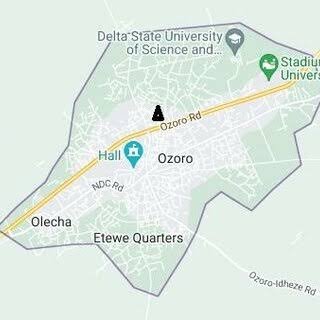
The controversy surrounding the Ozoro Festival in Delta State has ignited a nationwide debate over harmful cultural practices, following viral videos showing acts of sexual violence and widespread outrage across Nigeria.

The scandal has led to the arrest of six suspects by the police, including a community leader, but many Nigerians argue that the response falls short of justice and fails to address deeper cultural issues.
Critics have described the Ozoro Alue-Do Festival as a “weaponised tradition,” accusing it of reinforcing misogyny and enabling abuse under the guise of cultural celebration. Some members of the Isoko community, however, insist the issue is being misrepresented.
A female indigene, who spoke anonymously, condemned what she described as systemic discrimination against women within the culture, alleging that harmful practices are often excused and victims silenced.
“Women are blamed even in cases of abuse, while perpetrators are shielded,” she said, pointing to long-standing traditions that, in her view, enable injustice.
But cultural analyst Anote Ajelouruo cautioned against sweeping generalisations, arguing that the festival’s origins must be understood within historical context.
He noted that fertility rites were common in many ancient societies and said isolated incidents of misconduct should not define an entire cultural heritage.
“Every society had practices shaped by limited knowledge at the time. What matters is ensuring such traditions are not hijacked or abused,” he said.
Lessons from Ibadan
Observers say reform is possible, pointing to the transformation of the Oke’Badan Festival in Ibadan, which has evolved from a chaotic and unsafe event into a structured cultural celebration.
Journalist and historian Temilade Adeyemi recalled that the festival was once notorious for harassment of women, with vulgar displays and public misconduct.
Today, however, it is widely regarded as a symbol of cultural pride, featuring organised performances and safer participation for women.
Path to Reform
Experts say any attempt to reform the Ozoro Festival must be driven by the community, with traditional leaders playing a central role in redefining its purpose.
They also stress the importance of accountability, urging authorities to ensure that those arrested are prosecuted to rebuild public trust.
Increased participation of women in planning and decision-making is seen as critical to reshaping the festival into a safer and more inclusive event.
Analysts further recommend sustained public education and media engagement to highlight positive cultural values while discouraging harmful practices.
Uncertain Future
Despite the outrage, questions remain over whether meaningful reform will take place or if the festival will continue to attract criticism.
For now, attention remains on both community leaders and law enforcement authorities, as Nigerians watch closely to see whether the incident will mark a turning point or another missed opportunity for change.

By AVM Rtd Akugbe Iyamu MNSA fsi
Extreme weather conditions are unexpected, unusual or severe weather events that fall outside normal patterns, often causing significant disruption, damage to infrastructure, and environmental destruction.
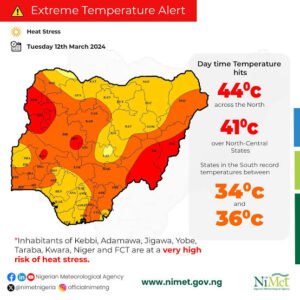
Examples include heatwaves, intense hurricanes, flooding, severe droughts, and tornadoes. These events are becoming more frequent due to climate change.
Nigeria is a country perpetually under elections frenzy: campaigning, off cycle and other electoral activities. These political manifestations always offered little attention to key areas of the environment that threatens economic growth and development, security and poverty, inequality and hunger. As of early 2026, Nigeria hosts over 3.7 million internally displaced persons (IDPs) driven from their homes by conflict, insecurity, and climate disasters. The vast majority of this displacement is concentrated in the North-East and North-West regions, with around 3,900 camps and host communities providing temporary shelter. Currently, Africa is experiencing intensified extreme weather events driven by climate change, primarily manifested as severe droughts, devastating floods, and extreme heatwaves. These events, such as the 2020-2023 Horn of Africa drought and 2024 regional flooding, are becoming more frequent, severely impacting food security, agriculture, and infrastructure.
For instance the death situation in Kenya has risen to 66 and Ethiopia 125 deaths with 11,000 displaced. This is a clear and present danger to Africa and is likely to stretch the existing response measures. At this point NIHSA, NiMet and other agencies need to be called out to show visible signs to the 2026 Seasonal Climate Prediction. At this point, the country need more emphasis in advising all stakeholders to shift from reactive to proactive climate-informed planning to ensure food security and protect infrastructure. Nigeria need to step up preparation against what we see coming as extreme weather in 2026. From the situations in Ethiopia and Kenya, it is obvious that 2026 will be characterized by variable rainfall and cyclone bomb. We have seen prolonged dry spells, and higher-than-average temperatures early in the year that have threatened the health and security of Nigerians. Based on the 2026 Seasonal Climate Prediction (SCP) unveiled by the Nigerian Meteorological Agency (NiMet) on February 10, 2026, the country need to do more. Judging from the heavy snow in the northern hemisphere, nigeria need key preparations that include using AI for better forecasting, tailored agricultural advice, and flood warning systems.
2026 should not be treated like other years. With insecurity, poverty, inequality, high taxation, higher borrowings and higher energy costs, negligence will unravel the economy and underbelly of Nigeria energy security system. Time to act is now because there are too many negatives conflating the country and we have to solve the issues of environmental challenges because when you lack the structure, you attract rupture.
The Federal Government, through the National Orientation Agency (NOA) should be promoting the dissemination of the SCP to local farmers to ensure it directly informs field decisions.
AVM RTD AKUGBE IYAMU MNSA fsi
CONSULTANT ON CLIMATE CHANGE AND ANALYST ON ENVIRONMENTAL POLICIES
PRESIDENT ASSOCIATION OF ENVIRONMENTAL PROTECTION AND CLIMATE CHANGE PRACTITIONERS

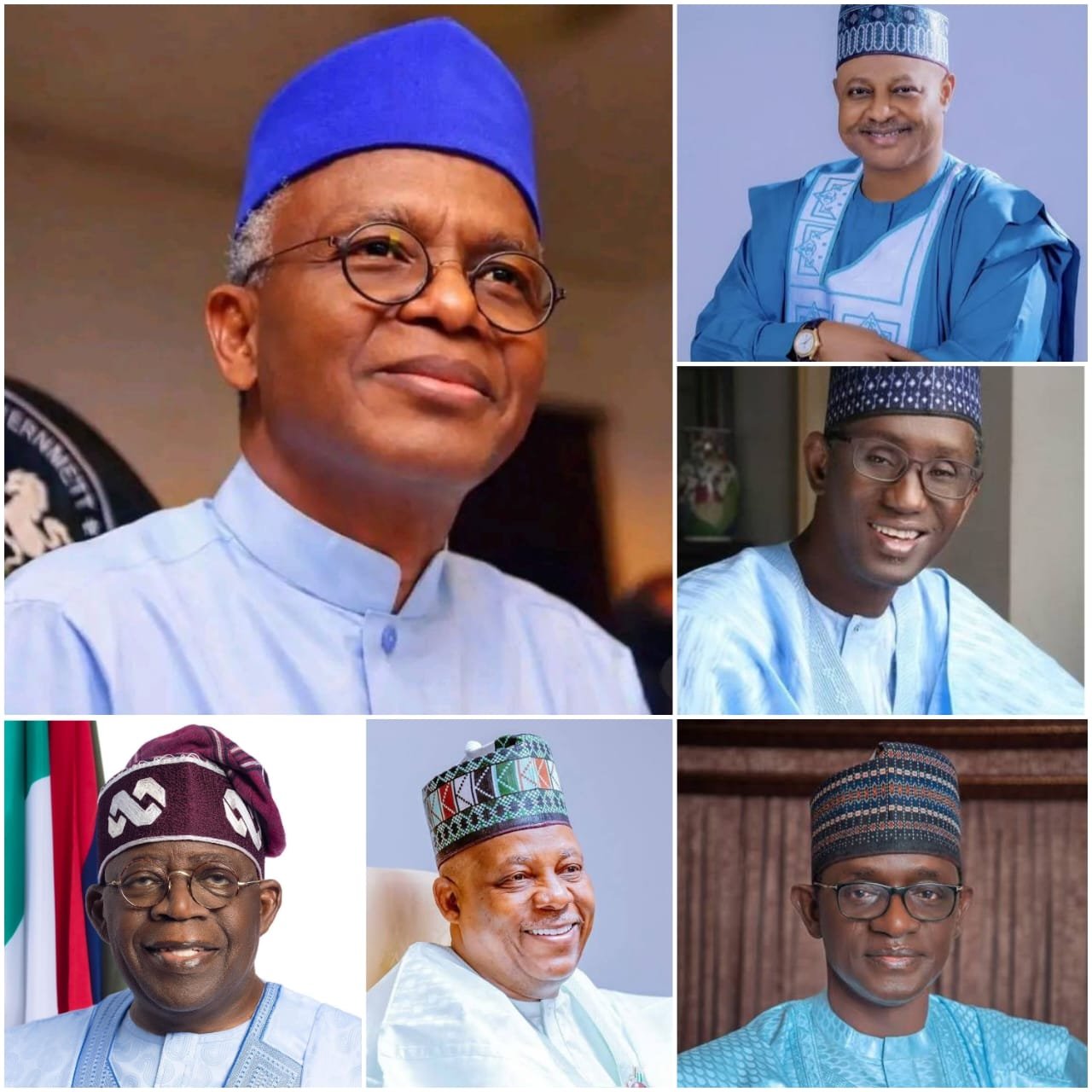
FFK Raises Fresh Questions Over El-Rufai’s Actions, Security Allegations
Former Minister of Aviation, Femi Fani-Kayode, has again raised concerns about the actions and statements of former Kaduna State Governor, Nasir El-Rufai, describing some of them as matters that require clarification in the interest of national security.
In a lengthy statement titled “More Questions for Nasir El-Rufai,” Fani-Kayode said he was still awaiting answers to several issues he had previously raised regarding El-Rufai’s conduct while serving in public office.
He also expressed sympathy after reports that El-Rufai allegedly suffered a nosebleed while in detention, noting that he hoped the former governor would soon respond directly to the questions raised.
Fani-Kayode accused the former governor of carrying out several demolition exercises during his tenure as Minister of the Federal Capital Territory and later as governor of Kaduna State, claiming that the actions affected residential buildings, communities and facilities, including some used by vulnerable groups.
He further alleged that some of the demolitions occurred close to the end of El-Rufai’s tenure in May 2023, including operations reportedly conducted by the Kaduna State Urban Planning and Development Authority in areas such as Gbagyi Villa and other communities.
According to him, critics had described the demolitions as vindictive, while affected residents alleged that some structures were removed despite legal disputes over the properties.
The former aviation minister also raised issues relating to policies implemented during El-Rufai’s administration in Kaduna State, including restrictions on certain religious activities and the suspension of state-sponsored pilgrimages at the time.
Fani-Kayode additionally referenced tensions between El-Rufai and some political figures, including Kaduna State Governor Uba Sani, claiming the relationship deteriorated after the former governor left office.
Beyond the political issues, the statement also touched on security-related concerns, particularly allegations surrounding the bugging of phones and claims involving the possible importation of a toxic substance.
Fani-Kayode said such matters, if true, could pose serious national security implications and called for relevant security agencies to investigate thoroughly.
He expressed confidence that institutions such as the Department of State Services, the Nigerian Police Force, and other intelligence bodies would look into the allegations and determine the facts.
Fani-Kayode maintained that his remarks were intended to raise questions and encourage transparency, emphasizing the need for clarity on issues that could affect national stability and public confidence.