# Tags

POLITICS CAN WAIT: WHY INFRASTRUCTURE AND PUBLIC SERVICES MATTER MORE NOW

By Ebiye Odagbor In the heart of every functioning society lies the ability of its government to provide services that meet the daily needs of its people. From roads that link communities to hospitals that care for the sick, the essence of governance is not in lofty rhetoric but in practical, visible delivery. In Rivers State, under the emergency administration of Ibok-Ette Ibas, a new emphasis has emerged, one that centres on infrastructure and basic services as the cornerstone of public legitimacy. At a time when political noise is deafening across Nigeria, the Sole Administrator is sending a quiet but resounding message: politics can wait; governance cannot. The context is crucial. Rivers State, one of the most strategic in the country due to its resources and location, had descended into a political impasse. The declaration of a state of emergency was greeted by scepticism, opposition and legal arguments. Yet, rather than respond with political counterattacks or seek legitimacy through alliances, Ibas chose a different route. He turned inward. He focused on roads, pensions, schools and the daily concerns of citizens who care more about potable water than partisan allegiance. In the first weeks of his administration, attention was immediately given to critical roads in rural and urban areas alike. Many of these roads had been neglected for years. Commuters had grown accustomed to potholes, flooded intersections and the inevitable loss of productivity they caused. But now, the reconstruction of these routes is underway, with contractors mobilised, deadlines communicated and progress monitored. The result is a visible improvement that even the most ardent critics of the emergency government cannot ignore. Beyond roads, the education sector has received similar focus. Dormant schools have been reopened, with furniture supplied and sanitary facilities refurbished. Teachers are being paid regularly, and plans are underway to hire qualified personnel where shortages exist. It is a return to the basics. A recognition that a literate and healthy populace is more important to long-term peace than any political campaign. Perhaps the most symbolic of the recent moves was the historic pension payment of over 2.8 billion naira to hundreds of retired civil servants. For years, these individuals had lived with uncertainty and indignity. To see them receive their entitlements without fanfare or politics, directly into their accounts, was not just administrative action—it was a moral reckoning. It affirmed the principle that governance must be humane. This model of leadership, rooted in service delivery rather than political loyalty, is beginning to redefine public perception. Many in Rivers State who were initially resistant to the emergency structure are now re-evaluating their position. They see the resurfaced roads, the functional schools, the clean-up efforts, the improved waste management systems. They are not being wooed with slogans. They are being convinced with substance. It is important to understand why this matters now more than ever. In a political environment dominated by mistrust, governance often becomes reduced to survival tactics. Leaders are expected to appease factions, reward loyalists and sidestep core public issues until elections loom. But Ibas has departed from this template. He has no political ambition tied to the next polls. He is not beholden to campaign financiers. What he is delivering is the purity of governance untainted by election fever. This makes his model a rare experiment in genuine public service. In many parts of Nigeria, state resources are captured by a narrow elite, while ordinary citizens are asked to endure. What is happening in Rivers now inverts that pattern. The state’s resources are being channelled to visible programmes that benefit a majority. The housing projects are modest but well-planned. Markets are being rebuilt. Small bridges in agrarian communities are being rehabilitated. These are not vanity projects designed to flatter egos. They are evidence of listening leadership. A common criticism of emergency governance is that it lacks accountability. But what Ibas has demonstrated is that accountability is not solely a function of democracy. It is a function of character and orientation. By publicly publishing procurement standards, by insisting that ministries report to the public weekly and by making officials sign performance contracts, this administration is making accountability a culture, not just a campaign promise. It is not all rosy, of course. There are limits. Some projects are behind schedule. The economy remains fragile, and security issues persist in certain rural areas. But what makes this administration stand out is not perfection; it is prioritisation. At every turn, the decision has been to choose what matters most to the people over what pleases the political class. This approach is slowly shifting the conversation across Rivers State. Political actors who had hoped to weaponise public anger are now having to contend with a populace that is seeing results. Civil society organisations that were once antagonistic are beginning to offer praise where due. Even professional unions, known for their sharp criticism, have acknowledged improvements in engagement and delivery. This does not mean that politics is irrelevant. But it does mean that when public service becomes the reference point of legitimacy, politics becomes less toxic. The best politics, after all, is good governance. And the people of Rivers are beginning to witness that truth in real time. Governments rise and fall. Leaders come and go. But the impact of meaningful governance lingers in the roads we travel, the schools we send our children to and the hospitals we trust. If Ibok-Ette Ibas leaves office tomorrow, his legacy will not be a billboard. It will be a bridge, a pension payment, a functioning clinic. The lesson is profound. In a democracy still maturing, and in a region marred by factional fights and economic uncertainty, the true test of leadership lies not in political gymnastics but in administrative focus. The people of Rivers State deserve peace, progress and a government that works. And for now, that is what they are getting. By putting politics on hold and putting service first, Ibas is showing that legitimacy does not have to be argued. It can be earned.

PRESIDENT TINUBU PLEDGES MORE FUNDING FOR INFRASTRUCTURE DEVELOPMENT

President Bola Tinubu has assured that more funds would be committed to infrastructure development, urging governors to collaborate with the federal government to align building approvals. In a statement, President Tinubu said proper approval alignment between subnational and federal governments will facilitate the construction of major roads and bridges across the country. “I have directed the Minister of Works, David Umahi, and the Surveyor General of the federation to work more closely with the governors,” President Tinubu said while commissioning the Lekki Deep Sea Port Access Road at the Dangote Refinery and Petrochemical Plant in Lagos. Tinubu emphasized that aligning state approvals with the Federal Government will reduce the burden of compensation and delays in actualizing people-oriented projects. The President also commended the Federal Ministry of Works, Messrs Hitech Construction Company Limited, Messrs Dangote Industries Limited, BUA, and all contractors involved in the country’s road development. “Let me assure you that with God on our side, we shall complete these projects and deploy them for the economic benefit of our nation,” Tinubu said. Tinubu dismissed critics of the government’s legacy projects, saying they are ignorant about how the government awarded the legacy roads to contractors. “It is necessary to note that the Federal Executive Council approved our Legacy Projects to be procured, awarded and constructed in sections,” he explained. The President also flagged off several projects for construction, including Section I Phase IB-120km of Sokoto-Badagry Superhighway in Sokoto State and the construction of Lagos–Calabar Coastal Highway (Section II)-55km in Lagos to Ogun State Border. Tinubu thanked the “four wise men of the private sector”: Jim Ovia, Femi Otedola, Abdulsamad Rabiu, and Aliko Dangote, for contributing to Nigeria’s economy. In his remarks, Aliko Dangote, the President of the Dangote Group, thanked President Tinubu for envisioning and implementing the Lekki Deep Sea Port project and assured him of the private sector’s support for expanding infrastructure nationwide. Governor Uba Sani of Kaduna State, speaking on behalf of the governors, thanked President Tinubu for removing the subsidy, which had translated into increased allocations to the states for health, education, and infrastructure investments.

AMMC AND NUJ FCT JOIN HANDS FOR INFRASTRUCTURAL DEVELOPMENT IN ABUJA

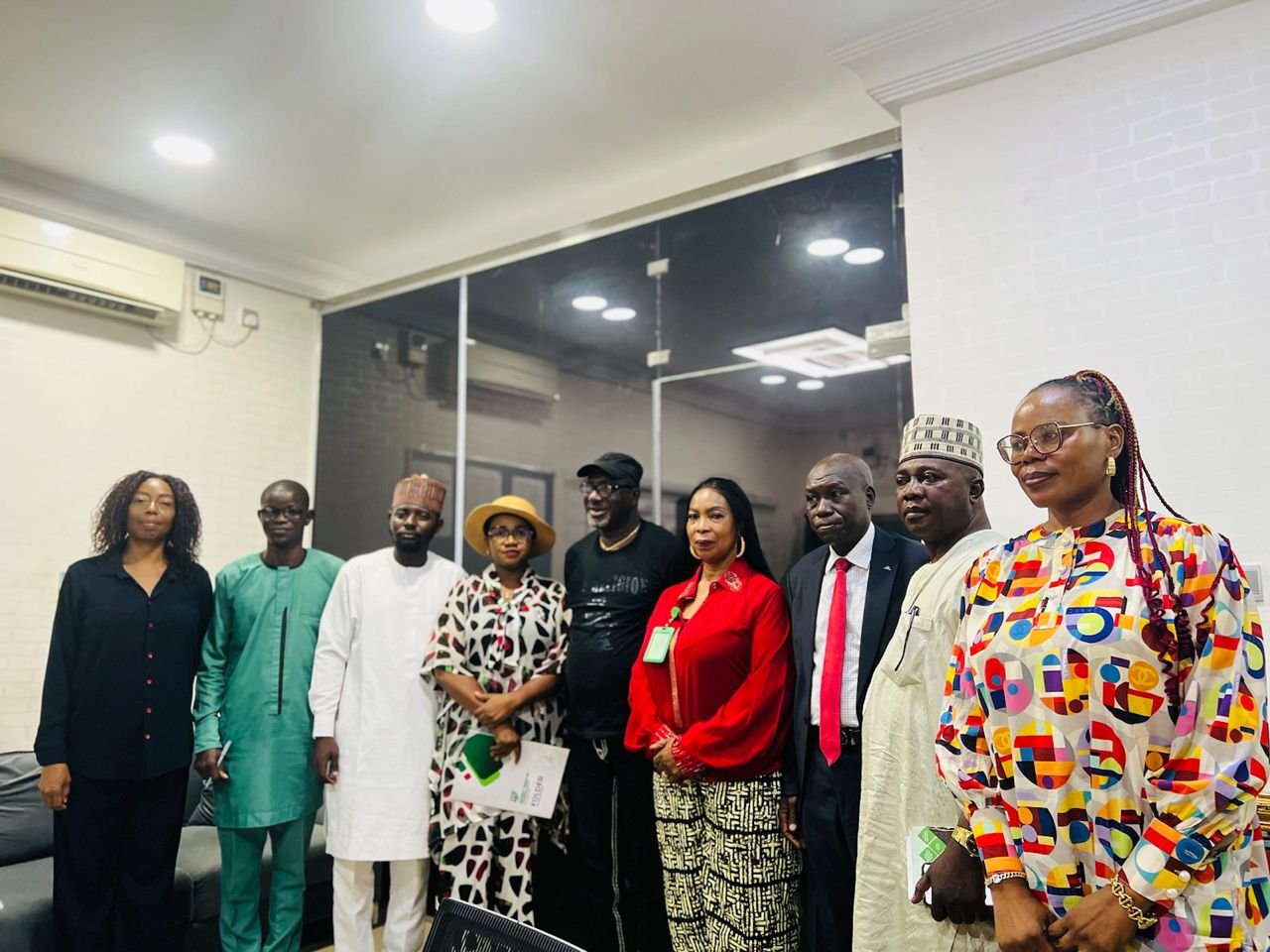
The Abuja Metropolitan Management Council (AMMC) has expressed commitment to partner with the Nigeria Union of Journalists (NUJ), FCT Council on infrastructural development in the Federal Capital Territory (FCT). This was disclosed when the NUJ FCT Chairperson, Ms. Grace Ike, led her executive team on a courtesy visit to the AMMC Coordinator, Chief Felix Amechi Obuah, on Tuesday. Chief Obuah welcomed the NUJ FCT team and expressed his readiness to collaborate with the council, recognizing the vital role the media plays in informing the public on AMMC’s activities. “I welcome you and your team to our corporate office today. I have listened to you and I just have to say that, I am indeed very happy to partner with the NUJ FCT,” he said. The AMMC Coordinator noted that while current financial constraints make it difficult to make any immediate commitment, he hopes to accommodate the union’s needs in the next budget. “Even though I am a bit handicapped to make any promises because of budgetary constraints, but in the subsequent budget, I assure you that whatever we can do to help your dream come true for NUJ and your members, the agency will do everything humanly possible to contribute their quota to the growth of the union,” he added. NUJ FCT Chairman, Comrade Grace Ike, commended Chief Obuah for his effective management and coordination of municipal services and infrastructural development in the FCT. She highlighted major infrastructural challenges facing the NUJ FCT Council and requested support to improve their facilities, including the completion of the Pentagon building and a hall that can accommodate over 2,000 journalists. She also made a strong case for the NUJ FCT “Journalists’ Village”, which would offer journalists affordable housing and a suitable environment to carry out their work. “Today, we come with a sincere appeal for your support towards the establishment of a Journalists’ Village here in the FCT. This initiative is vital for providing affordable housing, professional facilities, and a conducive environment that will enhance the welfare and productivity of journalists,” she said. Chief Obuah congratulated Ms. Ike on becoming the first female chairperson of the union after 41 years of its existence and prayed for a successful tenure. The AMMC Coordinator emphasized the importance of media partnership in promoting the agency’s activities and achieving its mandate.